


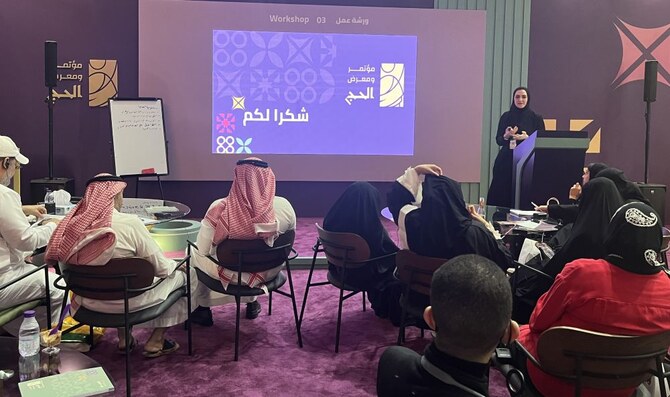

JEDDAH: An intensive three-day Hajj training event in Saudi Arabia has boosted the skills of more than 2,000 trainees from around the world in all aspects of the pilgrimage.
The Hajj Lab, part of the Hajj and Umrah Conference and Exhibition 2025, finished on Jan. 16.
It was organized by the Licensing and Training Center for Workers in the Service Sector of Hajj and Umrah, which falls under the Saudi Ministry of Hajj and Umrah.
The scheme, aligned with Saudi Vision 2030, provided a platform for knowledge sharing, training and collaboration, to enhance the services offered to pilgrims during the Hajj season.
Over the three days, the lab hosted a series of workshops designed to foster learning and development across various facets of the Hajj ecosystem.
With more than 60 trainers and 45 workshop sessions, the Hajj Lab brought together more than 2,000 global trainees committed to enhancing their skills and knowledge of the Hajj sector.
The workshops, tailored to meet the specific needs of the Hajj, covered new technologies, regulations and services related to transportation, healthcare, security and digital transformation.
General supervisor of the Licensing and Training Center, Abdul Bari Al-Salami, highlighted the comprehensive approach to the workshops.
“Twenty workshops each day, divided into five sessions, were held across four halls, each capable of hosting around 40 trainees,” he said.
“Trainers from both government sectors and companies providing Hajj services shared their expertise to ensure that attendees were well-informed about the latest regulations, technologies and strategies. This is part of our effort to improve services we are implementing for the upcoming Hajj and Umrah season.”
The workshop topics were chosen after extensive discussions with specialists from various sectors involved in the Hajj.
Ayad Fadl, director of the Licensing and Training Center, said: “The theme this year is all about the Hajj season and, particularly, what’s new for the next season. These workshops are a yearly opportunity for us to introduce innovations and improvements.”
The Hajj Lab also serves as a platform to assess the impact of new initiatives and gather feedback from attendees.
“We aim to observe the impact of each workshop,” Fadl added.
“Some sessions focus on specific knowledge areas, while others address broader industry challenges. After each session, we evaluate the effectiveness and decide on how to expand the training throughout the year.”
The Licensing and Training Center’s training content accreditation officer, Ahdab Badr, said: “One of the workshops discussed new regulations at Nusuk for Hajj pilgrims, which is an update for the upcoming season. We use the Hajj Lab to increase awareness and gauge the audience’s response about it. If successful, Nusuk aims to implement these changes on their official platforms.”
With a goal of training more than 150,000 workers this year, the Licensing and Training Center continues to focus on developing soft skills among those who work with pilgrims, based on extensive studies conducted in recent years. “We aim to create a more efficient workforce, which is crucial for enhancing the overall Hajj experience,” said Badr.
Sela Company served as a partner in hosting the lab. Sara Sheikh, Sela’s expo operations manager, highlighted the company’s role in the creation of the workshop programs: “Our collaboration with the Ministry of Hajj and Umrah aims to ensure the quality and variety of the workshops, particularly in the nine specialized areas of focus, including crowd management, project management, medical and health services, digital transformation, business intelligence and marketing.”
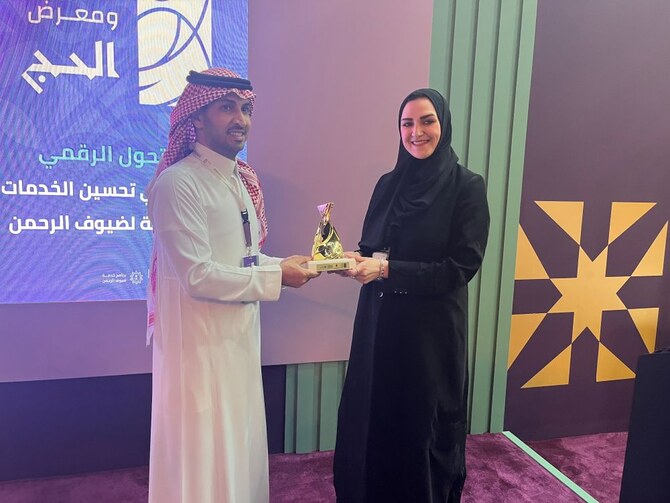
One of the standout sessions, titled “Digital Transformation and its Effect on Enhancing Services Offered to Pilgrims,” was led by Eng. Ameenah Naytah, chief digital transformation officer and e-portal director at the Ministry of Hajj and Umrah.
Naytah discussed the importance of digital transformation in enhancing services provided to pilgrims. “We began by introducing the concept of digital transformation, then discussed the tools and technologies that are available to enhance sustainability,” she said.
“The Hajj Lab was an essential platform for the ministry to interact with the audience, understand their level of knowledge about digital transformation, and gather feedback that will guide future developments.”
Another session, titled “Data Quality: From Basics to Best Practices in the Hajj System,” was conducted by Omar Bassam Bani Kenana, a data management consultant.
“In our workshop, we worked closely with the audience to explain how we improve data quality across all departments and systems in the ministry. We aim to raise awareness about the importance of data quality and provide insights into how attendees can apply best practices in their own systems,” he said.
Mohammed, a consultant at Nusuk, said: “I am truly grateful for the opportunity to attend the Hajj Lab workshops. The sessions provided invaluable insights into the latest developments in Hajj services.
“The practical knowledge was eye-opening and I now feel better equipped to apply these new strategies in my work, enhancing the experience for pilgrims.
“This event not only expanded my understanding, but also inspired me to be part of the continued innovation in the Hajj ecosystem. I’m looking forward to implementing these lessons and seeing the positive impact on the Hajj season.”


