Saudi-Finland ties hold ‘almost unlimited potential,’ says Finnish minister

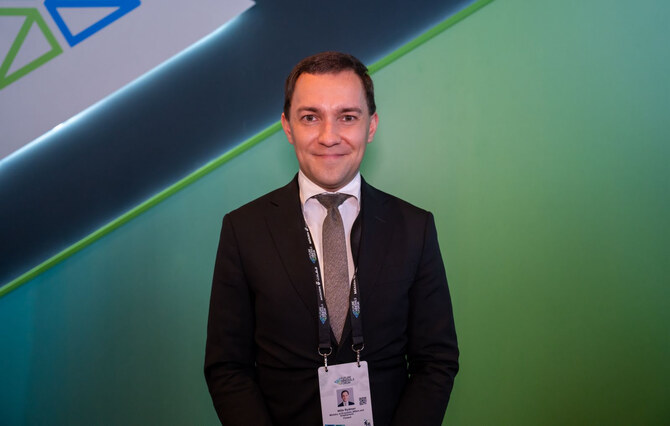
Finland’s Minister for Economic Affairs Wille Rydman. AN photo
Short Url
Updated 15 January 2025
Follow

Saudi-Finland ties hold ‘almost unlimited potential,’ says Finnish minister

RIYADH: Mining presents significant opportunities for collaboration between Saudi Arabia and Finland, a senior Finnish minister stated, emphasizing the “almost unlimited potential” of their bilateral relationship.

In an interview with Arab News on the sidelines of the Future Minerals Forum in Riyadh on Jan.14, Wille Rydman, Finland’s minister for economic affairs, highlighted that Saudi Arabia’s partnership with Finnish companies could play a key role in achieving sustainability within the Kingdom's mineral sector.

Saudi Arabia already enjoys a robust relationship with Finland in the energy sector. In October 2024, the two countries signed a memorandum of understanding to accelerate collaboration in areas such as clean power technologies, stable electricity systems, and climate change mitigation solutions.

“I think that there is almost unlimited potential in our bilateral trade relations. As we are now meeting here in the Future Minerals Forum, the focus is heavily on the mining industry. And I think that’s one of the arenas where our countries can cooperate even deeper in the future,” Rydman said.

He added: “Finnish companies are very known for their sustainability, their ability for doing (a) sustainable mining industry. I’m very confident that they can also give a lot of know-how and business potential for Saudi Arabia’s mineral sector.”

Rydman further emphasized that Finnish collaboration in the mining sector would assist Saudi Arabia in meeting its energy transition targets. Strengthening the industry, he noted, is essential for achieving these goals, as minerals are crucial for the electrification of societies.

“It’s been globally very well recognized how important a role critical raw materials are playing in the future energy transition, and how important it is to maintain those critical supply and value chains when it comes to minerals and mining industry,” the minister explained.

He also pointed out that Saudi Arabia’s Vision 2030, which includes objectives like responsible mining and the use of green energy, presents valuable opportunities for Finnish companies to operate within the Kingdom.

“The aims and targets that Saudi Arabia has put for itself are actually kind of targets and aims where Finnish companies have been succeeding very well, especially when it comes to the mining industry, responsible mining, green energy, green and clean transition. And that’s why I think that Finnish companies entering Saudi Arabian markets can help Saudi Arabia to reach those targets,” Rydman said.

The minister also extended an invitation to Saudi investors to explore opportunities in Finland.


Saudi Arabia leads outcome-based education to prepare future-ready generations: Harvard Business Review

A Harvard sign is seen at the Harvard University campus in Boston, Massachusetts, on May 27, 2025. (AFP)
Updated 10 February 2026
Follow

Saudi Arabia leads outcome-based education to prepare future-ready generations: Harvard Business Review

  • The Riyadh-based school group developed a strategy that links every classroom activity to measurable student competencies, aiming to graduate learners equipped for the digital economy and real-world contexts

RIYADH: Saudi Arabia’s education system is undergoing a sweeping transformation aligned with Vision 2030, shifting from traditional, input-focused methods to outcome-based education designed to equip students with future-ready skills, Harvard Business Review Arabic reported.

The transformation is being adopted and spearheaded by institutions such as Al-Nobala Private Schools, which introduced the Kingdom’s first national “learning outcomes framework,” aimed at preparing a generation of leaders and innovators for an AI-driven future, the report said.

Al-Nobala has leveraged international expertise to localize advanced learning methodologies.

The Riyadh-based school group developed a strategy that links every classroom activity to measurable student competencies, aiming to graduate learners equipped for the digital economy and real-world contexts. The school’s group approach combines traditional values with 21st-century skills such as critical thinking, communication, innovation and digital fluency.

According to the report, the shift addresses the growing gap between outdated models built for low-tech, resource-constrained environments and today’s dynamic world, where learners must navigate real-time information, virtual platforms, and smart technologies.

“This is not just about teaching content, it’s about creating impact,” the report noted, citing how Al-Nobala’s model prepares students to thrive in an AI-driven world while aligning with national priorities.

The report noted that Saudi Arabia’s Ministry of Education has paved the way for this shift by transitioning from a centralized controller to a strategic enabler, allowing schools such as Al-Nobala to tailor their curriculum to meet evolving market and societal needs. This is part of the long-term goal to place the Kingdom among the top 20 global education systems.

Al-Nobala’s work, the report stated, has succeeded in serving the broader national effort to link education outcomes directly to labor market demands, helping to fulfill the Vision 2030 pillar of building a vibrant society with a thriving economy driven by knowledge and innovation.

Last February, Yousef bin Abdullah Al-Benyan, Saudi Arabia’s minister of education, said that the Kingdom was making “an unprecedented investment in education,” with spending aligned to the needs of growth and development. He said that in 2025, education received the second-largest share of the state budget, totaling $53.5 billion.