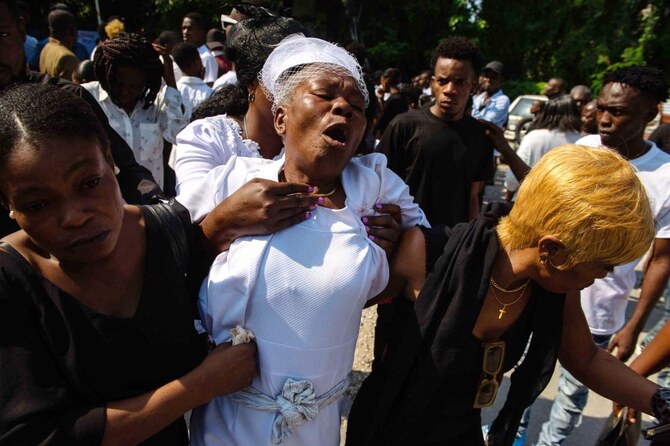
GENEVA: More than a million people, over half of them children, are now displaced within Haiti where gang violence continues unabated despite the start of a United Nations-backed security mission last year, UN data showed on Tuesday.
The tally of 1.04 million displaced people released by the International Organization for Migration represents a threefold increase from December 2023 when 315,000 people were homeless. Never before have so many people been displaced by violence in the country, according to UN data.
“Haiti needs sustained humanitarian assistance right now to save and protect lives,” said IOM Director General Amy Pope in a statement sent to journalists, stressing the need to address the root causes of the violence and instability.
Armed gangs within Haiti now have near-total control over the capital Port-au-Prince and wide remit over the rest of the country. An international mission approved last year tasked with restoring order has so far seen just a fraction of troops deploying, although two contingents of Guatemalan soldiers arrived this month to boost the mission’s forces.
IOM spokesperson Kennedy Okoth Omondi told a Geneva press briefing that spaces in shelters were running short, with many struggling to obtain basic services like food and water. Deportations of migrants from The Dominican Republic and elsewhere have added to the strain on communities, he added.
“What has really made this worse is the fact that we have seen over and over deportation still occurring back to Haiti, where communities are already struggling to basically survive,” he said.

More than 1 million people displaced by raging Haiti gang violence, UN says
https://arab.news/93phc
More than 1 million people displaced by raging Haiti gang violence, UN says
- “Haiti needs sustained humanitarian assistance right now to save and protect lives,” said IOM Director General Amy Pope in a statement
UN experts concerned by treatment of Palestine Action-linked hunger strikers
- Eight prisoners awaiting trial for alleged offences connected to the group have taken part in the protest
LONDON: UN human rights experts have raised concerns about the treatment of prisoners linked to Palestine Action who have been on hunger strike while on remand, warning it may breach the UK’s international human rights obligations.
Eight prisoners awaiting trial for alleged offences connected to the group have taken part in the protest, reported The Guardian on Friday.
Among them are Qesser Zuhrah and Amu Gib, who were on hunger strike at HMP Bronzefield from Nov. 2 to Dec. 23, and Heba Muraisi, held at HMP New Hall. Others include Teuta Hoxha, Kamran Ahmed and Lewie Chiaramello, who has refused food on alternate days due to diabetes.
Zuhrah and Gib temporarily resumed eating this week because of deteriorating health but said they plan to resume the hunger strike next year, according to Prisoners for Palestine.
In a statement issued on Friday, UN special rapporteurs, including Gina Romero and Francesca Albanese, said the handling of the prisoners was alarming.
“Hunger strike is often a measure of last resort by people who believe that their rights to protest and effective remedy have been exhausted. The state’s duty of care toward hunger strikers is heightened, not diminished,” they said.
Three of the prisoners were in hospital at the same time on Sunday, with Ahmed admitted on three occasions since the hunger strike began.
The experts said: “Authorities must ensure timely access to emergency and hospital care when clinically indicated, refrain from actions that may amount to pressure or retaliation, and respect medical ethics.”
Prisoners for Palestine has alleged that prison staff initially denied ambulance access for Zuhrah during a medical emergency last week, with hospital treatment only provided after protesters gathered outside the prison.
“These reports raise serious questions about compliance with international human rights law and standards, including obligations to protect life and prevent cruel, inhuman or degrading treatment,” the experts said, adding: “Preventable deaths in custody are never acceptable. The state bears full responsibility for the lives and wellbeing of those it detains. Urgent action is required now.”
Families and supporters have called for a meeting with Justice Secretary David Lammy, while lawyers claim the Ministry of Justice has failed to follow its own policy on handling hunger strikes.
Government officials are understood to be concerned about the prisoners’ condition but cautious about setting a wider precedent.


