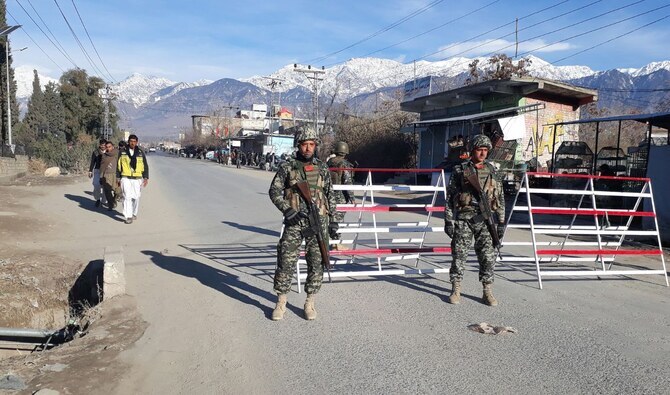
PESHAWAR: Authorities in Pakistan’s Khyber Pakhtunkhwa (KP) province have started dismantling bunkers built by rival tribes in the Kurram district, which has been hit by deadly clashes in the last two months, an official said on Monday.
Kurram, a northwestern district of around 600,000 people in KP, has been rocked by tribal and sectarian clashes since November 21, when armed men attacked a convoy of Shia passengers, killing 52 people.
The attack sparked further violence and blockade of a main road connecting Kurram’s main town of Parachinar with the provincial capital of Peshawar, causing medicine, food and fuel shortages in the area, as casualties surged to 136.
Authorities last week issued a notification regarding dismantling of the bunkers in Lower Kurram, more than a week after a council of tribal and political elders brokered a peace deal between the two sides.
“One bunker each has been demolished in Balishkhel and Khar Kali area of Lower Kurram and arrangements for the demolition of the rest are being made,” Lower Kurram Assistant Commissioner Hafeez-ur-Rehman told Arab News over the phone.
“The bunkers are being dismantled using explosives, under the supervision of the district administration.”
Under the peace agreement signed on Jan. 1, both sides agreed on the demolition of bunkers and the handover of heavy weapons to authorities within two weeks.
Any party that launches an attack after the signing of the deal will be considered a “terrorist” and action will be taken against it. A fine of Rs10 million ($35,933) will be imposed on those who violate the terms of the deal by using weapons against each other, according to the peace agreement.
Land disputes in the volatile district will be settled on a priority basis with the cooperation of local tribes and the district administration. Opening of banned outfits’ offices will be prohibited in the district, while social media accounts spreading hate will be discouraged via collective efforts backed by the government.
The decisions were made by the KP apex committee, which comprises civilian and military leadership in the province.
Muhammad Ali Saif, a spokesperson for the KP government, confirmed the start of a drive to demolish all such structures in the volatile district.
“All bunkers will be dismantled in light of the apex committee decision and the peace agreement,” he said, adding that it was essential to restore peace in the area.
However, a shortage of food and medicines persists in the district and provincial authorities have been supplying relief goods and transporting ailing and injured people from Kurram to Peshawar via helicopters.


![]()

Authorities start dismantling bunkers in clashes-hit northwestern Pakistani district
Short Url
https://arab.news/68zj8
Authorities start dismantling bunkers in clashes-hit northwestern Pakistani district
- Tribal and sectarian clashes since Nov. 21 have killed at least 136 people in Kurram, causing medicine, food and fuel shortages
- On Jan. 1, warring sides agreed on the demolition of bunkers and handover of heavy weapons to authorities under a peace agreement
Latest updates


© 2026 SAUDI RESEARCH & PUBLISHING COMPANY, All Rights Reserved And subject to Terms of Use Agreement.