

Saudi Arabia unveils 15 new incentives to boost exports, logistics 

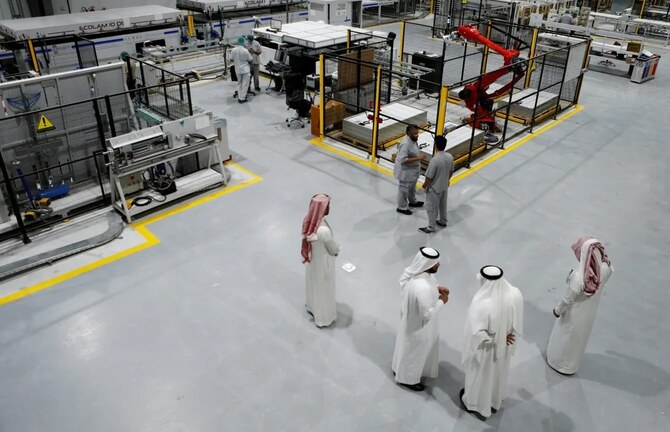
The Ministry of Industry and Mineral Resources announced the incentives, which include key administrative benefits such as assigning liaison officers and account managers to streamline processes for investors and address challenges more efficiently. Reuters
Short Url
Updated 13 January 2025
Follow

Saudi Arabia unveils 15 new incentives to boost exports, logistics 

RIYADH: Saudi Arabia has rolled out 15 new incentives under the Authorized Economic Operator program, to boost export competitiveness, enhance supply chain security, and advance the Kingdom’s ambitions as a global logistics hub.

The Ministry of Industry and Mineral Resources announced the incentives, which include key administrative benefits such as assigning liaison officers and account managers to streamline processes for investors and address challenges more efficiently.

As part of the program, companies will also gain access to industrial land, with long-term leases of up to 30 years, and eligibility for the “Custom Factory on Demand” service. These measures are designed to support industrial expansion and strengthen the Kingdom's position in global trade.

This announcement follows the ministry’s earlier declaration of an allocation of SR10 billion ($2.66 billion) to activate the Standard Incentives Program for the industrial sector. This funding, approved by the Saudi Cabinet in December last year, is intended to foster industrial investment, stimulate growth, and contribute to the sustainable development of Saudi industry.

The new incentives will also streamline procedures for investors, including expedited processing and priority access to pre-developed industrial lands and factories. Additionally, companies will be given preferential eligibility for incentives provided by the Saudi Export Development Authority.

Further financial support is available through the Saudi Industrial Development Fund, which can cover up to 75 percent of project costs. SIDF offers extended financing with repayment terms of up to 20 years and grace periods of up to 36 months. Eligible companies can also access advisory services and training programs from SIDF’s industrial academy.

The AEO program is a cornerstone of Saudi Arabia’s broader strategy to enhance customs and logistics services, simplify trade processes, and improve the efficiency of supply chains.

The initiative not only aims to bolster the position of Saudi companies as global leaders but also seeks to attract both local and foreign investments, especially benefiting small and medium-sized enterprises.

Launched by the Zakat, Tax, and Customs Authority, the Saudi AEO program aligns with global trade frameworks used by over 80 countries. It offers businesses that adhere to secure trade standards smoother operations in the international customs environment.

On Jan. 11, ZATCA expanded the program into a national initiative, integrating 15 government entities into the effort.


Saudi minister at Davos urges collaboration on minerals

Global collaboration on minerals essential to ease geopolitical tensions and secure supply, WEF hears. (Supplied)
Updated 20 January 2026
Follow

Saudi minister at Davos urges collaboration on minerals

  • The reason of the tension of geopolitics is actually the criticality of the minerals

LONDON: Countries need to collaborate on mining and resources to help avoid geopolitical tensions, Saudi Arabia’s minister of industry and mineral resources told the World Economic Forum on Tuesday.

“The reason of the tension of geopolitics is actually the criticality of the minerals, the concentration in different areas of the world,” Bandar Alkhorayef told a panel discussion on the geopolitics of materials.

“The rational thing to do is to collaborate, and that’s what we are doing,” he added. “We are creating a platform of collaboration in Saudi Arabia.”

Bandar Alkhorayef, Saudi Minister of Industry and Mineral Resources 

The Kingdom last week hosted the Future Minerals Forum in Riyadh. Alkhorayef said the platform was launched by the government in 2022 as a contribution to the global community. “It’s very important to have a global movement, and that’s why we launched the Future Minerals Forum,” he said. “It is the most important platform of global mining leaders.”

The Kingdom has made mining one of the key pillars of its economy, rapidly expanding the sector under the Vision 2030 reform program with an eye on diversification. Saudi Arabia has an estimated $2.5 trillion in mineral wealth and the ramping up of extraction comes at a time of intense global competition for resources to drive technological development in areas like AI and renewables.

“We realized that unlocking the value that we have in our natural resources, of the different minerals that we have, will definitely help our economy to grow to diversify,” Alkhorayef said. The Kingdom has worked to reduce the timelines required to set up mines while also protecting local communities, he added. Obtaining mining permits in Saudi Arabia has been reduced to just 30 to 90 days compared to the many years required in other countries, Alkhorayef said.

“We learned very, very early that permitting is a bottleneck in the system,” he added. “We all know, and we have to be very, very frank about this, that mining doesn’t have a good reputation globally.

“We are trying to change this and cutting down the licensing process doesn’t only solve it. You need also to show the communities the impact of the mining on their lives.”

Saudi Arabia’s new mining investment laws have placed great emphasis on the development of society and local communities, along with protecting the environment and incorporating new technologies, Alkhorayef said. “We want to build the future mines; we don’t want to build old mines.”