

Malala Yousafzai ‘overwhelmed and happy’ to be back in Pakistan

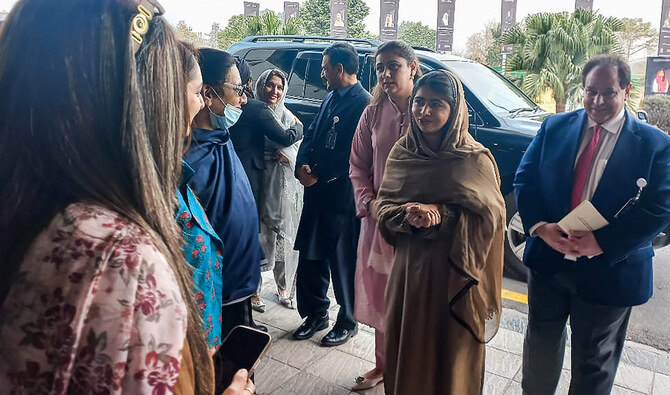
Nobel Peace Prize Laureate Malala Yousafzai (2R) arrives to attend an international summit on ‘Girls’ Education in Muslim Communities’, in Islamabad on January 11, 2025. (AFP)
Short Url
Updated 11 January 2025
Follow

Malala Yousafzai ‘overwhelmed and happy’ to be back in Pakistan

  • The education activist was shot by the Pakistani Taliban in 2012 when she was a schoolgirl
  • She has arrived for a global summit in her home country on girls’ education in Islamic world

ISLAMABAD: Nobel Peace Prize laureate Malala Yousafzai said Saturday she was “overwhelmed” to be back in her native Pakistan, as she arrived for a global summit on girls’ education in the Islamic world.
The education activist was shot by the Pakistani Taliban in 2012 when she was a schoolgirl and has returned to the country only a handful of times since.
“I’m truly honored, overwhelmed and happy to be back in Pakistan,” she told AFP as she arrived at the conference in the capital Islamabad.
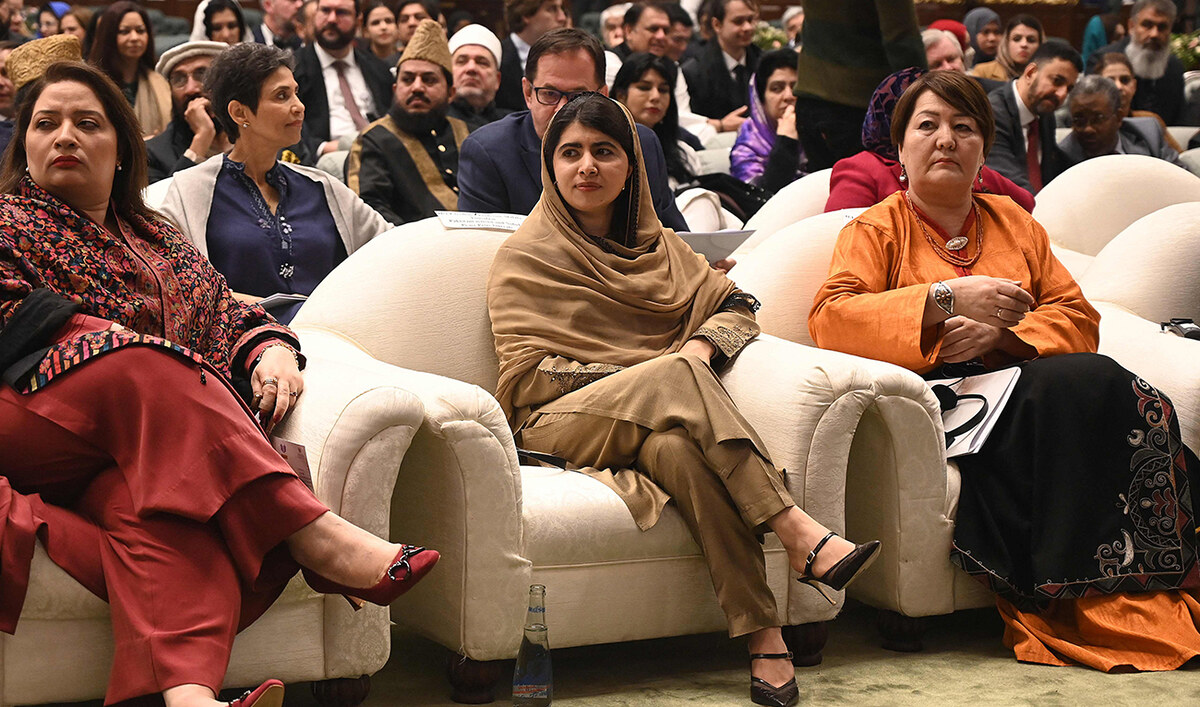


Nobel Peace Prize Laureate Malala Yousafzai (C) attends an international summit on 'Girls’ Education in Muslim Communities', in Islamabad on January 11, 2025. (AFP)

The two-day summit was set to be opened Saturday morning by Prime Minister Shehbaz Sharif, and brings together representatives from Muslim-majority countries, where tens of millions of girls are out of school.
Yousafzai is due to address the summit on Sunday.
“I will speak about protecting rights for all girls to go to school, and why leaders must hold the Taliban accountable for their crimes against Afghan women & girls,” she posted on social media platform X on Friday.
The country’s education minister Khalid Maqbool Siddiqui told AFP the Taliban government in Afghanistan had been invited to attend, but Islamabad has not received a response.
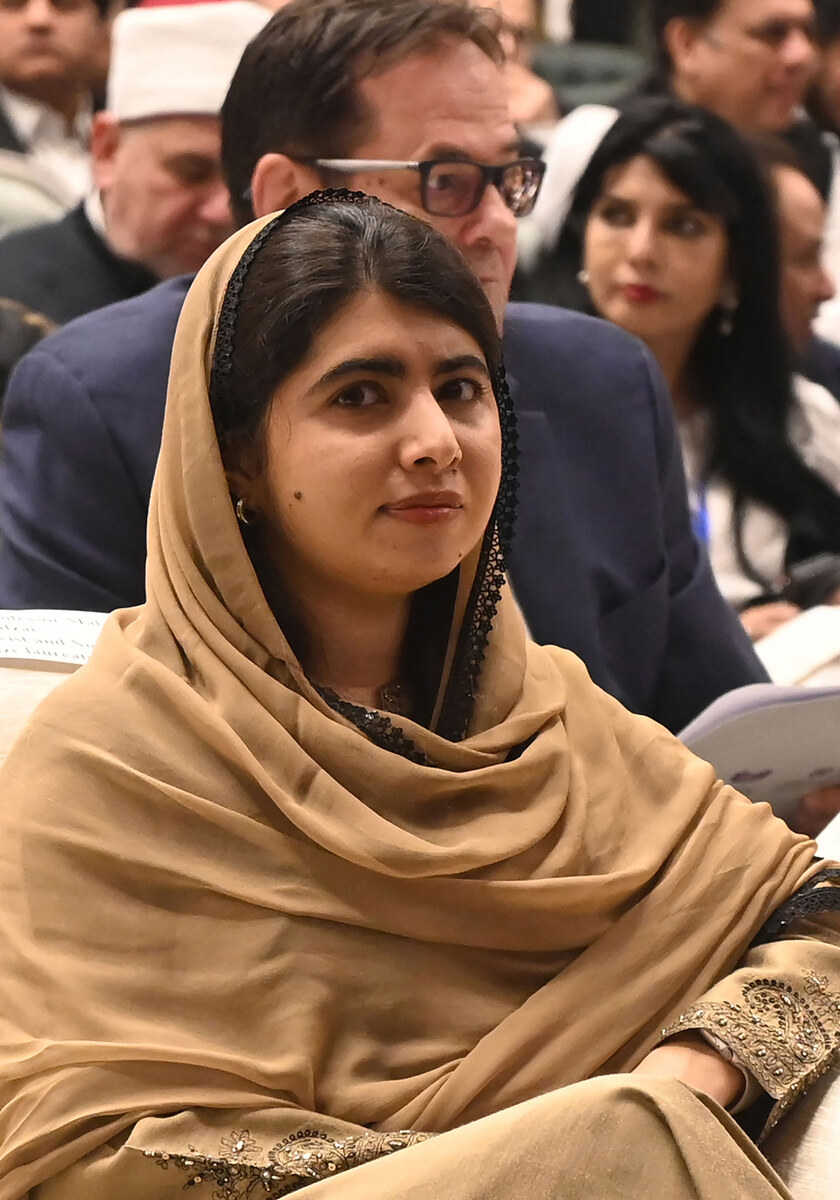


Nobel Peace Prize Laureate Malala Yousafzai (C) attends an international summit on 'Girls’ Education in Muslim Communities', in Islamabad on January 11, 2025. (AFP)

Afghanistan is the only country in the world where girls and women are banned from going to school and university.
Since returning to power in 2021, the Taliban government there has imposed an austere version of Islamic law that the United Nations has called “gender apartheid.”
Pakistan is facing its own severe education crisis with more than 26 million children out of school, mostly as a result of poverty, according to official government figures — one of the highest figures in the world.


Nobel Peace Prize Laureate Malala Yousafzai (C) meets with delegation members while atteding an international summit on 'Girls’ Education in Muslim Communities', in Islamabad on January 11, 2025. (AFP)

Yousafzai became a household name after she was attacked by Pakistan Taliban militants on a school bus in the remote Swat valley in 2012.
She was evacuated to the United Kingdom and went on to become a global advocate for girls’ education and, at the age of 17, the youngest Nobel Peace Prize winner.


Pakistan mulls 'Super App' for public services, document verification in major technology push

Updated 15 February 2026
Follow

Pakistan mulls 'Super App' for public services, document verification in major technology push

  • Pakistan has been urging technology adoption in public, private sectors as it seeks to become a key tech player globally
  • The country this month launched the Indus AI Week to harness technology for productivity, skills development and innovation

KARACHI: Pakistan is planning to launch a “Super App” to deliver public services and enable digital document verification, the country's information technology (IT) minister said on Sunday, amid a major push for technology adoption in public and private sectors.

Pakistan, a country of 240 million people, seeks to become a key participant in the global tech economy, amid growing interest from governments in the Global South to harness advanced technologies for productivity, skills development and innovation.

The country's information and communications technology (ICT) exports hit a record $437 million in Dec. last year, according to IT Minister Shaza Fatima Khawaja. This constituted a 23% increase month on month and a 26% increase year on year.

Pakistan's technology sector is also advancing in artificial intelligence (AI) and cloud computing, marked by the launch of Pakistan’s first sovereign AI cloud in November, designed to keep sensitive data domestic and support growth in the broader digital ecosystem.

“In developed countries, citizens can access all government services from a mobile phone,” Fatima said, announcing plans for the Super App at an event in Karachi where more than 7,000 students had gathered for an AI training entrance test as part of the ‘Indus AI Week.’

“We will strive to provide similar facilities in the coming years.”

Khawaja said the app will reduce the need for in-person visits to government offices such as the National Database and Registration Authority (NADRA) and the Higher Education Commission (HEC).

The Indus AI Week initiative, which ran from Feb. 9 till Feb. 15. was aimed at positioning Pakistan as a key future participant in the global AI revolution, according to the IT minister.

At the opening of the weeklong initiative, Prime Minister Shehbaz Sharif announced that Pakistan would invest $1 billion in AI by 2030 to modernize the South Asian nation’s digital economy.

“These initiatives aim to strengthen national AI infrastructure and make the best use of our human resource,” Khawaja said, urging young Pakistanis to become creators, inventors and innovators rather than just being the consumers of technology.