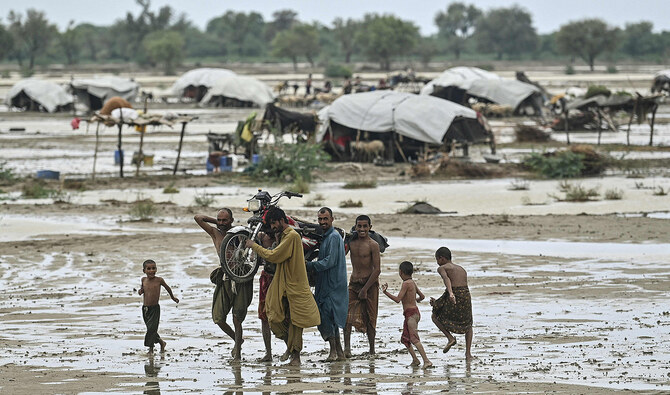
KARACHI: A fact-finding mission conducted by a network of rights activists in South Asia on Friday criticized Pakistan’s response to the devastating 2022 floods, highlighting significant shortcomings in housing, sanitation and health care for flood-affected communities in Sindh.
The 2022 floods, triggered by unprecedented monsoon rains and glacial melt, displaced millions, killed over 1,700 people and caused damages exceeding $35 billion, leaving vast areas submerged for months.
The fact-finding team of South Asians for Human Rights (SAHR) visited Sindh, surveying several districts, including Larkana, Shikarpur, Nawabshah and Hyderabad, from January 6-10 to assess the government’s compensation and rehabilitation efforts.
“The preliminary findings contradict the provincial government’s claims of launching one of the world’s largest housing projects for flood affectees,” said Ahmad Rafay Alam, an environmental lawyer and SAHR Bureau Member, during a press conference in Karachi.
The mission raised serious concerns over the proposed one-room “flood-resilient” housing model, calling it insufficient and lacking essential amenities such as kitchens and toilets.
“With skyrocketed inflation, the Rs300,000 ($1,077) compensation per house is unreasonably low,” SAHR said in a statement.
It maintained there was not much consultation while designing the houses, questioning their climate resilience and warning they were unlikely to survive future disasters.
“More severe natural calamities will impact this vulnerable population, and it is highly unlikely that these structures can withstand another heavy rain,” it noted.
In Dhand, a village near Mohenjo Daro, SAHR found that only four out of 40 destroyed houses had been rebuilt.
“Some families still live in tents or neighbors’ homes, and with average family sizes of six people, it is impossible to live in these single rooms, especially when some family members are married,” it said.
The regional rights network urged the government to conduct fresh surveys to ensure no genuinely affected individuals were left out. It informed that many residents had reported difficulty in finding their names on government beneficiary lists, delaying relief.
SAHR also highlighted poor sanitation and health care in affected areas, reporting that villages lacked drainage systems, leading to outbreaks of diarrhea, malaria and skin infections.
Arab News reached out to provincial officials, including Sindh’s Information Minister Sharjeel Memon and Chief Minister Murad Ali Shah’s spokesperson Rasheed Channa, but received no response.
Sadia Javed, another government spokesperson, said she would review the mission’s findings but had not responded by the time of filing this report.


![]()

Rights network criticizes flood compensation and rehabilitation efforts in Sindh
Short Url
https://arab.news/zmpw6
Rights network criticizes flood compensation and rehabilitation efforts in Sindh
- Network’s fact-finding team says not much consultation was done while designing houses for flood-hit families
- It says these one-room ‘flood-resilient’ structures lack basic amenities like toilets, can’t withstand heavy rain
Latest updates


© 2026 SAUDI RESEARCH & PUBLISHING COMPANY, All Rights Reserved And subject to Terms of Use Agreement.