

Where We Are Going Today: Ramen Korean & Japanese Restaurant

1 / 4
Photo/Supplied
2 / 4
Photo/Supplied
3 / 4
Photo/Supplied
4 / 4
Photo/Supplied
Short Url
Updated 10 January 2025
Follow

Where We Are Going Today: Ramen Korean & Japanese Restaurant

  • For those seeking a more interactive dining experience, the barbecue sets are a highlight of Korean cuisine, allowing diners to cook their own meals at their table

Nestled in vibrant Riyadh Park, Ramen Korean & Japanese Restaurant offers a delightful fusion of authentic cuisine. As one of the city’s most renowned dining spots, it stands out not just for its location but also for its commitment to high-quality ingredients and diverse menu options.

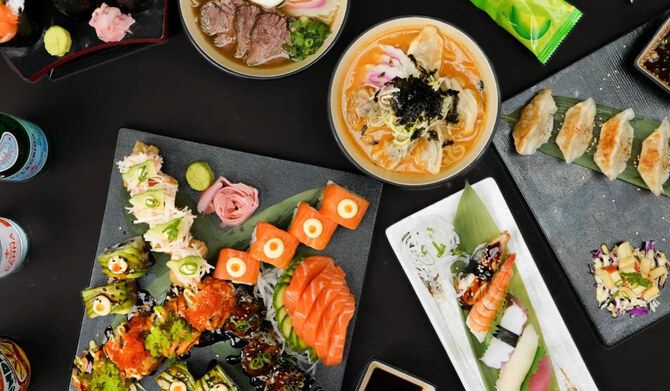
Visitors will enjoy the warm and inviting atmosphere, which perfectly complements the culinary experience. The extensive menu features a wide variety of Asian dishes, from crispy gyoza and fresh edamame to perfectly fried tempura. However, the true star here is ramen, with more than ten varieties catering to different tastes.

You might opt for seafood, with its delightful blend of flavors. The rich chicken stock serves as a comforting base, enhanced by fresh scallions, onions and choy. The addition of kamaboko fish cake, shrimp, and squid creates a harmonious medley, while the perfectly cooked ramen noodles provide a satisfying texture. Each bite is a reminder of the restaurant’s dedication to authentic flavors.

You may also try the jajangmyeon, a classic noodle dish famous for its depth of flavor. The combination of tender beef, sauteed onions and scallions, enveloped in a savory black bean sauce, is simply irresistible.

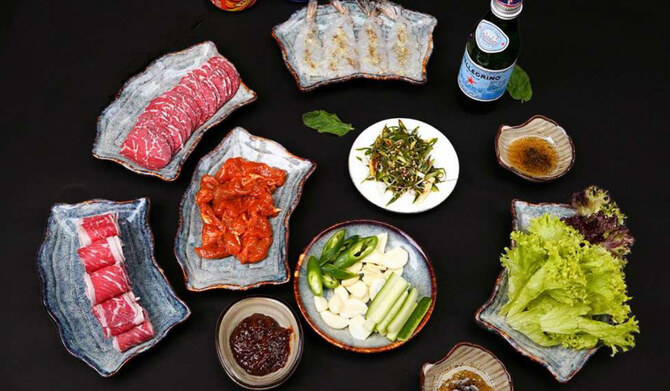
For those seeking a more interactive dining experience, the barbecue sets are a highlight of Korean cuisine, allowing diners to cook their own meals at their table. The set for two, featuring Wagyu ribeye, brisket roll and shrimp, is priced at SR290 ($77); while on the pricier side, this reflects the standard of both the food and experience on offer.

While the prices may be considered steep, the location and exceptional quality justify the cost. For example, the kimchi ramen at SR80 is testament to the restaurant’s dedication to providing a memorable dining experience.

Overall, Ramen Korean & Japanese Restaurant is a must-visit for anyone craving authentic Asian flavors in Riyadh.


Recipes for Success: Chef Akinori Tanigawa offers advice and a niku dofu recipe 

Updated 59 min 36 sec ago
Follow

Recipes for Success: Chef Akinori Tanigawa offers advice and a niku dofu recipe 

DUBAI: For Chef Akinori Tanigawa, cooking is something learned slowly, through repetition, discipline and years in the kitchen. Now head chef at KIGO Dubai, his career spans traditional training in Japan as well as professional kitchens in the US. 

Born in Fukuoka, Japan, Tanigawa began his career in Osaka as a kappo chef — a style of dining where guests sit at the counter and the chef cooks in front of them. He later returned to his hometown to focus on traditional Japanese cuisine, eventually taking over his family’s restaurant in Fukuoka, where for more than 13 years he worked as a kaiseki chef, mastering the art of multi-course seasonal meals that follow a precise order and philosophy. 

He then spent five years in the US as head chef of a kaiseki restaurant in Indiana, learning how to present this highly refined style of Japanese dining to an international audience without losing its essence. 

In 2024, Tanigawa joined Four Seasons Hotel Dubai DIFC as the head chef of KIGO.  

When you started out, what was the most common mistake you made?  

In the early days I treated that kitchen knife like just another tool — nothing special. I didn’t respect its power or precision, and it showed. My cuts were inconsistent, my prep was chaotic, and the ingredients never looked or danced the way they deserved. It wasn’t long before I realized that mastering your tools, especially the blade in your hand, is the heartbeat of great cooking. Without that foundation, even the greatest passion can’t shine on the plate. Once I learned to understand and honor the knife, everything in my cuisine took a leap forward — from texture to timing to taste. 

What’s your top tip for amateur chefs? 

Don’t let recipes box you in. Numbers on a page are only a guide, not a rulebook. A little more heat, a pinch less salt, an instinctive pause… these aren’t mistakes, they’re what give a dish its personality. I always encourage home cooks to look at the ingredients in front of them, trust their senses, and cook with intention. Imagine the smiles around the table, enjoy the rhythm of the kitchen, and let the experience shape the food. When you cook with feeling, the result is always more memorable. 

What one ingredient can instantly improve any dish? 

High-quality natural salt. It’s so much more than seasoning; it’s the quiet hero that elevates every ingredient, coaxing moisture, enhancing umami, and defining the soul of a dish. Using a mineral-rich, natural salt with care transforms a plate from good to unforgettable, giving each flavor clarity, depth and balance. Sometimes, it’s the simplest element that makes the biggest difference. 

When you go out to eat, do you find yourself critiquing the food?  

I make a conscious effort to switch off my “professional brain” when I go out to eat, but habit has me observing, nonetheless. 

What’s the most common issue that you find in other restaurants? 

The thing that disappoints me most isn’t a minor flaw on the plate; it’s the atmosphere. Hearing a chef shouting in the kitchen, for instance, can overshadow even the most exquisite dish. To me, a world-class dining experience isn’t just about taste; it’s about harmony — the flavors, the setting, and the emotions of the creator all need to align. Without that balance, a dish can never truly sing. 

What’s your favorite cuisine or dish to order?  

I’m drawn to simplicity, so dishes like Japanese udon are a favorite. When a plate has just a few components, every ingredient and every technique stand center stage. It’s in that clarity and restraint that the skill of a chef truly shines. I have a deep appreciation for that kind of culinary honesty — understated, precise, and quietly powerful. 

What’s your go-to dish if you have to cook something quickly at home? 

I usually turn to egg dishes or a simple donburi, a rice bowl. With the right technique, eggs can easily become the star of a meal, transforming a quick meal into something satisfying and memorable. They’re not only versatile and delicious but also incredibly efficient at giving you energy, which makes them perfect for a fast yet fulfilling dish. 

What customer request most frustrates you? 

The toughest requests at KIGO are when a guest asks to remove ichiban dashi – the primary broth made from kombu and bonito — not because of allergies or dietary reasons, but simply out of personal preference. Dashi is the soul of Japanese cuisine and the foundation of its flavor, and removing it risks the integrity of the dish. In these moments, I focus on creativity, finding ways to satisfy the guest while still honoring the essence of the cuisine, often by crafting an alternative broth using different ingredients. 

What’s your favorite dish to cook?  

Nabe, or hot pot, is my go-to when cooking for family and loved ones. There’s something truly special about sharing a meal from a single pot. It naturally draws people together and creates a sense of closeness. To me, nabe perfectly embodies the warmth of home and the comfort of one’s roots. It’s more than a dish; it’s a shared experience. 

What’s the most difficult dish for you to get right? 

Simple dashi-based dishes, like osuimono (clear soup) are the most challenging. There’s nowhere to hide — the quality of the water, the freshness of the kombu, and the aroma of the bonito flakes are all immediately apparent. Delivering a perfect bowl day after day is a true test of a chef’s skill, and a lifelong discipline where there is never just one right answer. 

As a head chef, what are you like? Are you a disciplinarian? Do you shout a lot? Or are you more laid back? 

I’m naturally calm. I place great value on dialogue and collaboration in the kitchen, an approach that reflects the spirit of KIGO itself. That said, when firm guidance is needed, it comes from a sense of responsibility, both to the precious ingredients I work with and to every plate that reaches a guest. My approach is always rooted in respect, precision, and ensuring that every dish achieves its fullest potential. 

Chef Akinori’s niku dofu — braised tofu with beef or chicken (sukiyaki style) 

Chef Akinori’s niku dofu. 

Serves: 2 

Cooking time: About 25 minutes 

Main ingredients: 

Thinly sliced beef (shabu-shabu style): 200 g (recommended: sirloin or shoulder loin) Alternatively, 300 g of chicken thigh, cut into bite-size pieces, may be used. 

Tofu: 1 block (about 300 g) - silken or firm, according to preference 

Spring onion / green onion: 1–2 stalks, finely sliced (for garnish) 

Seasoning

Water: 450 ml 

Instant bonito dashi granules: 6 g (approx. 1½ tsp) 

Soy sauce: 60 ml 

Mirin: 60 ml 

Sugar: 24 g (approx. 2 tbsp) 

Tamari soy sauce: 12 ml (if unavailable, substitute with regular soy sauce) 

Method

1.⁠ ⁠Preparation (5 mins) 

Cut the tofu into 4–6 large pieces and gently pat dry with kitchen paper. 

Finely slice the spring onion, soak in cold water for 30 seconds, then drain well. Set aside for garnish. 

Keep the meat refrigerated until ready to use. 

2.⁠ ⁠Make the broth (3 mins) 

Combine water, dashi granules, soy sauce, mirin, sugar, and tamari in a pot. 

Heat over medium heat until the granules dissolve. Do not bring to a boil. 

3.⁠ ⁠Simmer the tofu (10 mins) 

Gently place the tofu into the broth. 

Cover with a lid or foil and simmer over low–medium heat for about 10 minutes, allowing the tofu to absorb the flavour. 

4.⁠ ⁠Add the meat (4 mins) 

Reduce the heat to low. 

Add the beef slices one by one, spreading them gently in the broth. Skim for any foam that rises to the surface. 

If using chicken, simmer for 5–6 minutes until fully cooked. 

5.⁠ ⁠Finish 

Once the meat is just cooked, turn the heat immediately to keep it tender. 

Serve in bowls and garnish with the drained spring onions. 

Variations and serving suggestions:  

Add vegetables: Napa cabbage, chrysanthemum leaves (shungiku), mushrooms, or extra onions work well. 

Sukiyaki style: Serve with a beaten raw egg on the side as a dip for a rich, authentic experience. 

After enjoying the main ingredients, add udon noodles to the remaining broth and heat gently for a comforting conclusion. 

Chef’s tip: Niku-Dofu is not about simmering the meat for hours. Let the tofu soak up the flavors first, then add the meat at the very end. This simple shift in timing transforms the dish, making it unexpectedly refined, even when cooked at home.