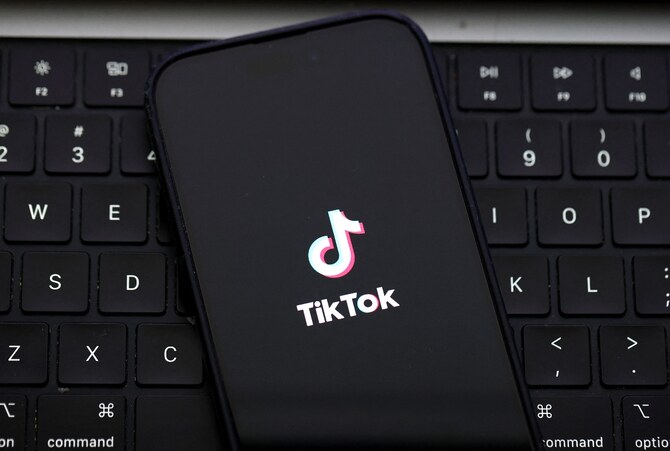
WASHINGTON: The law that could ban TikTok is coming before the Supreme Court on Friday, with the justices largely holding the app’s fate in their hands.
The popular social media platform says the law violates the First Amendment and should be struck down.
TikTok’s parent company is based in China, and the US government says that means it is a potential national security threat. Chinese authorities could force it to hand over sensitive data on the huge number of Americans who use it or could influence the spread of information on the platform, they say.
An appeals court has upheld the law, which bans TikTok unless it’s sold.
The law is set to take effect Jan. 19, the day before a new term begins for President-elect Donald Trump, who has 14.7 million followers on the platform. The Republican says he wants to “save TikTok.”
Here are some key things to know about the case:
Is TikTok banned?
Not now, but the short-form video-sharing app could be shut down in less than two weeks if the Supreme Court upholds the law.
Congress passed the measure with bipartisan support, and President Joe Biden, a Democrat, signed it into law in April.
TikTok’s lawyers challenged the law in court, joined by users and content creators who say a ban would upend their livelihoods. TikTok says the national security concerns are based on inaccurate and hypothetical information.
But a unanimous appeals court panel made up of judges appointed by both Republican and Democratic presidents has upheld the law.
When will the Supreme Court decide?
The justices will issue a decision after arguments Friday, a lightning-fast movement by court standards.
The conservative-majority court could drop clues about how it’s leaning during oral arguments.
TikTok lawyers have urged the justices to step in before the law takes effect, saying even a monthlong shutdown would cause the app to lose about one-third of its daily American users and significant advertising revenue.
The court could quickly block the law from going into effect before issuing a final ruling, if at least five of the nine justices think it is unconstitutional.
What has Trump said about it?
The law is to take effect Jan. 19, the day before Trump takes over as president.
He took the unusual step of filing court documents asking the Supreme Court to put the law on hold so that he could negotiate a deal for the sale of TikTok after he takes office. His position marked the latest example of him inserting himself into national issues before he takes office. It also was a change from his last presidential term, when he wanted to ban it.
Parent company ByteDance has previously said it has no plans to sell. Trump met with TikTok CEO Shou Zi Chew at his Mar-a-Lago club in Palm Beach, Florida, last month.
Who else is weighing in?
Free-speech advocacy groups like the ACLU and the Electronic Frontier Foundation have urged the court to block the law, saying the government hasn’t shown credible evidence of harm and a ban would cause “extraordinary disruption” in Americans’ lives.
On the other side, Sen. Mitch McConnell, the Republican former Senate leader, and a group of 22 states have filed briefs in support, arguing that the law protects free speech by safeguarding Americans’ data and preventing the possible manipulation of information on the platform by Chinese authorities.


![]()

The Supreme Court is considering a possible TikTok ban. Here’s what to know about the case
Short Url
https://arab.news/4zqd7
The Supreme Court is considering a possible TikTok ban. Here’s what to know about the case
- Three appeals court judges have sided with the government and upheld the law, which bans TikTok unless it’s sold
- The justices largely hold the app’s fate in their hands as they hear the case Friday


Latest updates


Recommended


© 2026 SAUDI RESEARCH & PUBLISHING COMPANY, All Rights Reserved And subject to Terms of Use Agreement.