

Al-Ahsa’s bishts are exquisitely tailored, rich cultural symbols

1 / 6
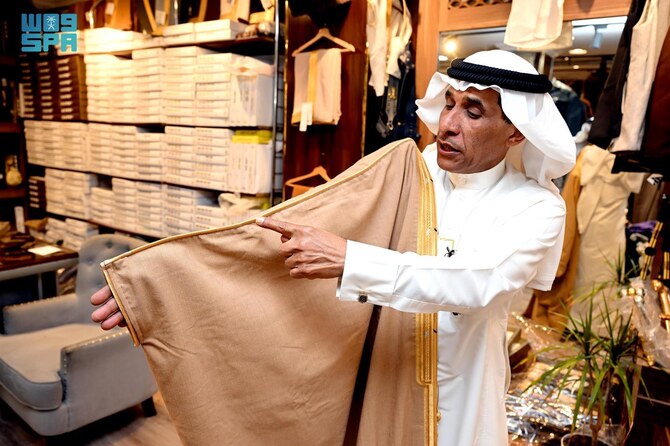
Al-Ahsa is known for its diverse industries and handicrafts, particularly the Hasawi bishts, which are sought-after across the Arab world. (SPA)
2 / 6
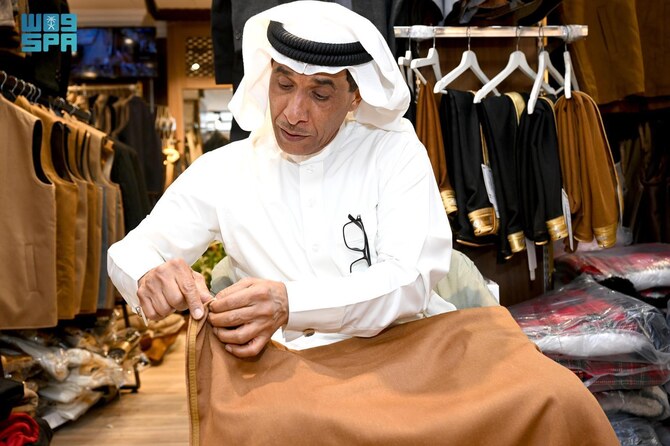
Al-Ahsa is known for its diverse industries and handicrafts, particularly the Hasawi bishts, which are sought-after across the Arab world. (SPA)
3 / 6
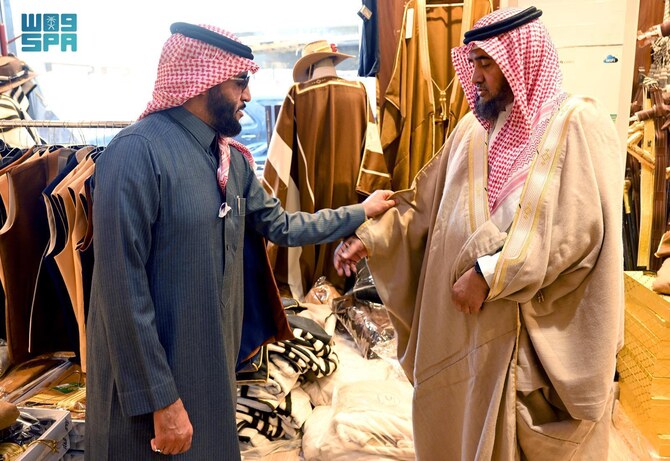
Al-Ahsa is known for its diverse industries and handicrafts, particularly the Hasawi bishts, which are sought-after across the Arab world. (SPA)
4 / 6
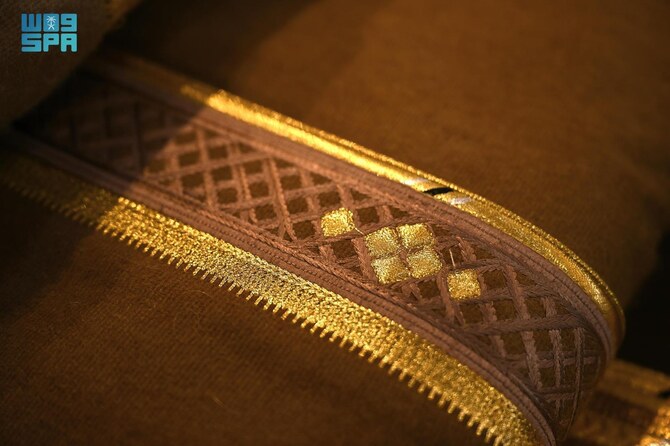
Al-Ahsa is known for its diverse industries and handicrafts, particularly the Hasawi bishts, which are sought-after across the Arab world. (SPA)
5 / 6
Al-Ahsa is known for its diverse industries and handicrafts, particularly the Hasawi bishts, which are sought-after across the Arab world. (SPA)
6 / 6
Al-Ahsa is known for its diverse industries and handicrafts, particularly the Hasawi bishts, which are sought-after across the Arab world. (SPA)
Short Url
Updated 07 January 2025
Follow

Al-Ahsa’s bishts are exquisitely tailored, rich cultural symbols

  • Known across the Arab world for their elegance, quality and intricate embroidery 

RIYADH: Al-Ahsa is known for its diverse industries and handicrafts, particularly the Hasawi bishts, which are sought-after across the Arab world for their exquisite tailoring, quality and intricate embroidery. 

The Hasawi bisht is favored by dignitaries, officials and businesspeople for its aesthetics as well as the rich culture it represents, the Saudi Press Agency reported recently. 

They come in dark or light fabrics depending on taste, the occasion and season.

These garments are often adorned with silk thread, as well as golden and silver zari embroidery in shades of yellow, reddish hues, and white, the SPA reported.

Handmade bishts continue to be in demand despite machine-made options.

Certain families in Al-Ahsa and elsewhere in the Kingdom are renowned for their expertise in crafting handmade and artisanal bishts, with meticulous attention to design, shape and embroidery. 

Prices vary based on craftsmanship, fabric quality, and the type of zari used. Fabrics from Japan or Kashmir, along with German zari, are factors in determining cost. 

Winter bishts, woven from camel hair, come in varying quality and are distinguished by their thickness and weight compared to those made for summer.

Bisht fabrics are woven in Saudi Arabia, Syria and Jordan, with China and India offering similar manufactured options, the SPA added.

The embellishment of the winter Hasawi bisht initially had silk thread, and later incorporated golden and silver. 

Stitching the karmuk, the wide section adorned with zari, can take 14 days by hand, while a machine can complete the task in two hours.


Saudi scientific organization celebrates 2025 Nobel Prize in Chemistry laureate Omar Yaghi

Updated 30 January 2026
Follow

Saudi scientific organization celebrates 2025 Nobel Prize in Chemistry laureate Omar Yaghi

  • King Abdulaziz City for Science and Technology honors him with a reception at its headquarters in Riyadh
  • Yaghi, the first Saudi recipient of a Nobel Prize, shared the Nobel Prize with 2 other scientists for their pioneering work in molecular chemistry

LONDON: King Abdulaziz City for Science and Technology in Riyadh honored Omar Yaghi, the Saudi scientist and recipient of the 2025 Nobel Prize in Chemistry, with a reception at its headquarters in Riyadh on Thursday.

Yaghi is the first Saudi scientist awarded a Nobel Prize. He received it in December, alongside two other scientists, for their pioneering work in the field of molecular chemistry, and for contributions to energy, the environment and advanced materials.

He is also supervisor of the Center of Excellence for Nanomaterials for Clean Energy Applications, a collaboration between KACST and the University of California, Berkeley.

Munir Eldesouki, the president of KACST, said that the Kingdom is keen to recognize its scientific talents, in keeping with Saudi Vision 2030 and its goals relating to the fostering of scientific research. 

King Abdulaziz City for Science and Technology in Riyadh honored Omar Yaghi, the Saudi scientist and recipient of the 2025 Nobel Prize in Chemistry. (SPA)

Yaghi said he appreciated the support he had received from Saudi leaders during his career, and praised them for creating an enabling environment in which scientists are able to pursue world-class research, development and innovation.

Investment in national talent has created a research ecosystem that positions Saudi Arabia among the leading scientific nations, he added.

Thursday’s event, attended by the organization’s staff and students, also honored the winning teams from the recent “GenAI for Materials Discovery Hackathon,” which KACST organized in partnership with the University of California, Berkeley, and Academy 32, a nonprofit Saudi organization dedicated to research, development and innovation.

The celebration concluded with an interactive discussion session during which Yaghi talked with students and researchers, reflected on key milestones in his scientific journey, and shared insights into the factors that helped shape his career, the Saudi Press Agency reported.