

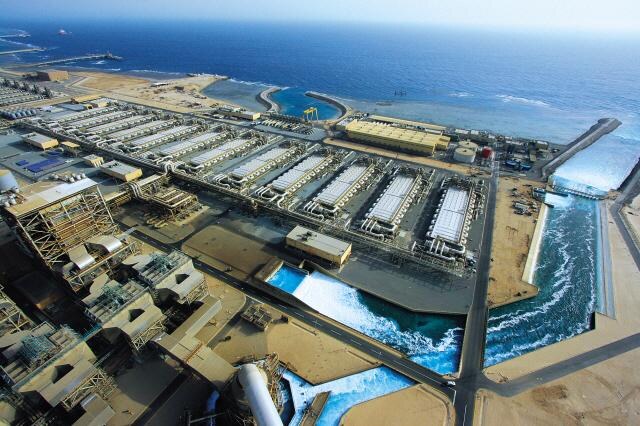

RIYADH: Saudi Arabia’s water sector witnessed significant shifts in 2023, with a 31 percent increase in desalinated seawater production, now comprising 50 percent of the country’s distributed water supply, up from 44 percent in 2022, official data showed.
According to the General Authority for Statistics’ latest Water Accounts report, non-renewable groundwater consumption by the agricultural sector dropped by 7 percent to 9,356 million cubic meters, compared to 10,044 million m³ in 2022.
This surge reflects the Kingdom’s strategic efforts to bolster sustainable water resources as part of its Vision 2030 agenda, aimed at reducing dependency on non-renewable groundwater.
In 2023, renewable groundwater abstraction rose to 21 percent of total groundwater use, while non-renewable abstraction fell by 6 percent, aligning with the country’s emphasis on resource preservation. Additionally, water reuse consumption increased by 12 percent to 555 million m³, signaling progress in recycling initiatives.
Agriculture remained the largest consumer of water, using 12,298 million m³, but its expenditure share accounted for only 0.5 percent of total water costs. Meanwhile, industry dominated water-related expenditures at 61.4 percent, reflecting its significant reliance on distributed water for operations.
The shift toward desalinated and renewable water sources is pivotal for Saudi Arabia, which faces acute water scarcity challenges. With groundwater resources depleting and the per capita household water consumption declining from 112.8 liters per day in 2022 to 102.1 liters in 2023, the Kingdom’s investments in desalination and reuse technologies underscore its commitment to long-term water security.
Industrial sectors saw a notable increase in water consumption, with the share of distributed water used by industries rising to 30 percent in 2023 from 22 percent in 2022. This surge mirrors the Kingdom’s push for industrial expansion under Vision 2030, which emphasizes economic diversification.
Despite these strides, non-renewable groundwater still constitutes 62 percent of the natural water supply, a decline from 68 percent in 2022 but still a dominant figure. The agriculture sector’s significant water use highlights opportunities for adopting more efficient irrigation techniques and exploring crop diversification to enhance sustainability.
Saudi Arabia’s water strategy is set to play a critical role in achieving its economic and environmental goals. As the Kingdom continues to expand its desalination infrastructure and promote water reuse, it positions itself as a regional leader in tackling water scarcity through innovation and sustainable practices.


