

Experience the horror house with a Saudi twist at Souq Al-Awaleen

1 / 6
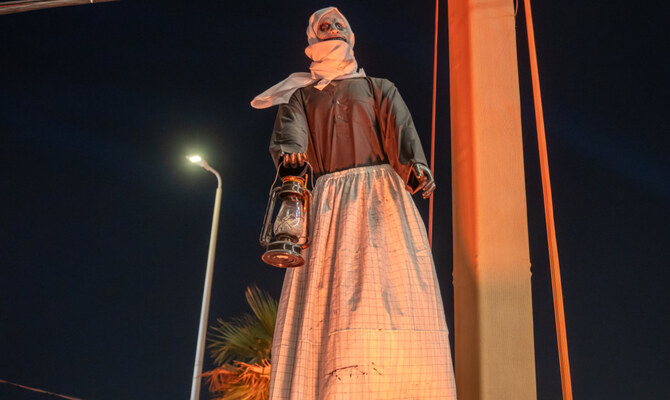
One of the standout attractions in the souq is the horror house themed around Saudi folklore. (AN photo by Loai El-Kelawy)
2 / 6
One of the standout attractions in the souq is the horror house themed around Saudi folklore. (AN photo by Loai El-Kelawy)
3 / 6
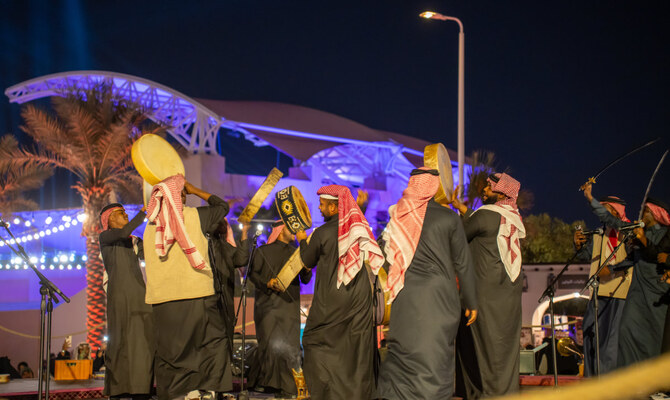
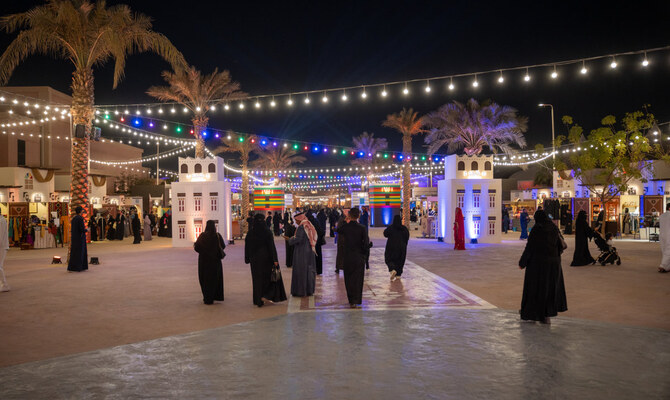
From the northern to the eastern regions of Saudi Arabia, Riyadh’s Souq Al-Awaleen unites the diverse cultures of the Kingdom. (AN photo by Loai El-Kelawy)
4 / 6
From the northern to the eastern regions of Saudi Arabia, Riyadh’s Souq Al-Awaleen unites the diverse cultures of the Kingdom. (AN photo by Loai El-Kelawy)
5 / 6
From the northern to the eastern regions of Saudi Arabia, Riyadh’s Souq Al-Awaleen unites the diverse cultures of the Kingdom. (AN photo by Loai El-Kelawy)
6 / 6
From the northern to the eastern regions of Saudi Arabia, Riyadh’s Souq Al-Awaleen unites the diverse cultures of the Kingdom. (AN photo by Loai El-Kelawy)
Short Url
Updated 05 January 2025
Follow

Experience the horror house with a Saudi twist at Souq Al-Awaleen

  • Visitors are warmly welcomed by actors representing different regions of the Kingdom

RIYADH: From the northern to the eastern regions of Saudi Arabia, Riyadh’s Souq Al-Awaleen unites the diverse cultures of the Kingdom.

Visitors are greeted with warm welcomes from actors representing each region, allowing them to appreciate the variety of Saudi traditions and the distinct traditional outfits of every area.

Guests can explore the culture of coastal cities, like Jeddah, and mountainous regions such as Asir, experiencing a true melting pot of Saudi culture. They can don the flower headbands and traditional attire of the southern people, and take part in the Ardah dance from the central Najd region, brandishing Arabian swords.

The immersive experience continues as actors reenact everyday life, such as teaching in a classroom. Visitors can sit at school desks, use chalk to write on the blackboard, and take an Arabic language class that evokes nostalgic memories for many.

Additionally, guests can step into an old prison to imagine life behind bars, and browse a selection of nostalgic toys that offers a delightful trip down memory lane.

Each corner of the souq tells a unique story, offering authentic handicrafts, traditional attire and an array of spices that capture the essence of various regions. 

HIGHLIGHT

Visitors can sit at school desks, use chalk to write on the blackboard, and take an Arabic language class that evokes nostalgic memories for many.

One of the standout attractions in the souq is the horror house themed around Saudi folklore, known as Al-Sa’alawa. The chilling experience is inspired by tales of a mysterious creature that has captivated the imagination of many.

The Al-Sa’alwa tent offers a thrilling horror house experience that immerses visitors in the legends of Saudi folklore. Osama Al-Balawai, an actor in the tent, describes the creature Al-Sa’alwa, which has become the subject of various interpretations.

Some view it as a ghost, others as a male figure, while some believe it takes the form of a beautiful woman. Regardless of its form, caution is advised when encountering this enigmatic being.

“Join us at the Al-Sa’alwa tent for an unforgettable experience,” Al-Balawai told Arab News. “Will you emerge safe, or will you be captivated by the legend?

“We encourage you to visit Souq Al-Awaleen to partake in this thrilling adventure. We can’t wait to see you there!”

In addition to the horror experience, Arab News discovered Bin Ghaith Textiles, a fabric shop in the market. Owner Hassan passionately shared his love for textiles, highlighting their historical significance.

“My passion is textiles and the history behind them,” he said. “I collect organic fibers and enjoy exploring what people wore before the rise of synthetic materials. This gives me a chance to connect with history.”

Hassan said that his interest lies in the organic materials used in the past, such as linen, cotton, silk and wool, contrasting sharply with today’s disposable fashion culture.

“The market is the heart of any city,” he said. “It reflects the identity of the place, offering insights into its culture and history.”

This year marks Hassan’s second time at Souq Al-Awaleen, where he appreciates the diverse crowd that arrives to explore the rich tapestry of Saudi heritage.

“The younger generation is especially curious about what their ancestors wore and how textiles have evolved,” he said. “It’s essential to preserve this knowledge and tradition.”

The market, which offers free entry, also hosts handicrafts, folk art and live performances. Local artisans have a platform to showcase their work, and visitors can take part in workshops focusing on traditional Sadu weaving and pottery.

In addition to its artisanal offerings, Souq Al-Awaleen serves up a taste of authentic Saudi cuisine at Sufrat Al-Deira. The atmosphere evokes a bygone era, enhanced by cooking demonstrations and other cultural performances.

This year’s Riyadh Season runs until March 2025 and has already drawn more than 13 million attendees, according to the Saudi Press Agency.


Rebuilding lives: Saudi initiative gives fresh hope to amputees

Updated 08 December 2025
Follow

Rebuilding lives: Saudi initiative gives fresh hope to amputees

  • Baitureh Health Association has provided life-changing support to more than 1,000 people
  • Prosthetic limbs can cost up to $76,000

MAKKAH: The Baitureh Health Association for the Care of Amputees has quickly become one of Saudi Arabia’s most impactful humanitarian initiatives, transforming support for people with lost limbs.

Established in 2020, the association deals with people’s physical, psychological and social needs and fills a long-standing gap in the national health system.

CEO Badr bin Alyan told Arab News that the initiative was created in response to a growing need, driven by amputations linked to accidents, blood disorders, occupational injuries and other causes.

Its operations were “based on service integration rather than fragmentation, enabling beneficiaries to return to their lives with confidence, ability and independence,” he said.

This holistic process covers everything from initial evaluations to psychological and physical rehabilitation, family support, prosthetic fitting and ongoing maintenance.

Its psychological support programs include group sessions led by certified mentors who have undergone similar experiences, as well as field visits to support patients before and after amputation.

More than 1,000 people across the Kingdom have so far benefitted from the association’s work, about 10 percent of them children, whom Alyan said were “the most sensitive and the most in need of intensive psychological and family support.”

Its specialist programs for children — My First Step and Therapeutic Entertainment — help young people adapt to prosthetics, overcome trauma and build confidence in a safe and supportive setting.

The association has completed more than 300 prosthetic fittings, including silicone cosmetic limbs, mechanical, hydraulic, electronic and 3D-printed models. 

Alyan said the type of prosthetic selected depended on a number of factors, such as age, lifestyle, type of amputation, activity level and psychological readiness.

Children also have to undergo frequent adjustments to their new limbs to account for their growth.

Each prosthetic cost between SR20,000 ($5,300) and SR285,000, Alyan said.

The association funds its work through sponsorships, community contributions and strategic partnerships.

Despite its success, Alyan said there were still challenges to be faced, including the lack of a consolidated base for the provision of psychological support and therapy services and prosthetics development and maintenance.

There was also a shortage of local experts, he said.

In response, the association set up a rehabilitation center, which Alyan said would help to localize prosthetics manufacturing, reduce costs and accelerate fitting processes and create opportunities for local experts to develop their knowledge and experience.

But providing prosthetics was only part of the association’s work, he said.

“Rebuilding a human life is the deeper goal.”