LONDON: Lawlessness has become a grim feature of daily life in the Gaza Strip, where gangs now routinely attack aid convoys bringing much-needed assistance into the embattled territory, crippling the international relief effort.
Already struggling under the pressure of Israeli restrictions on aid entering the enclave, the theft of these deliveries has compounded the humanitarian crisis, leaving scores of civilians to die from cold, dehydration, and malnutrition.
Those convoys that avoid the gangs then run the gauntlet of air attacks as Israel pounds northern Gaza in its ongoing offensive against the Palestinian militant group Hamas.
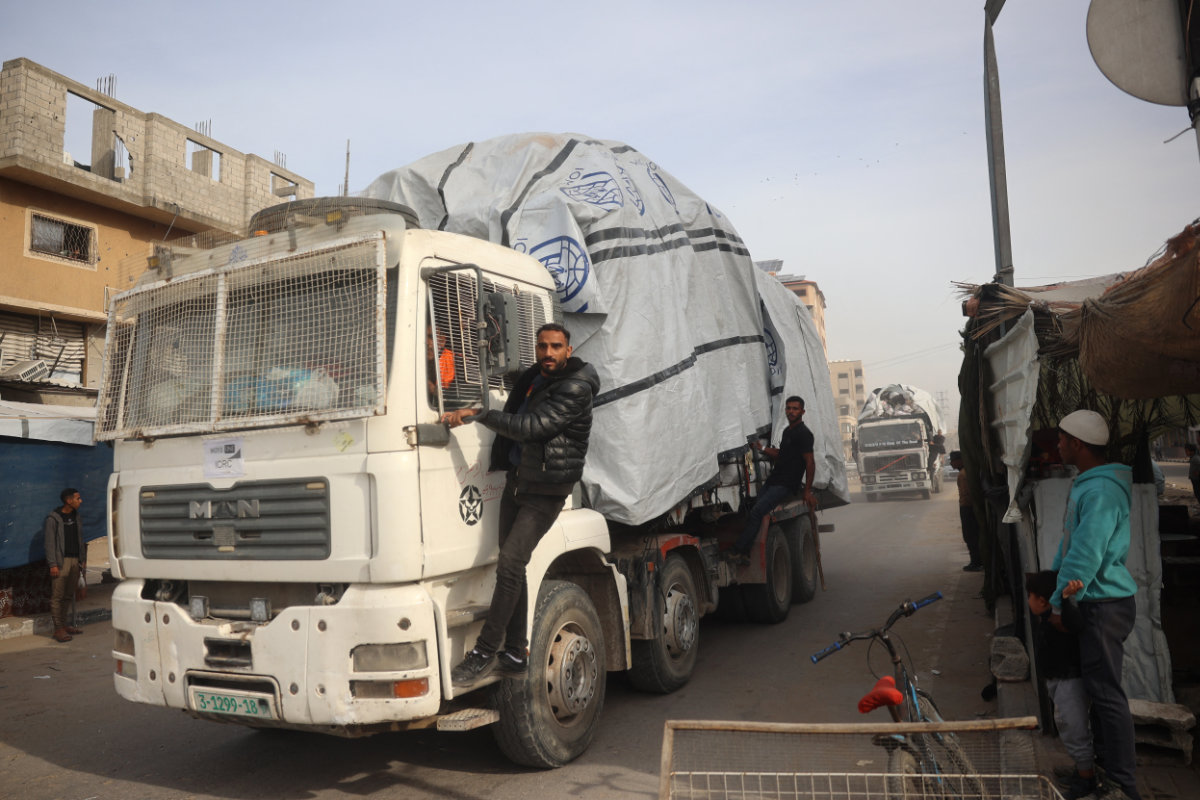
Men stand guard on the side of trucks carrying humanitarian aid as a convoy drives on the main Salah al-Din road in the Nuseirat refugee Camp in the central Gaza Strip on December 7, 2024, amid the ongoing conflict between Israel and the Palestinian Hamas militant group. (AFP)
Tom Fletcher, the UN undersecretary-general for humanitarian affairs and emergency relief coordinator, has sounded the alarm about the worsening humanitarian situation, describing the context for aid delivery as among “the most dangerous” in the world.
“We deal with tough places to deliver humanitarian support,” he said in a statement on Dec. 23. “But Gaza is currently the most dangerous, in a year when more humanitarians have been killed than any on record.”
As of late November, at least 333 humanitarian aid workers had been killed in Gaza since the Oct. 7, 2023, Hamas-led attack on southern Israel sparked the conflict, according to UN figures.

Most of the casualties are staff of the UN Relief and Works Agency for Palestine Refugees in the Near East and the International Red Cross and Red Crescent Movement.
UN and US officials have accused Israel of failing to prevent gangs from looting aid convoys in Gaza, despite an October pledge to act quickly to improve the dire humanitarian situation in the enclave.
Israel denies deliberately restricting aid to Gaza or ignoring the proliferation of gangs and organized crime. It also accuses Hamas of diverting aid.
Cold winter conditions have made matters even worse for Gaza’s children. On Dec. 26, at least three infants died from hypothermia in Al-Mawasi refugee camp as temperatures dropped, the Palestinian news agency WAFA reported.

Palestinians wait to collect portions of humanitarian aid food at the al-Shati camp near Gaza City on December 26, 2024. (AFP)
Exacerbating the situation, the Israeli government voted in October to ban UNRWA — the sole provider of aid to more than 2 million people in Gaza — starting from January. The ban follows Israeli claims that nine UNRWA staff were involved in the Oct. 7, 2023, attack.
Robert Blecher, director of the Future of Conflict program at International Crisis Group, believes Israel is “within its rights to block UNRWA on, say, national security grounds, so long as that exclusion in and of itself does not deprive civilians of aid.”
He told Arab News that although international humanitarian law “requires the rapid and unimpeded passage of humanitarian aid to those in need,” it “does not specify who must be permitted to deliver the aid.”
Two Israeli officials told The Times of Israel newspaper that the government has considered hiring private contractors to secure and deliver relief in Gaza, preventing diversion by Hamas and other armed groups.
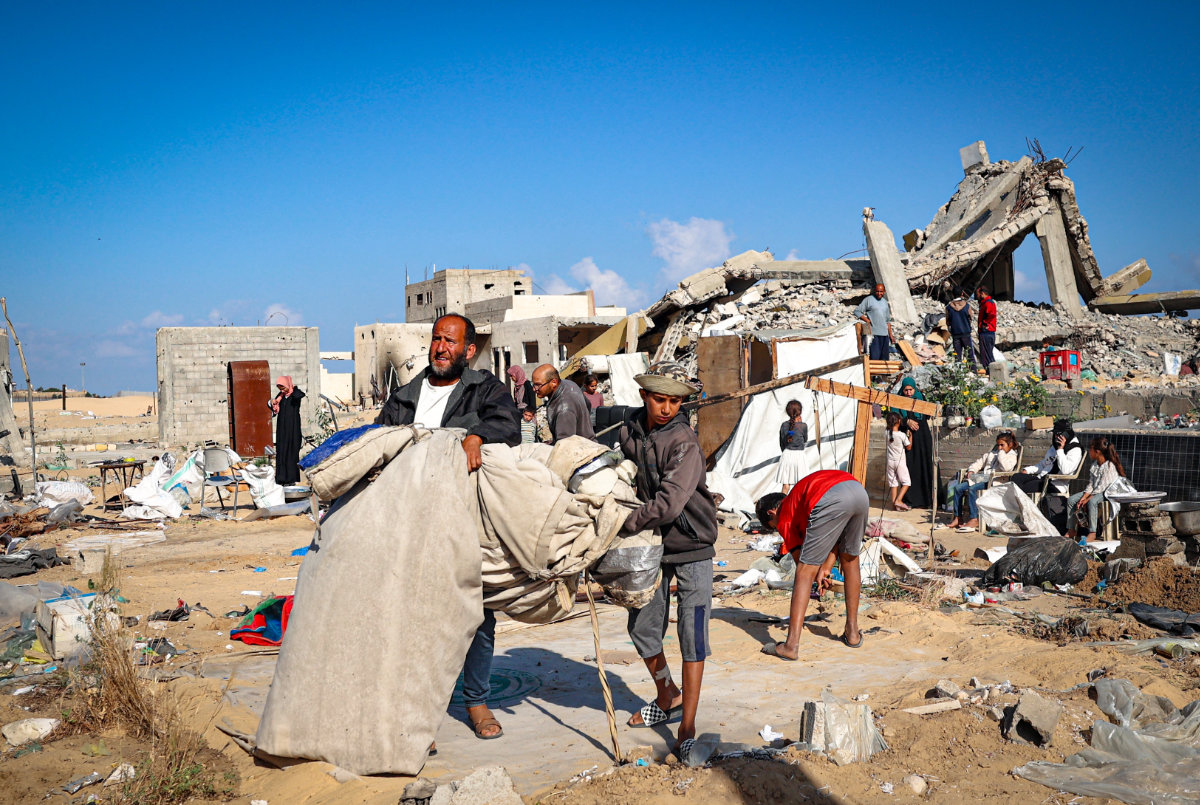
Displaced Palestinians pack their belongings and tents before leaving an unsafe area in Rafah on May 15, 2024, as Israeli forces continued to battle and bomb Hamas militants around the southern Gaza Strip city. (AFP)
Blecher described the issue of private security contractors distributing food as a question of “feasibility,” saying:
“Theoretically speaking, if the private security contractors were to be brought in as part of a political agreement between Israel and the Palestinians to solve a technical problem, then yes, their involvement could be feasible.
“There would still be challenges of accountability and capacity, as well as a broader chipping away at the global humanitarian system, but in theory, it could work.”
Nevertheless, there are doubts about whether a state, whose prime minister and former minister of defense have been accused by the International Criminal Court of weaponizing starvation, would follow through with such a plan.
“If private security contractors are brought in without a political agreement as a replacement for Israeli soldiers, they will be seen as occupiers and treated as such,” said Blecher. “That’s the more likely scenario.”
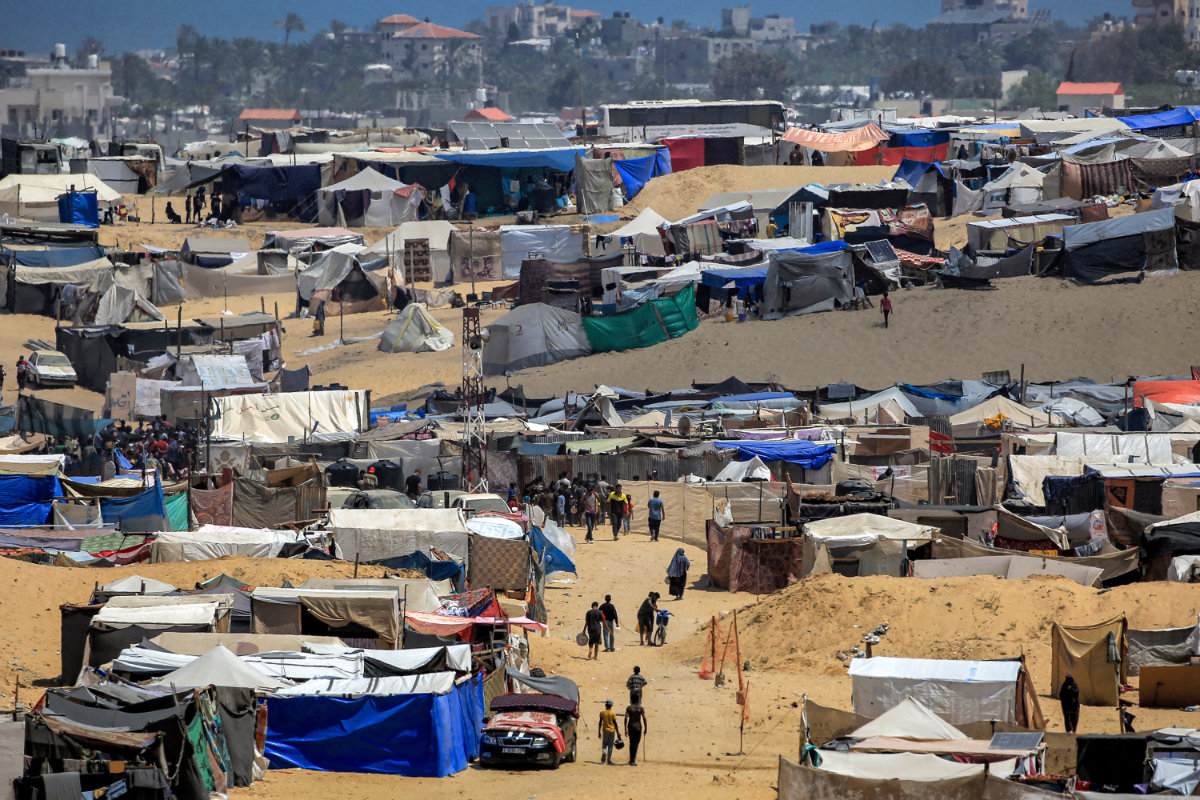
Tents sheltering displaced Palestinians in Rafah in the southern Gaza Strip are pictured on June 4, 2024 amid the ongoing conflict in the Palestinian territory between Israel and Hamas. (AFP)
Under international humanitarian law, Israel, classified as an occupying power in Gaza, is obligated to “take all the measures in its power to restore, and ensure, as far as possible, public order and safety.”
In addition, Article 55 of the Fourth Geneva Convention requires Israel to ensure the provision of food and medical supplies to the population, while Article 56 mandates the maintenance of medical and hospital services, as well as public health and hygiene, in the occupied territory.
“It seems pretty clear to everyone that Israel is the occupying power and therefore is responsible for the well-being of the civilian population,” Khaled Elgindy, a senior fellow at the Middle East Institute, told Arab News.
“Obviously, almost everything that Israel is doing is contrary to that.”
He added: “It has heavily restricted food and humanitarian aid as a matter of policy. That was clear from day one in the pronouncements of Israeli leaders. And it’s been clear ever since.
“Now, many different groups have concluded — including Oxfam, humanitarian organizations, human rights groups, and even agencies within the US government — that Israel is using starvation as a weapon of war.”
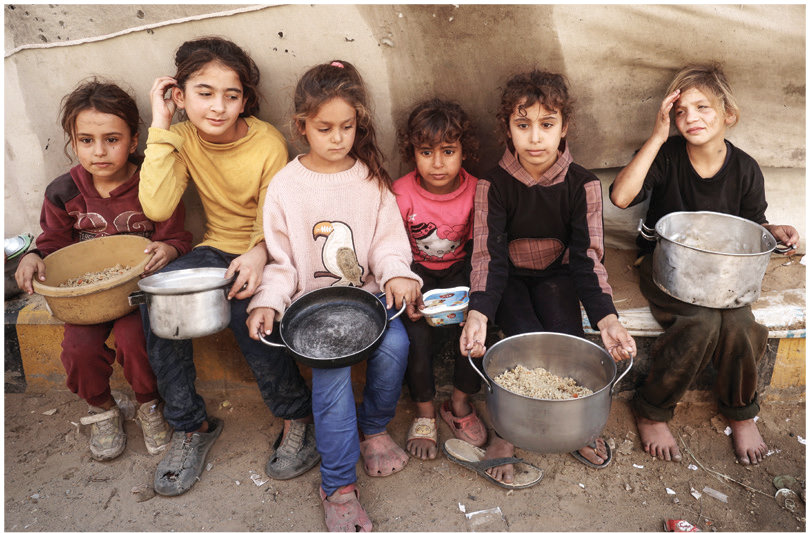
Palestinian children wait for their food ration at a refugee camp in Gaza. (AFP file)
Tightening the noose on Gaza’s war-stricken population are the rising attacks on aid convoys. In October, $9.5 million worth of food and other goods were looted, representing nearly a quarter of all the humanitarian aid sent to Gaza that month, according to UN figures.
Preliminary data indicates that looting in November was significantly worse.
In one of the single worst incidents, in mid-November, a 109-truck convoy chartered by UN agencies was attacked shortly after it was permitted to pass through a southern Gaza border crossing at night, several hours earlier than previously scheduled, according to Reuters.
Although they were stationed nearby, Israeli troops reportedly did not intervene as gunmen from multiple gangs surrounded the convoy, forced the drivers out, and stole flour and other food items.
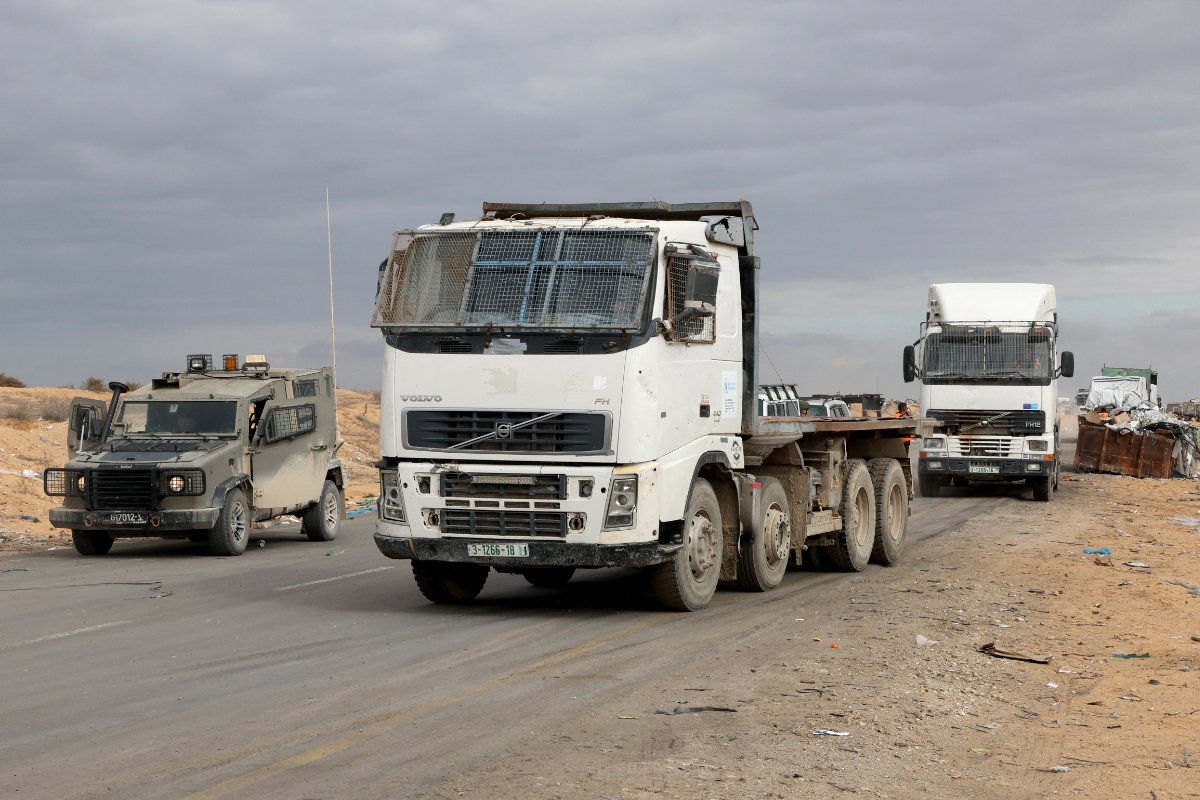
Israeli soldiers keep watch as trucks arrive to pick up aid destined for the Gaza Strip from a drop-off area near the Kerem Shalom crossing, also known as Karm Abu Salem, on November 28, 2024. (AFP)
Despite the deconfliction process, in which humanitarian groups share their coordinates and agree with Israeli authorities on when and how aid is delivered, relief convoys “are still being targeted,” making it “very difficult to deliver anything,” said Elgindy.
“That’s why in many instances, we’ve seen groups like UNRWA, World Central Kitchen, and others have to suspend their aid operations in certain moments and certain places because they can’t guarantee the safety of those delivering the aid.”
Israeli forces have also been implicated in attacks on aid convoys, although they have denied deliberately targeting them. In one such attack in April, Israeli drone operators fired on three World Central Kitchen vehicles, killing seven aid workers and forcing the nongovernmental organization to pause operations in Gaza.
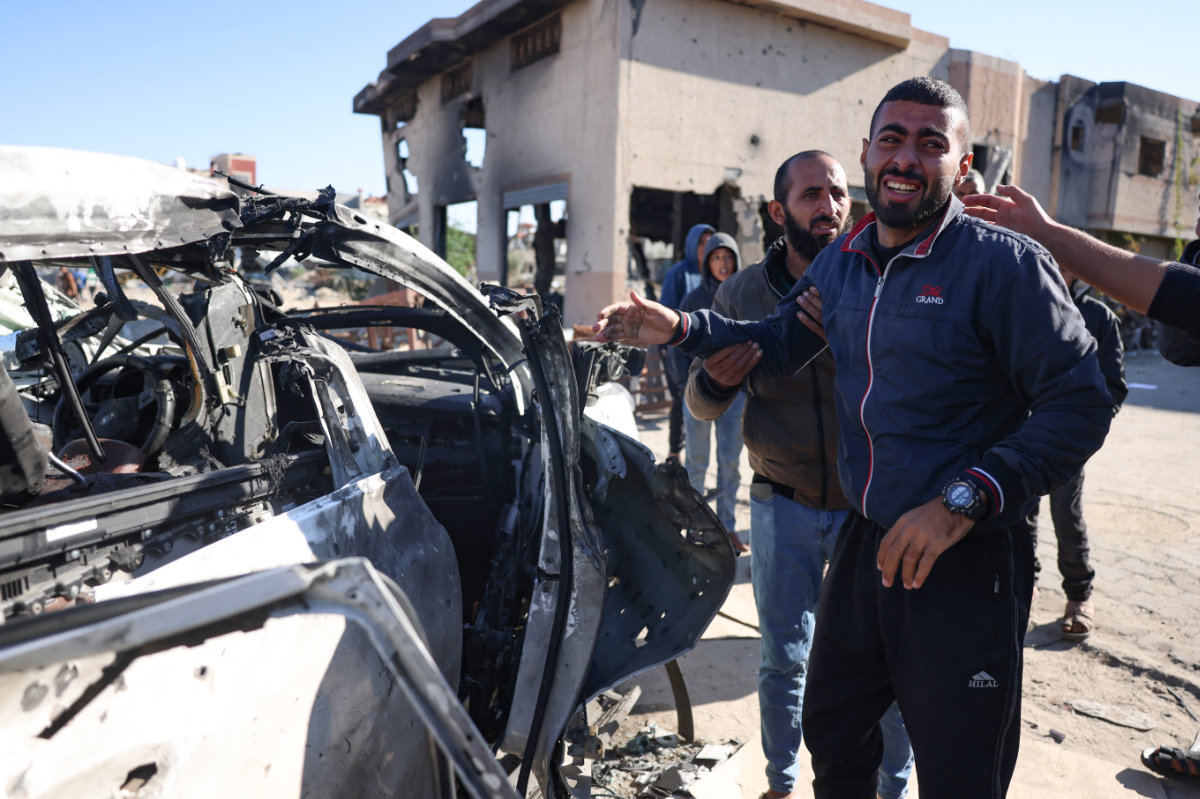
People react in front of a car hit by an Israeli strike in Khan Yunis in the southern Gaza Strip on November 30, 2024, in which five people were reported killed, including three World Central Kitchen workers. (AFP)
In an effort to restore order after Israel began targeting police officers in early 2024, citing their role in Hamas governance, Hamas told the BBC in November it was working on a plan to restore security to 60 percent of Gaza within a month, up from less than 20 percent.
And while some Gazans in the south welcomed the effort, others saw it as an attempt to take control of lucrative black markets.
Indeed, some Palestinians on social media have reported having to buy items that were originally intended for aid distribution.
Israel “has not allowed Hamas — the governing authority in Gaza — to regroup even as a civilian force, as a police force,” said Elgindy.
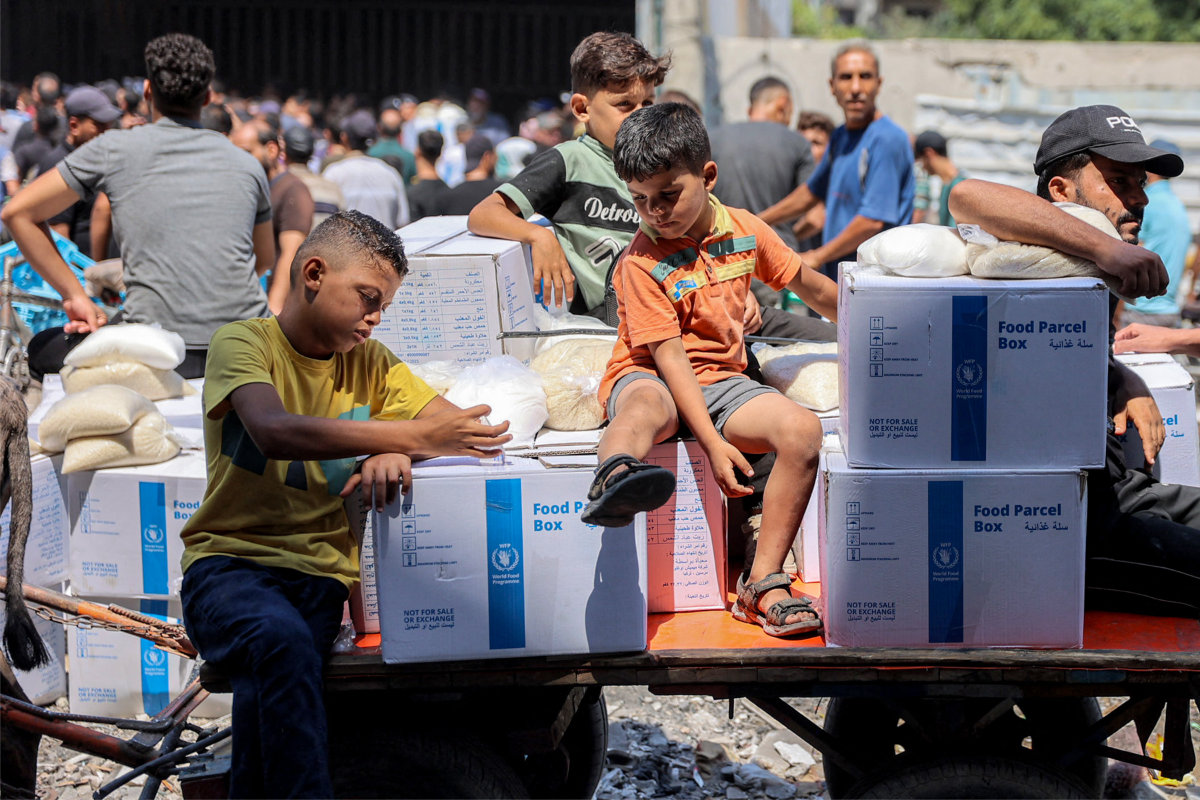
Boys sit on a cart with humanitarian aid packages provided by the United Nations Relief and Works Agency for Palestine Refugees (UNRWA) in central Gaza City on August 27, 2024. (AFP)
In the absence of law and order, he said Gaza has descended into a situation governed by “the law of the jungle.
“Whoever has guns — gangs and armed groups — will commandeer aid,” he said. “There have also been cases where Israeli authorities are within eyesight of the looting and they do not intervene.”
Israel is therefore “not meeting any of its obligations” under international humanitarian law, “not even in the most minimal sense of providing for the welfare of the civilian population.”