

Pakistan naval chief lauds fleet readiness, highlights role in securing vital maritime zones

In this handout photo, taken and released by Pakistan Navy on January 3, 2025, Chief of the Naval Staff Admiral Naveed Ashraf gestures for a group photograph with prize winners of Fleet Efficiency Competition Parade 2024 at the Pakistan Navy Dockyard in Karachi. (Photo courtesy: Pakistan Navy)
Short Url
Updated 03 January 2025
Follow

Pakistan naval chief lauds fleet readiness, highlights role in securing vital maritime zones

  • Admiral Naveed Ashraf witnesses Pakistan Navy’s annual efficiency competition parade in Karachi
  • Ashraf praises officers and sailors for achieving the operational objectives and milestones in 2024

ISLAMABAD: Chief of the Naval Staff Admiral Naveed Ashraf on Friday expressed satisfaction with the operational readiness of Pakistan’s fleet, highlighting its critical role in safeguarding strategic maritime zones, including Gwadar Port developed under the China-Pakistan Economic Corridor (CPEC), to boost trade and regional connectivity.
The Gwadar Port, a vital link in Pakistan’s efforts to enhance regional trade, has been at the center of the country’s push to convince landlocked Central Asian states to utilize its ports for international trade via sea lanes.
The navy has also been instrumental in fostering the development of Pakistan’s blue water economy, ensuring maritime security and facilitating economic growth.
“Chief of the Naval Staff expressed complete satisfaction and confidence in the operational readiness of Pakistan Navy Fleet,” the navy said in a statement after holding fleet annual efficiency competition parade. “He lauded the dedication and professionalism of officers and sailors in safely and efficiently achieving the operational objectives and milestones for the year 2024.”
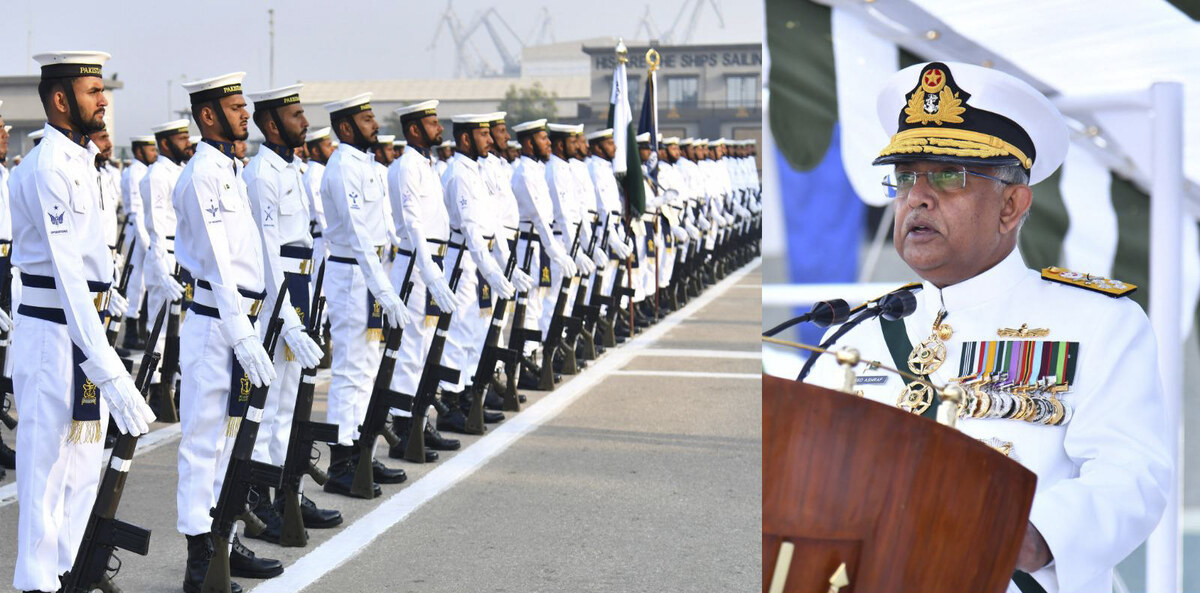


In this handout photo, taken and released by Pakistan Navy on January 3, 2025, Chief of the Naval Staff Admiral Naveed Ashraf speaks at the Fleet Efficiency Competition Parade 2024 at the Pakistan Navy Dockyard in Karachi. (Photo courtesy: Pakistan Navy)

“He highlighted Pakistan Navy’s efforts to ensure the security of strategic maritime zones, particularly Gwadar Port and maritime projects under CPEC,” it added.
The parade was held at the dockyard in Karachi. The naval chief attended the event as the chief guest and elaborated on the evolving maritime security challenges in the region.
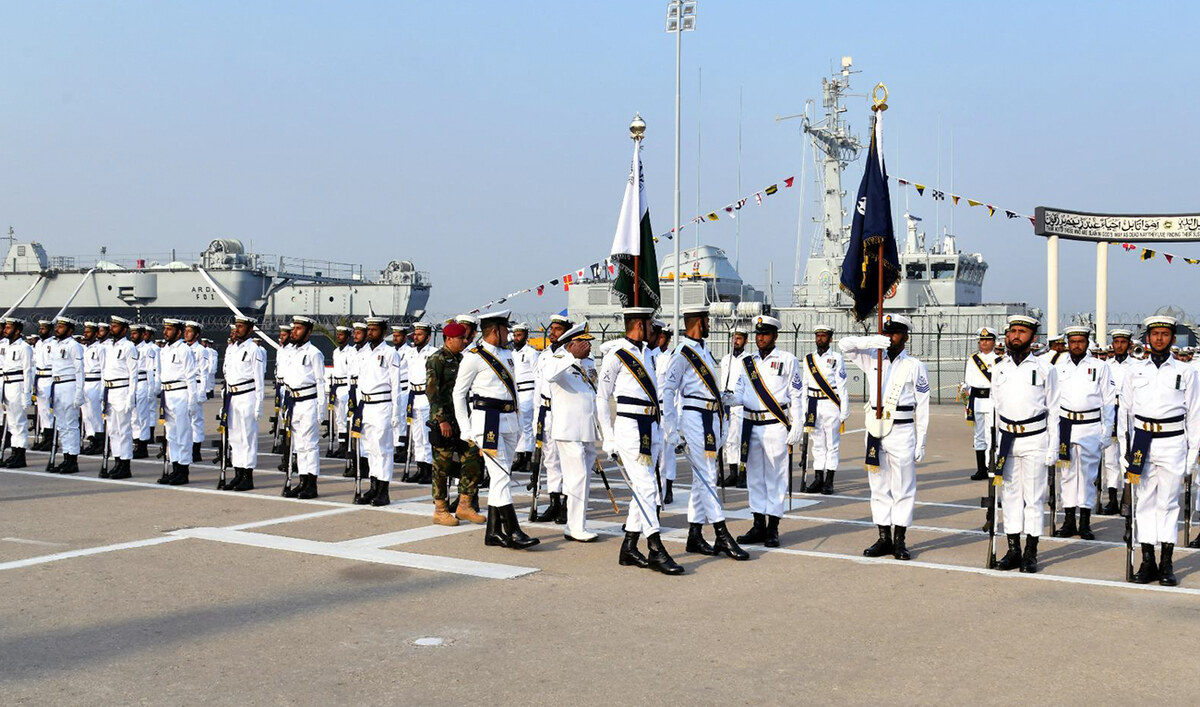


In this handout photo, taken and released by Pakistan Navy on January 3, 2025, Chief of the Naval Staff Admiral Naveed Ashraf reviews the guard at the Fleet Efficiency Competition Parade 2024 at the Pakistan Navy Dockyard in Karachi. (Photo courtesy: Pakistan Navy)

He also stressed the need for the navy to remain vigilant and prepared to counter any threats to Pakistan’s maritime boundaries.
Earlier, Commander Pakistan Fleet Rear Admiral Abdul Munib, in his welcome address, highlighted the fleet’s operational achievements over the past year.
Awards and trophies were presented to the best-performing squadrons and units during the ceremony, recognizing their exemplary contributions to the navy’s operational success in 2024.


Pakistan PM calls for faster CPEC implementation, pledges security for Chinese workers

Updated 27 February 2026
Follow

Pakistan PM calls for faster CPEC implementation, pledges security for Chinese workers

  • Shehbaz Sharif pushes expanded cooperation in agriculture, IT and mining under CPEC phase two
  • Chinese envoy reaffirms Beijing’s support for Pakistan’s sovereignty and economic development

ISLAMABAD: Prime Minister Shehbaz Sharif on Friday called for speeding up projects under the China-Pakistan Economic Corridor (CPEC) and pledged stronger security guarantees for Chinese workers and investments, during a meeting with China’s ambassador in Islamabad.

Sharif made the remarks as the two countries strive to launch the second phase of CPEC, a multibillion-dollar infrastructure and energy initiative launched in 2015 as part of China’s Belt and Road Initiative (BRI).

CPEC’s first phase focused largely on power generation and transport infrastructure aimed at easing Pakistan’s chronic energy shortages and improving connectivity. The second phase seeks to expand cooperation into industrial development, with an emphasis on special economic zones and export-oriented growth.

“While highlighting the importance of accelerating ongoing CPEC projects, the Prime Minister stressed on the need to enhance cooperation in agriculture and IT and mining & minerals,” said a statement circulated by the PM Office after the meeting.

“He also underscored Pakistan’s resolve to provide a secure and conducive environment for Chinese personnel, investments, and institutions in Pakistan,” it added.

Chinese nationals and projects in Pakistan have faced security threats in the past, including attacks by militant groups targeting infrastructure sites and convoys. Islamabad has repeatedly vowed to tighten security and has deployed special protection units for Chinese workers.

China is Pakistan’s closest ally in the region and a key economic partner, with CPEC widely regarded by Islamabad as central to long-term economic growth.

During the meeting, the prime minister conveyed greetings to Chinese President Xi Jinping and Premier Li Qiang, particularly on the occasion of the Chinese New Year.

China’s Ambassador to Pakistan, Jiang Zaidong, reiterated Beijing’s support for Pakistan’s sovereignty and socioeconomic development, according to the statement. Both sides also exchanged views on regional and international issues and agreed to maintain close coordination.