CNN names Pakistan’s scenic Gilgit-Baltistan among best places to visit in 2025

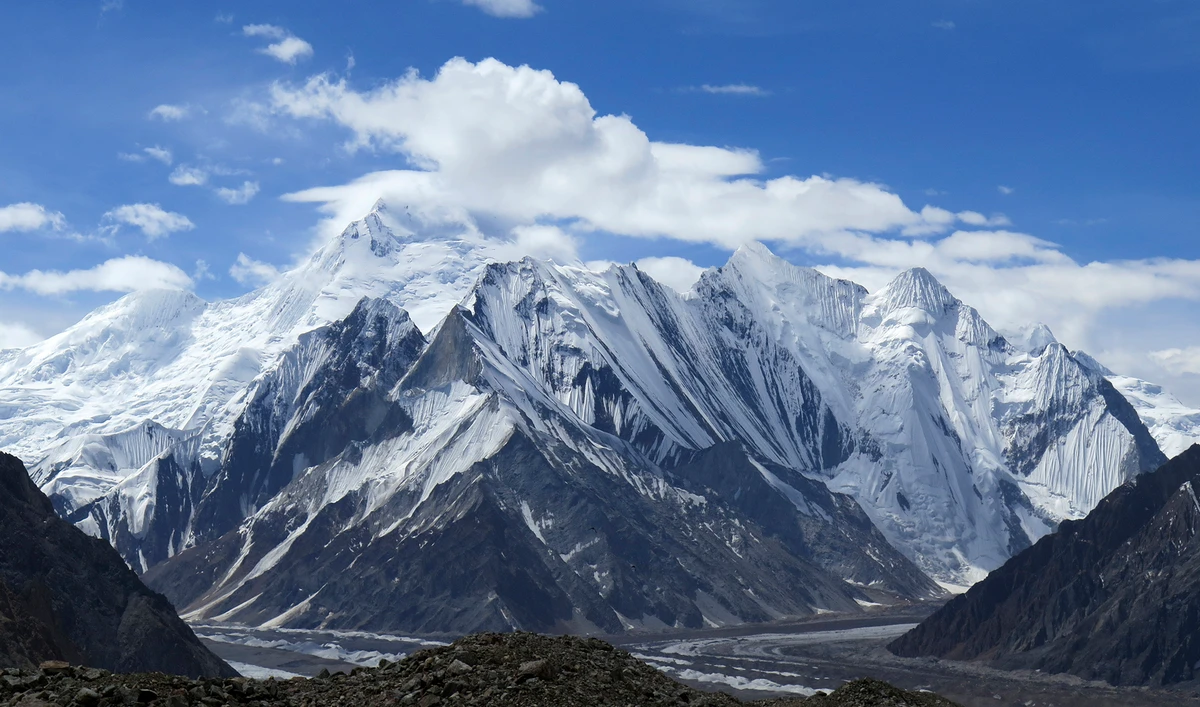
This picture taken on August 15, 2019 shows a view of snow-capped mountains and glaciers from the Concordia camping site in the Karakoram range of Pakistan’s mountain northern Gilgit region. (AFP/File)
Short Url
Updated 03 January 2025
Follow

CNN names Pakistan’s scenic Gilgit-Baltistan among best places to visit in 2025

  • GB, a sparsely populated region, is home to five of the 14 tallest peaks in the world, including K2
  • The region is frequented by thousands of foreigners each year, tour operators also arrange trips

ISLAMABAD: US-based broadcaster CNN has curated a list of 25 destinations that are particularly worth visiting in 2025, naming Pakistan’s scenic Gilgit-Baltistan (GB) region among them.
GB, a sparsely populated northern region administered by Pakistan as an autonomous territory, is home to some of the tallest peaks in the world and a major tourist destination.
Thousands of tourists and foreign climbers visit the region each year for expeditions on various peaks, paragliding and other sports activities.
“The Gilgit-Baltistan region in the Karokoram Mountains isn’t the easiest place to get to — flight schedules can be unreliable, roads can be blocked off seasonally — but it has more tantalizing peaks than a lemon meringue pie,” CNN Travel said this week.
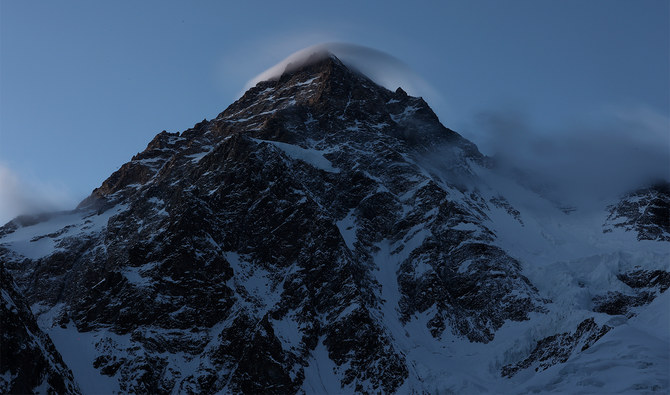


This picture taken on July 15, 2023 shows a view of K2, world’s second tallest mountain from its Base camp in the Karakoram range of Gilgit–Baltistan, Pakistan. (AFP/File)

“It’s home to five of the 14 ‘eight-thousander’ peaks recognized as the world’s highest. That includes K2, the world’s second-tallest mountain but No. 1 in terms of difficulty and danger.”

In terms of tourism and infrastructure, hiking in this region makes the Himalayas look like a traipse in Central Park, but GB is a place where going alone is not an option, according to CNN Travel.
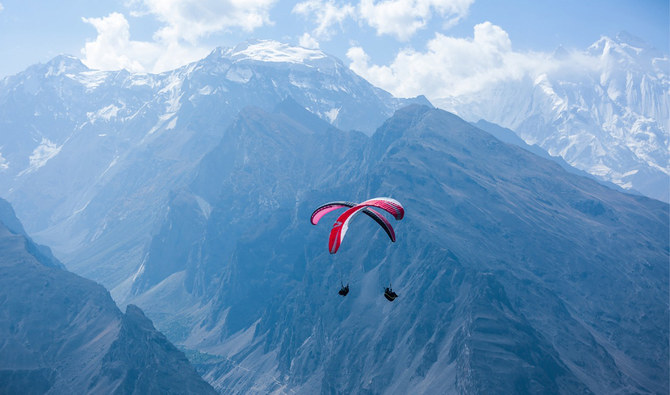


The file photograph posted on October 21, 2019, shows a paraglider is airborne in Pakistan's Gilgit-Baltistan region. (GB Paragliding & Hang Gliding Association/File)

While 2024 saw a surge in mountaineering expeditions in GB, nine mountaineers died last year in their attempts to summit various peaks in the South Asian country, according to the Alpine Club of Pakistan, which arranges various expeditions. Of these climbers, five were from Japan, one from Russia, one from Brazil and two from Pakistan.

GB, however, is accessible through trips organized by reputable global tour operators, including G Adventures and Wild Frontiers, according to CNN Travel.
“Intrepid offers a 10-day, fully supported hike through the region known as ‘Little Tibet’ starting at around $3,000,” it said.
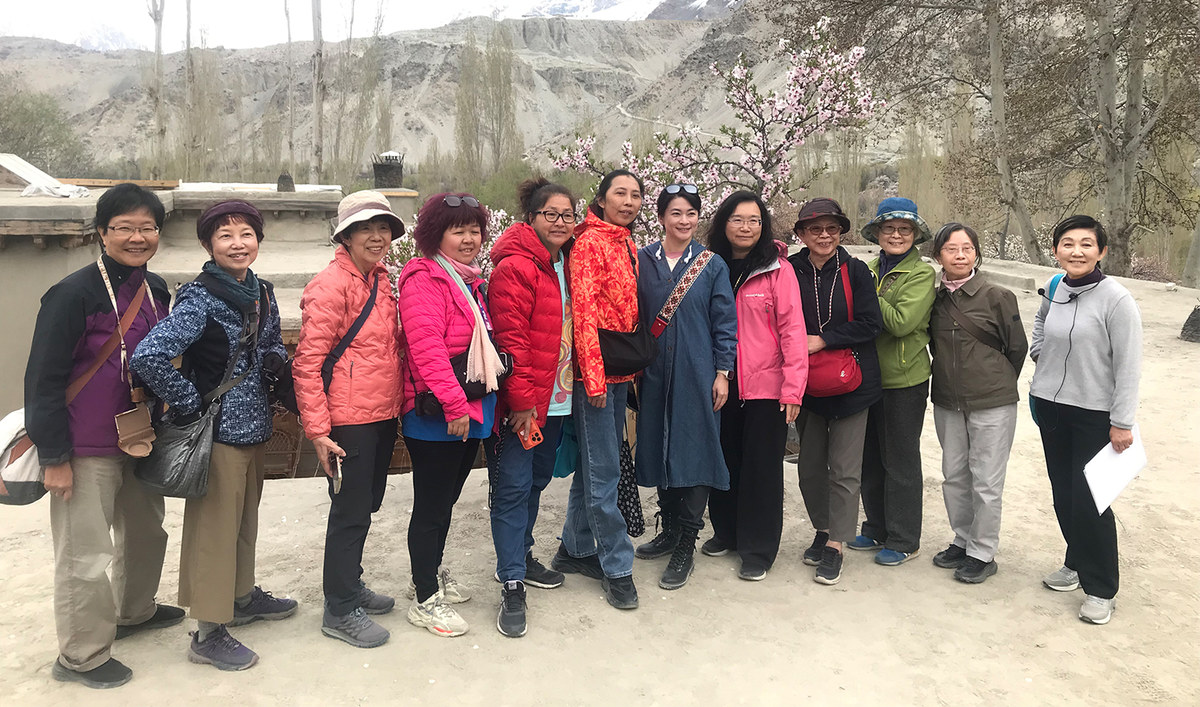


Foreign tourists attend Blossom Festival in Khaplu Valley in Pakistan’s Gilgit-Baltistan region on April 14, 2024. (AN/File)

Other top destinations on the CNN Travel list include Almaty in Kazakhstan, India’s Andaman and Nicobar Islands, Bolivia, Chemnitz in Germany, Morocco’s Rabat, Vancouver Island in Canada, and Turkiye’s Kaçkar Mountains.
Pakistan planning minister says exports must double to $60 billion in four years to avoid IMF

Updated 5 sec ago
Follow

Pakistan planning minister says exports must double to $60 billion in four years to avoid IMF

  • Government may declare “export emergency” under URAAN Pakistan plan
  • Economists warn $60 billion target is ambitious amid weak global growth

KARACHI: Pakistan must double its exports to $60 billion within four years or risk returning to the International Monetary Fund, Planning Minister Ahsan Iqbal said on Thursday, underscoring the scale of the challenge facing the country as it seeks to break its long-standing dependence on external bailouts.

The comments come as the government pushes ahead with URAAN Pakistan (Flying Pakistan), Prime Minister Shehbaz Sharif’s flagship economic transformation plan aimed at reviving growth, improving competitiveness and strengthening external finances in an economy still vulnerable to balance-of-payments pressures.

As part of the push, Sharif has set up a high-level committee led by Deputy Prime Minister Ishaq Dar to drive implementation of the plan and propose measures to accelerate export growth.

“The only way Pakistan could avoid IMF bailouts is to raise exports to $60 billion in four years and to $100 billion over the next decade,” Iqbal told Arab News, warning that failure to sharply expand overseas sales would leave Islamabad with few alternatives.

“[The plan] includes a proposal to declare an export emergency to double export earnings to $60 billion,” he added on the mandate of the newly established economic panel, saying faster tax refunds for export-oriented sectors and the removal of structural bottlenecks would be central to the effort.

Pakistan has struggled for years to expand exports, which rose about five percent last year to $32.1 billion but have weakened in the current fiscal year. Exports fell more than 20 percent to $2.32 billion in December, according to Pakistan Bureau of Statistics data.

Overall shipments declined nine percent to $15.2 billion during July-December FY26, while imports rose 11 percent to $34.4 billion, widening the trade deficit by 35 percent to $19.2 billion, PBS figures show.

“If exports are not increased, we will have to go to our friendly countries for help or go back to the IMF,” Iqbal warned, referring to Pakistan’s long history with the IMF, which has approved 25 loan arrangements for the country since 1950. 

Pakistan last secured a $7 billion IMF program in 2024 to stabilize its economy.

“UNREALISTIC TARGET”

Pakistan has recently lifted its foreign exchange reserves to around $16 billion, but continues to rely on financial support from partners such as China, Saudi Arabia and the United Arab Emirates.

Iqbal said his ministry had briefed Pakistan’s civil and military leadership last month on strategies to reduce dependence on IMF support, adding that the Dar-led committee is expected to submit its recommendations to the prime minister next week.

“Pakistan possesses the potential to achieve these targets,” he said.

Economists, however, are divided on whether the export goal is achievable within the proposed timeframe.

Mohammed Sohail, chief executive officer of Topline Securities, described the target as “ambitious” but said stronger growth in services exports could help narrow the gap.

“While goods exports face challenges due to higher energy charges and taxation, Pakistan should also focus aggressively on services exports which is rising at a fast pace,” Sohail told Arab News.

Pakistan’s services exports rose nine percent to $8.41 billion in FY25, and climbed 17 percent to $3.83 billion in the first five months of the current fiscal year, according to State Bank of Pakistan data.

Others were more skeptical.

“Obviously, this is an unrealistic target,” said Muhammad Saad Ali, head of research at Lucky Investments.

“You cannot double your exports that roughly stand at $30 billion today. You can’t double them in three-four years magically,” he said.

“If we had set a 10-year target, then we would have said that there is a roadmap. But 3-4 years is absolutely not possible.”