


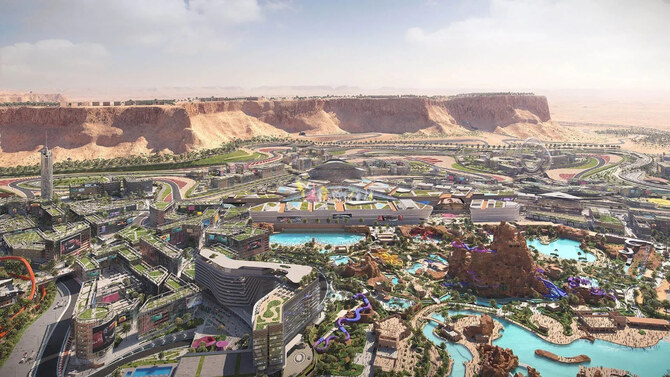

RIYADH: Artificial intelligence is poised to play a transformative role in Saudi Arabia’s urban development, event management and visitor experiences, particularly as the Kingdom prepares to host major global events like the FIFA World Cup 2034.
AI technologies are already central to the Kingdom’s megaprojects, including NEOM and Qiddiya, and are positioning Saudi Arabia as a global leader in innovation and smart city development.
From autonomous transport systems to real-time event coordination platforms, AI-driven communication tools are enhancing efficiency and user engagement in many sectors, particularly sports and entertainment.

“The Saudi Pro League has implemented AI-powered tools like OptaVision to enhance on-field analysis and deepen fan and sponsor engagement,” Amsal Kapetanovic, country manager at Infobip KSA, a communication platform specializing in AI solutions, told Arab News.
“The Saudi Company for Artificial Intelligence has also launched SportNative, an AI-driven sports product suite that optimizes operations and harnesses the full potential of the current sports ecosystem.”
The impact of AI was evident in Riyadh on Dec. 21 when the boxing rematch between Oleksandr Usyk and Tyson Fury featured an experimental fourth judge powered by AI, designed to eliminate bias and human error in scoring.
Opinion
This section contains relevant reference points, placed in (Opinion field)
Beyond enhancing sports, AI is being used to manage large crowds at events, reduce queuing times, and improve navigation, enhancing experiences for visitors.
“AI-powered systems can provide personalized recommendations, real-time translations, and seamless navigation for international visitors,” Kapetanovic said.
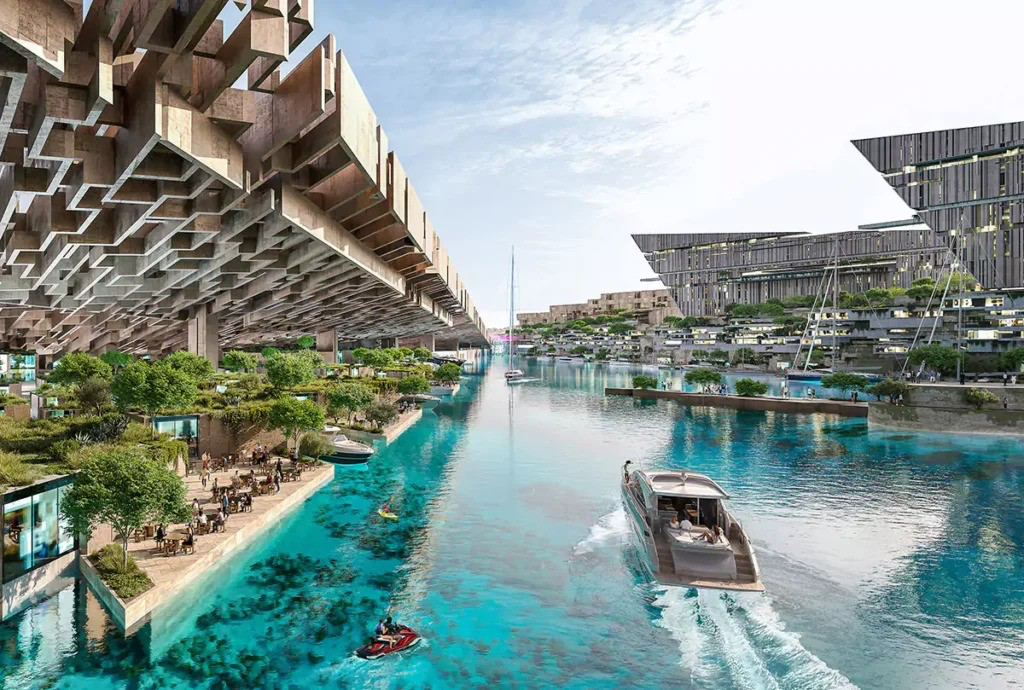
In Saudi Arabia's northwest, the NEOM smart city project is incorporating AI to redefine urban living. (Supplied)
“The Saudi Tourism Authority’s virtual travel companion, SARA, demonstrates how AI delivers real-time insights and information about attractions and events.”
NEOM, Saudi Arabia’s $500 billion smart city project on the Kingdom’s northwest coast, is incorporating AI to redefine urban living. The technology is expected to play a pivotal role in personalizing services, optimizing transport, and enhancing hospitality.
“AI will revolutionize communication technologies in projects like NEOM by facilitating intelligent, scalable, and seamless interactions,” Kapetanovic said. “In NEOM’s envisioned smart city ecosystem, AI-powered platforms could enable real-time collaboration, multilingual translation, and predictive analytics.”
DID YOUKNOW?
• AI technologies are central to Saudi Arabia’s megaprojects, enhancing personalized services, transport, and entertainment experiences.
• AI-powered tools, such as SportNative and OptaVision, optimize sports operations, on-field analysis, and fan engagement in the Kingdom.
• AI systems like SARA provide personalized recommendations, real-time translations, and seamless navigation.
AI is also expected to enhance travel and logistics in NEOM, enabling real-time route planning, efficient cargo management, and predictive maintenance of transport networks.
“These tools have the potential to empower residents, visitors and businesses through dynamic, efficient communication and logistical systems,” Kapetanovic said. “By leveraging AI, NEOM aspires to become a global benchmark for interconnected and sustainable living.”
The influence of AI extends beyond infrastructure to retail and entertainment, where conversational AI is reshaping customer interactions. Data from Infobip revealed a 26 percent increase in customer interactions during Black Friday, reflecting the growing adoption of AI in consumer communications.
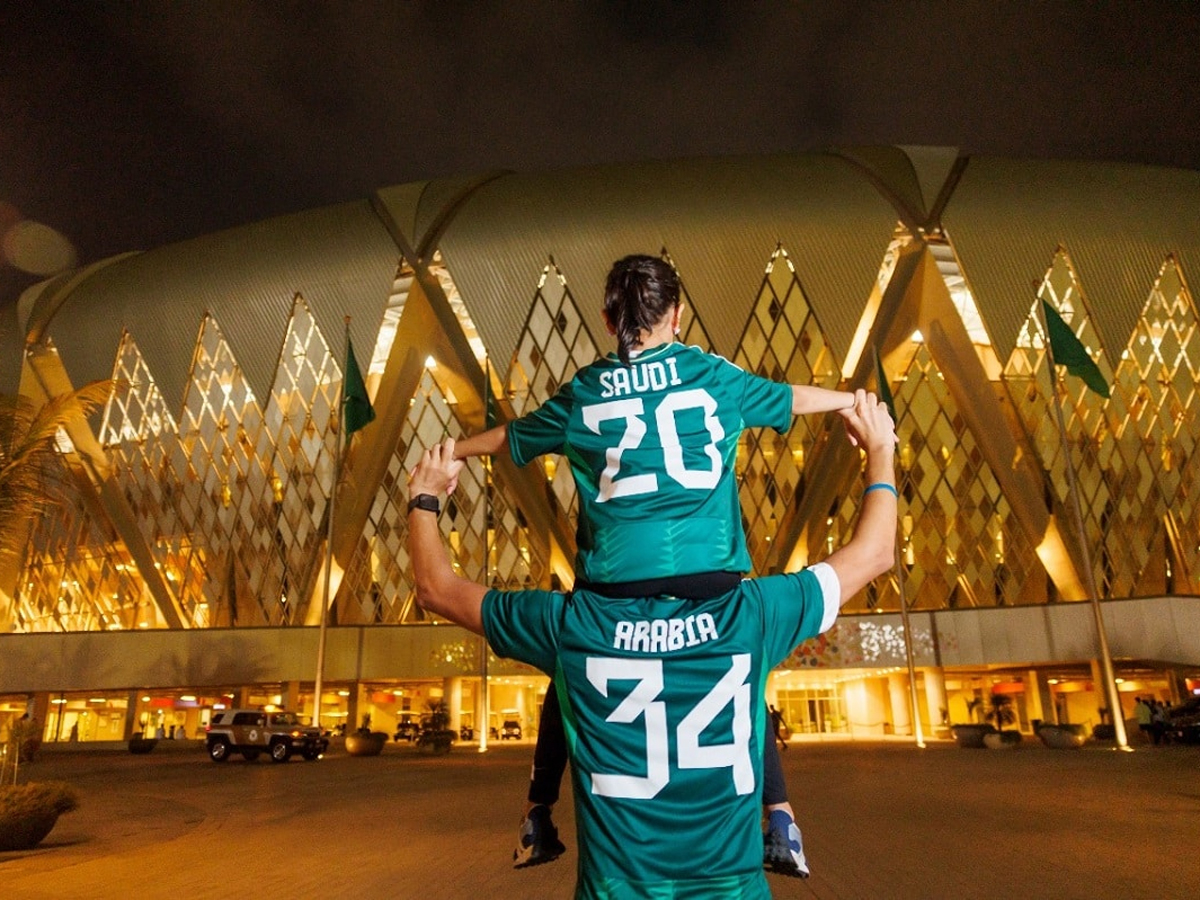
AI is now being used to manage large crowds at events, reduce queuing times, and improve navigation, enhancing experiences for visitors. (Supplied)
“This surge in digital communication aligns perfectly with the smart city vision of projects like NEOM,” Kapetanovic said.
Qiddiya, meanwhile, another megaproject taking shape near Riyadh, is expected to redefine leisure, entertainment and events through advanced AI applications.
In November, software development company Globant and the Qiddiya Investment Company signed an agreement to develop Qiddiya’s “PLAY LIFE Connected Experience,” an AI-powered platform offering personalized itineraries, event bookings, and community engagement.
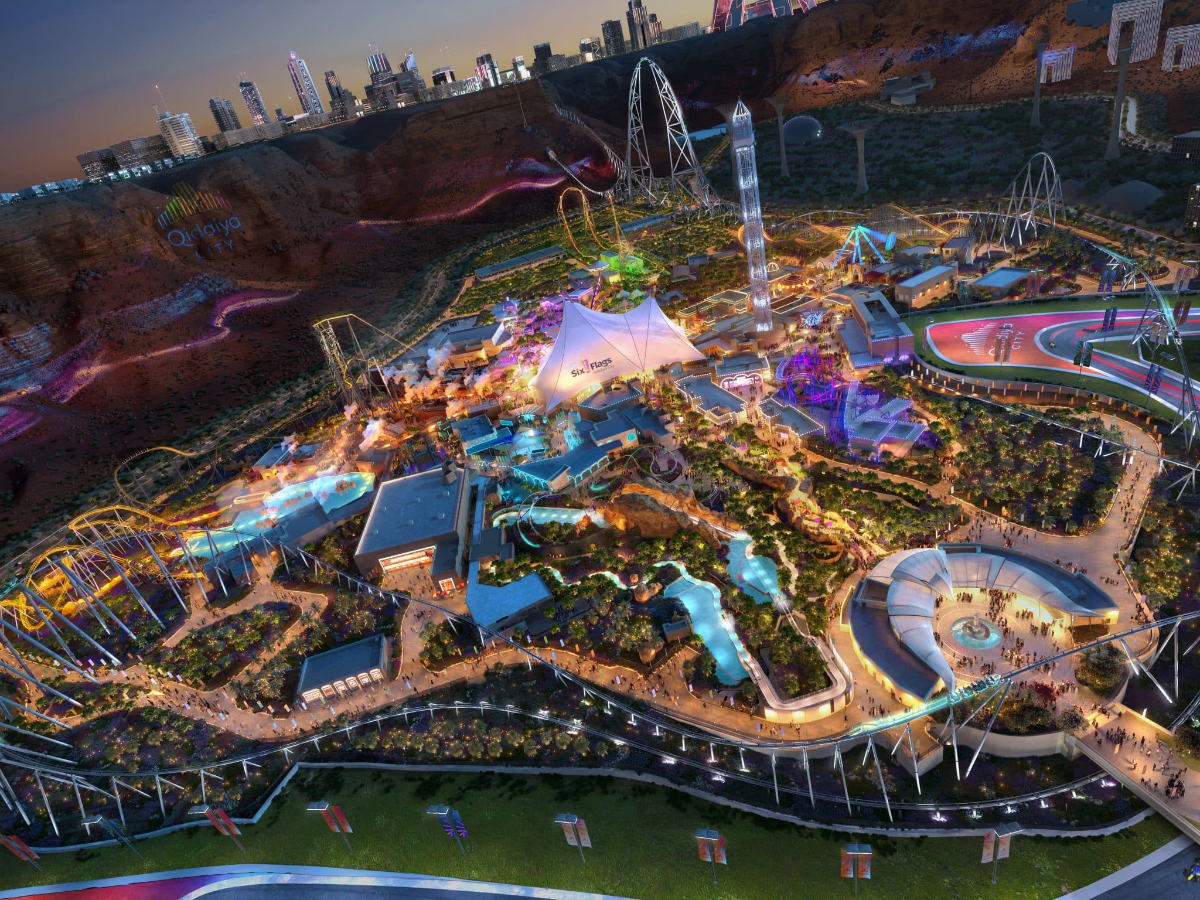
AN AI rendering of the Qiddiya project in Riyadh. (Supplied)
“The platform will allow visitors to book events, manage their itineraries, discover new adventures, and engage with the community through a real-time interface,” Kapetanovic said.
AI is also critical to Saudi Arabia’s Vision 2030 goals, which prioritize sustainable development and quality of life. From predictive maintenance to efficient resource allocation, AI-driven infrastructure advancements are minimizing costs while accelerating progress.
“When it comes to infrastructure, AI could drive predictive maintenance and efficient resource allocation,” Kapetanovic said. “These advancements align with Vision 2030 by fostering innovation, enabling sustainable development, and elevating the quality of life.”


