KARACHI: BIONIKS, a Karachi-based startup specializing in orthotics and prosthetics, has launched a mobile AI-powered limb factory in Gaza to provide customized prosthetic arms and legs to amputees in the conflict-stricken region, the company announced in its newsletter on Wednesday.
The company, established in 2016, announced the initiative as part of its commitment to creating an inclusive world by leveraging cutting-edge technology to transform lives.
The mobile factory is equipped with advanced artificial intelligence tools to design and produce prosthetic limbs, enabling on-site assistance in underserved areas.
“We believe technology has the power to transform lives,” BIONIKS said in a statement. “By taking advanced prosthetic solutions directly to those in need, we aim to restore independence, mobility, and dignity to individuals affected by conflict and hardship.”
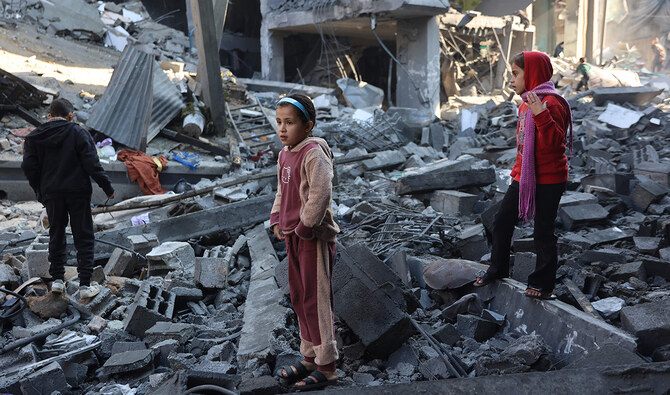
The initiative comes as Gaza grapples with a dire humanitarian crisis since the beginning of Israel’s military campaign in October 2023. BIONIKS said it hoped the factory would act as a lifeline for amputees by providing accessible and innovative solutions in regions where resources are limited.
BIONIKS gained international attention in 2021 when it provided a multi-grip bionic arm to four-year-old Mohammed Sideeq, making him the youngest recipient of such a prosthetic limb.
The startup’s co-founder, Anas Niaz, said designing the arm for a child so young was unprecedented.
“No one in the world has ever made a bionic arm for such a young age,” Niaz told Arab News in 2021. “We knew this was nearly impossible, but Mohammed had high hopes to get a bionic arm.”
The lightweight and durable arm allowed Sideeq to resume daily activities, including playing and buttoning his shirt, showcasing BIONIKS’ commitment to blending innovation with functionality.

Pakistani prosthetics startup launches AI-powered limb factory in Gaza to aid amputees
https://arab.news/p3f4b
Pakistani prosthetics startup launches AI-powered limb factory in Gaza to aid amputees
- Established in 2016, BIONIKS says its mobile factory is equipped with AI tools to design limbs
- Company says its initiative is part of its belief that technology has the power to transform lives
Pakistan high court pauses tree-cutting in Islamabad until Feb. 2
- Islamabad High Court asks CDA to ‘explain and justify’ tree-cutting at next hearing
- CDA officials say 29,000 trees were cut due to allergies, deny felling in green belts
ISLAMABAD: The Islamabad High Court has ordered an immediate halt to tree-cutting in the federal capital until Feb. 2, seeking justification from civic authorities over the legality of a large-scale felling drive that has seen thousands of trees removed in recent months.
The interim order, issued by a single-judge bench led by Justice Khadim Hussain Soomro, came during proceedings on a petition challenging the Capital Development Authority’s (CDA) tree-cutting operations in Islamabad’s Shakarparian area and H-8 sector.
At the outset of the hearing, the petitioner’s counsel argued that trees were being felled in violation of the Pakistan Environmental Protection Act 1997, the Islamabad Wildlife Ordinance 1979 and the city’s master plan.
“Respondents shall not cut trees till the next date of hearing,” Justice Soomro said in the court order released on Friday while referring to CDA officials.
“Respondents are directed to come fully prepared and to file paragraph-wise comments before the next date of hearing, along with a comprehensive report explaining the justification and legal basis for the cutting of trees,” he added.
According to the court order, the petitioner maintained that the CDA had not made any public disclosure regarding the legal basis for the operation and that the felling was causing environmental harm.
The petition sought access to the official record of tree-cutting activities and called for the penalization of CDA officials responsible for the act under relevant criminal and environmental laws.
It also urged the court to impose a moratorium on infrastructure projects in Islamabad, order large-scale replanting as compensation and constitute a judicial commission headed by a retired Supreme Court judge to probe the alleged violations.
CDA officials acknowledge around 29,000 paper mulberry trees have been cut in the capital in recent months, arguing that the species triggers seasonal allergies such as sneezing, itchy eyes and nasal congestion.
They also maintain that no trees have been removed from designated green belts and that the number of replacement trees planted exceeds those felled.
Designed in the 1960s by Greek architect Constantinos Doxiadis, Islamabad was conceived as a low-density city with green belts and protected natural zones at its core.
Critics, however, say the recent felling has extended beyond paper mulberry trees and question whether authorities are adhering to the city’s master plan and the legal protections governing forested and green areas.
The court has adjourned its hearing until Feb. 2, 2026.



