Pakistani religio-political faction ends Karachi sit-in after peace agreement reached in Kurram

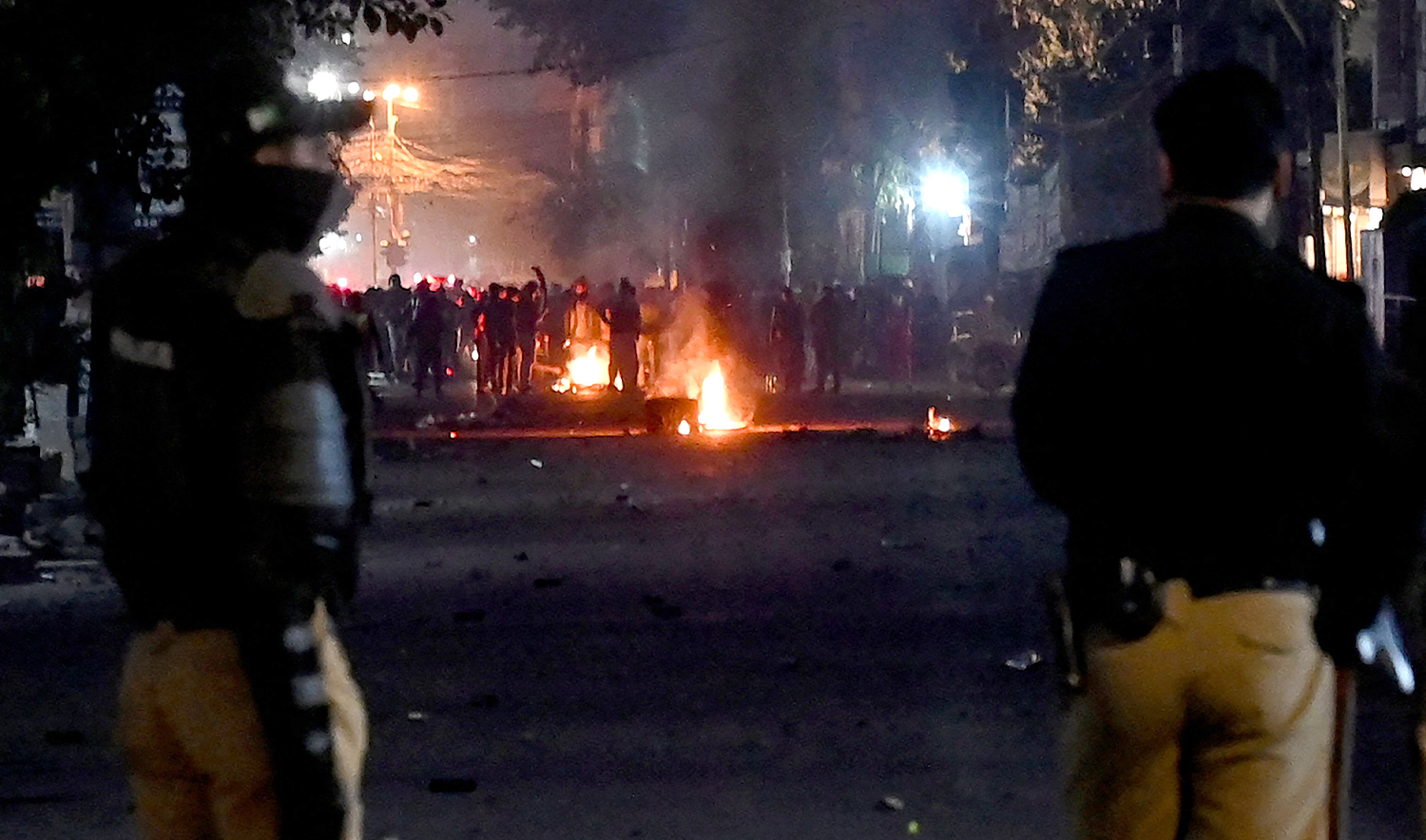
Police personnel (front) disperse Shiite Muslim protesters (back) during a demonstration in Karachi on December 31, 2024, to condemn sectarian clashes in Pakistan's Kurram district, bordering Afghanistan. (AFP/File)
Short Url
Updated 02 January 2025
Follow

Pakistani religio-political faction ends Karachi sit-in after peace agreement reached in Kurram

  • Majlis Wahdat-ul-Muslimeen had camped at over 10 locations in Karachi since last week to protest Kurram violence
  • The conflict started on November 21 when 52 people were killed in an ambush targeting a local convoy of residents

KARACHI: A Pakistani religio-political party announced on Wednesday an end to its sit-in protests in the southern port city of Karachi after warring tribes in Pakistan’s northwestern Kurram district signed a peace agreement to end prolonged violence that started in November.

The Majlis Wahdat-ul-Muslimeen (MWM) had been leading demonstrations at over 10 locations in Karachi since last week to protest the violence in Kurram, which has long been plagued by tribal and sectarian clashes.

The unrest escalated after a deadly ambush on a convoy on November 21 killed 52 people, mostly Shias, triggering clashes that have since claimed at least 136 lives in the district, home to a population of around 600,000.

“I announce the conclusion of the sit-ins and protests held in Pakistan and around the world in support of the oppressed people of Kurram district,” Senator Allama Raja Nasir, the leader of MWM, said in a post on X, formerly known as Twitter. “From Karachi to Khyber, the elderly, youth and women who braved harsh cold weather to hold sit-ins in solidarity with their compatriots are remarkable and unparalleled individuals who awakened the government and security institutions from their slumber.”

He described the peace agreement as a positive development, adding that his party would continue to raise its voice and strive for the permanent resolution of Kurram’s issues until the agreement was fully implemented.

The sit-ins in Karachi had disrupted life in the port city, drawing sharp warnings from the Sindh administration that threatened stern action if demonstrators did not move their protests to designated spots.

Tensions boiled over earlier this week when law enforcement officials clashed with protesters in Karachi.

Meanwhile, in Kurram, warring factions signed the peace agreement on Wednesday following weeks of mediation by a grand jirga — a council of tribal and political elders formed by the Khyber Pakhtunkhwa (KP) provincial government.

Under the agreement, both sides pledged to dismantle bunkers, surrender heavy weapons to the government, and refrain from using arms against each other.

“Both sides have agreed on the demolition of bunkers and the handover of heavy weapons,” KP government spokesperson Muhammad Ali Saif said in a statement. “We congratulate the people of Kurram on the signing of the peace agreement, which will usher in a new era of peace and prosperity in Kurram.”

Saif added the agreement would ensure a return to normalcy in the district.

According to the agreement, violations will trigger government action with the cooperation of a peace committee against the offending area.

Kurram, situated along Pakistan’s border with Afghanistan, has a history of violent tribal conflicts and militant attacks. A major conflict between Sunni and Shia tribes erupted in 2007 and continued for years before a jirga-mediated truce was reached in 2011.
‘Fully stand with Bangladesh’: Pakistan PM backs decision to boycott India match

Updated 04 February 2026
Follow

‘Fully stand with Bangladesh’: Pakistan PM backs decision to boycott India match

  • Pakistan’s government have not allowed the national cricket team to play its World Cup match against India on Feb. 15
  • Pakistan has accused India of influencing ICC decisions, criticized global cricket body for replacing Bangladesh in World Cup

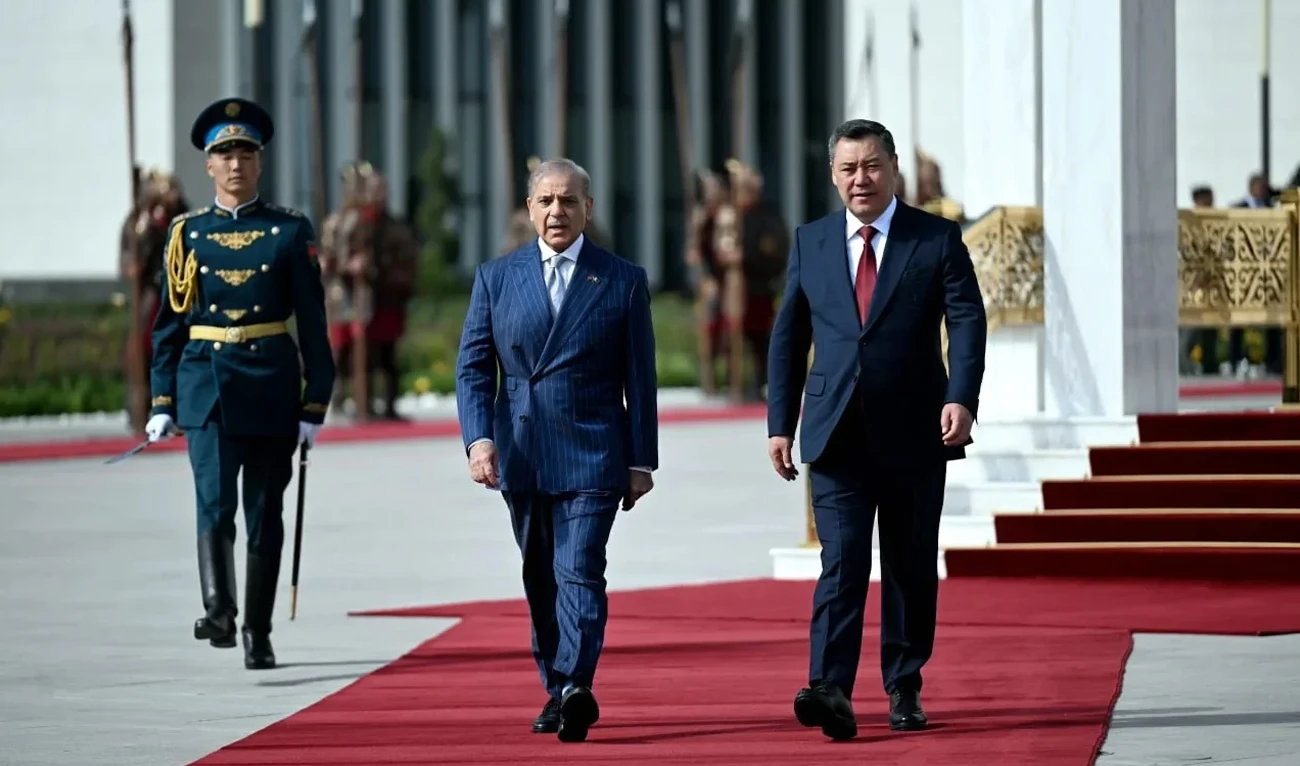
ISLAMABAD: Prime Minister Shehbaz Sharif on Wednesday backed his government’s decision to bar the national men’s cricket team from playing against India in the upcoming T20 World Cup tournament, reaffirming support for Bangladesh. 

Pakistan’s government announced on social media platform X last week that it has allowed its national team to travel to Sri Lanka for the World Cup. However, it said the Green Shirts will not take the field against India on their scheduled match on Feb. 15. 

Pakistan’s participation in the tournament was thrown into doubt after Pakistan Cricket Board (PCB) Chairman Mohsin Naqvi criticized the International Cricket Council (ICC) for replacing Bangladesh with Scotland. The decision was taken after Bangladesh said it would not let its team travel to India out of security concerns. 

During a meeting of the federal cabinet, Sharif highlighted that Pakistan has said that politics should be kept away from sports. 

“We have taken this stand after careful consideration and in this regard, we should stand fully with Bangladesh,” Sharif said in televised remarks. 

“And I believe this is a very reasonable decision.”

Pakistan has blamed India for influencing the ICC’s decisions. The global cricket governing body is currently led by Jay Shah, the head of the Board of Control for Cricket in India. Shah is the son of Indian Home Minister Amit Shah. 

Pakistan’s boycott announcement has triggered media frenzy worldwide, with several Indian cricket experts and analysts criticizing Islamabad for the decision. An India-Pakistan cricket contest is by far the most lucrative and eagerly watched match of any ICC tournament. 

The ICC has ensured that the two rivals and Asian cricket giants are always in the same group of any ICC event since 2012 to capitalize on the high-stakes game. 

The two teams have played each other at neutral venues over the past several years, as bilateral cricket remains suspended between them since 2013 due to political tensions. 

Those tensions have persisted since the two nuclear-armed nations engaged in the worst fighting between them since 1999 in May 2025, after India blamed Pakistan for an attack in Indian-administered Kashmir that killed tourists. 

Pakistan denied India’s allegations that it was involved in the attack, calling for a credible probe into the incident.