

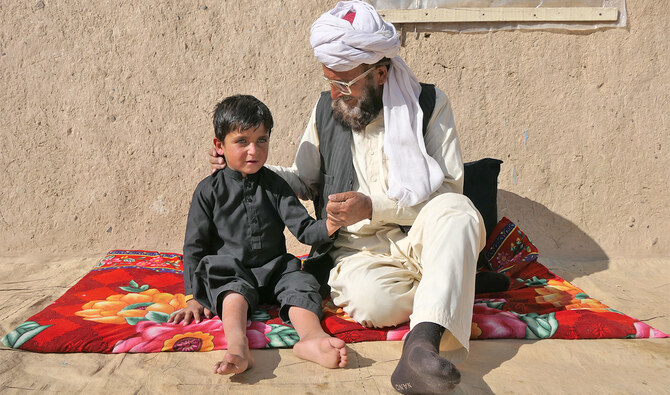

PISHIN, Balochistan: On a crisp December morning, Hajji Abdullah Khan walks through the crumbling streets of Killi Taratt, a small village in Pakistan’s polio-endemic Balochistan province, accompanied by his five-year-old son, Muhammad Hamza, who struggles to walk without support. Their journey is more than just a stroll— it’s a mission to meet villagers ahead of a province-wide anti-polio vaccination campaign.
Polio, which causes crippling paralysis and has no cure, remains a persistent threat to young children. Pakistan and Afghanistan are the only two countries in the world where polio is still endemic, despite Islamabad’s decades-long eradication efforts that began in 1994.
Hamza, the twin brother of a sister, was diagnosed with Type 1 wild poliovirus in July 2019 after suffering a high fever that prompted his father to take him to a hospital in Quetta. There, doctors confirmed that the boy had contracted the disease.
Since then, 74-year-old Khan has become a vocal advocate for anti-polio campaigns, working to convince hesitant families in his village, located 10 kilometers from Balochistan’s high-risk Pishin district. His efforts are all the more remarkable given his financial constraints, with his family solely dependent on the earnings of four of his children who work as daily wage laborers.
“There are nine children in my home and Hamza is the favorite one of his mother,” Khan told Arab News. “My wife used to hide him from polio teams because of fear that he might catch an evil eye. Since my son was declared a polio-affected child, I have started my struggle of advocating polio vaccine to convince the resisting parents by sharing my tale of suffering with them. Thus, the resistance against polio vaccine has declined in my village and Pishin district.”
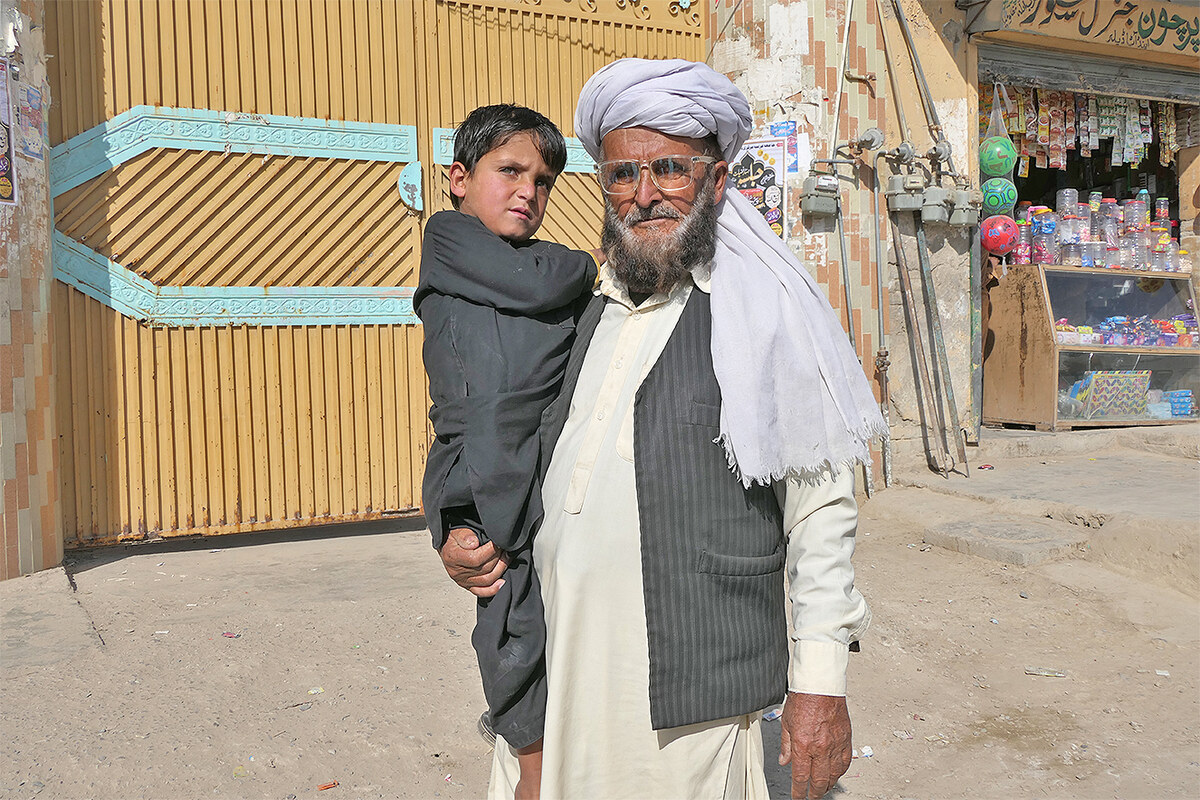
Haji Abdullah Khan poses with his polio-affected son Muhammad Hamza in Pakistan's southwestern Pishin district on December 27, 2024. (AN photo)
Pakistan has reported 67 new polio cases this year amid attacks on polio workers and the security personnel guarding anti-polio vaccination teams in the northwestern Khyber Pakhtunkhwa and southwestern Balochistan provinces, which border Afghanistan. According to the National Emergency Operation Center (NEOC) for Polio Eradication, Balochistan reported the highest number of cases this year, with 27 infections recorded across 13 districts.
Last month, the Balochistan government postponed an anti-polio drive for two weeks due to security threats and logistical challenges arising from a boycott by provincial health staff.
Khan shared that poliovirus had affected Hamza’s left leg and arm, which at times stop functioning completely.
“While he can walk with support, nonetheless, sometimes his leg and arms stop working and he falls on the ground,” he said.
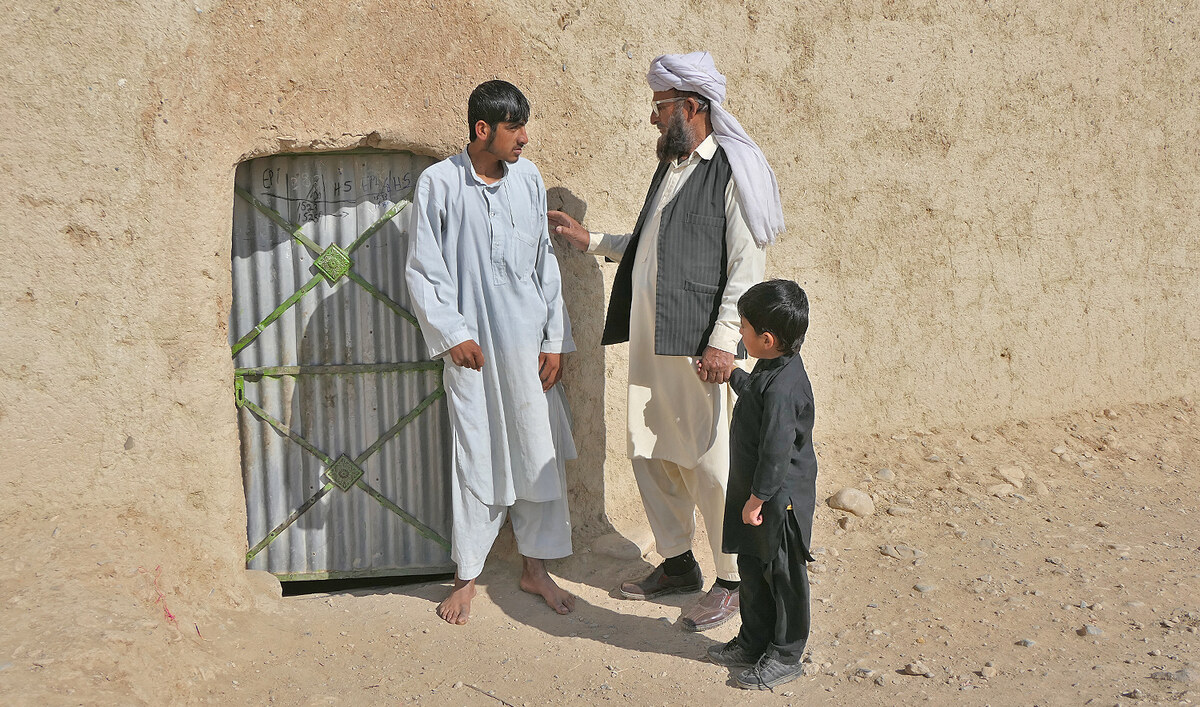
Haji Abdullah Khan (second right) talks with a local in Pakistan's southwestern Pishin district on December 27, 2024. (AN photo)
Despite nationwide vaccination drives and endorsements from prominent religious scholars and political figures, many parents in Pakistan remain skeptical of the polio vaccine. Public health studies attribute this hesitancy to factors such as lack of awareness, poverty and rural residency.
Dr. Najeebullah Khan, an official at the Balochistan Emergency Operation Center, said most cases in Balochistan in 2024 involved children whose parents had hidden them during vaccination campaigns.
“We need parents like Hajji Abdullah Khan who have been helping us in saving other children from lifetime disability,” he told Arab News, calling Khan an “ambassador for anti-polio vaccination.”
A sub-national polio vaccination campaign was launched in all 36 districts of the province on December 30 and will continue until January 5.
Dr. Najeebullah expressed optimism about a decline in polio cases in 2025, saying, “We have removed flaws from Union Council to provincial level and reset our strategy for the ... provincial anti-polio drive.”
Khan expressed concern about the future of his son, who barely manages to walk to a nearby seminary for religious education.
“I am worried about my son’s future because when me and my wife will die, my son will keep falling in the streets,” Khan said.
“Who will feed and clean him? No one,” he lamented, urging parents to vaccinate their children at all costs.
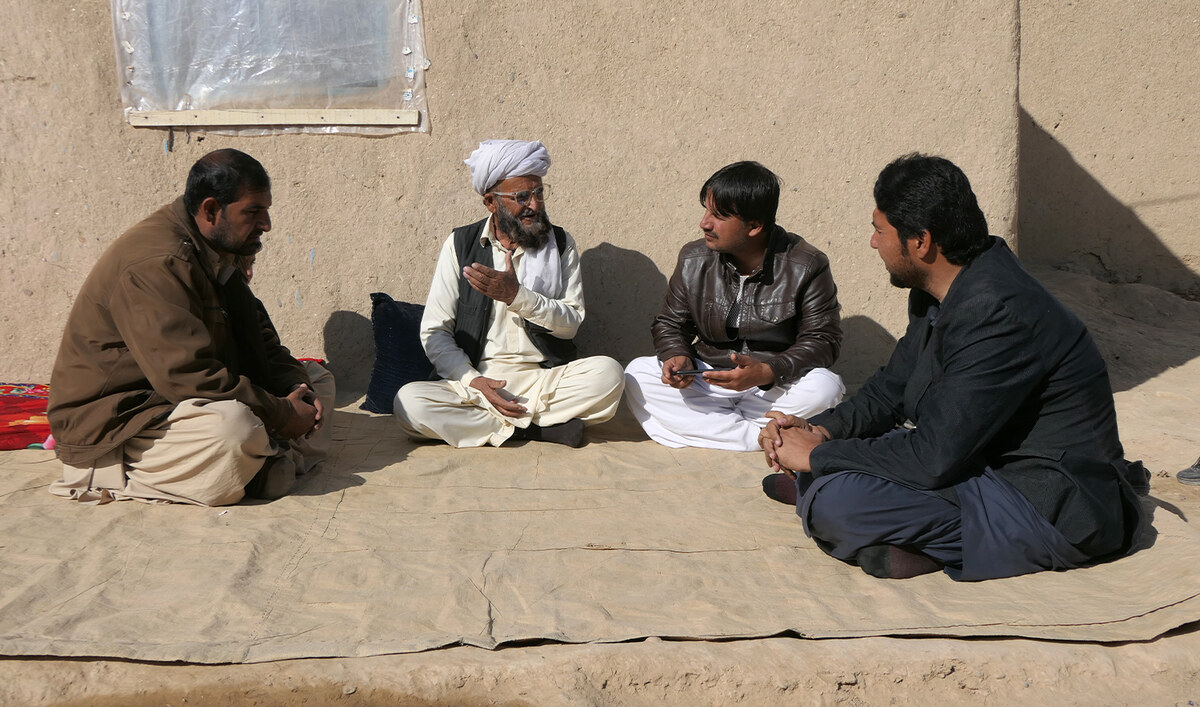
Haji Abdullah Khan (second from right) chats locals in Pakistan's southwestern Pishin district on December 27, 2024. (AN photo)


