

Oil Updates — crude rises on expanding Chinese factory activity, but set to end year lower 

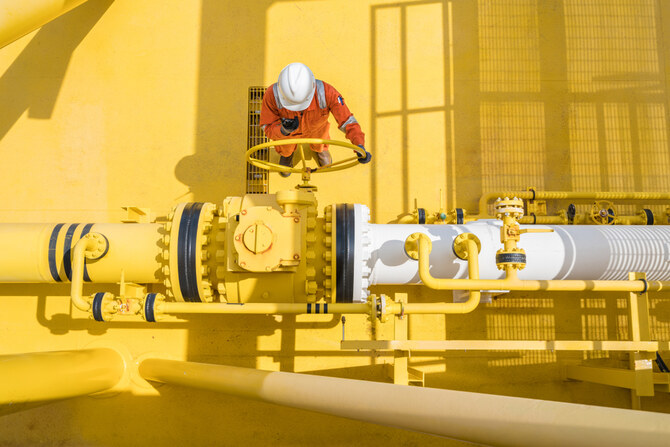
Brent crude futures rose 60 cents, or 0.8 percent, to $74.59 a barrel as of 08:30 a.m. Saudi time. Shutterstock
Short Url
Updated 31 December 2024
Follow

Oil Updates — crude rises on expanding Chinese factory activity, but set to end year lower 

SINGAPORE: Oil prices rose on Tuesday after data showed China’s manufacturing activity expanded in December, but they are on track to end lower for a second consecutive year due to demand concerns in top consuming countries, according to Reuters. 

Brent crude futures rose 60 cents, or 0.8 percent, to $74.59 a barrel as of 08:30 a.m. Saudi time. US West Texas Intermediate crude gained 62 cents, or 0.9 percent, to $71.61 a barrel. For the year, Brent declined 3.2 percent, while WTI was down 0.1 percent. 

China’s manufacturing activity expanded for a third straight month in December but at a slower pace, an official factory survey showed on Tuesday, suggesting a blitz of fresh stimulus is helping to support the world's second-largest economy. 

Chinese authorities have also agreed to issue a record 3 trillion yuan ($411 billion) in special treasury bonds in 2025 to revive economic growth, Reuters reported last week. 

A weaker demand outlook in China has forced both OPEC and the International Energy Agency to cut their oil demand expectations for 2025. 

OPEC and its allies earlier this month delayed their plan to start raising output until April 2025 against a backdrop of falling prices. The IEA expects global oil supply to exceed demand in 2025 even if OPEC+ cuts remain in place, as rising production from the US and other outside producers outpaces sluggish demand. 

While a weak longer-term demand outlook has weighed on prices, they could find short-term support from declining US crude stockpiles, which are expected to have fallen by about 3 million barrels last week. 

Both Brent and WTI were buoyed by a larger-than-expected drawdown from US crude inventories in the week ended Dec. 20 as refiners ramped up activity and the holiday season boosted fuel demand.  

Investor focus next year will be on the Federal Reserve’s rate path after the central bank earlier this month projected just two rate cuts, down from four in September, due to stubbornly high inflation. 

Lower interest rates generally incentivize borrowing and fuel growth, which in turn is expected to boost oil demand. 

The shifting expectations around US rates and the widening interest rate differentials between the US and the other economies have lifted the dollar and weighed on other currencies. 

A stronger dollar makes purchases of oil more expensive for consumers outside the US, weighing on demand. 

Markets are also gearing up for President-elect Donald Trump’s policies around looser regulation, tax cuts, tariff hikes and tighter immigration that are expected to be both pro-growth and inflationary - and ultimately dollar-positive.


Middle East war economic impact to depend on duration, damage, energy costs, IMF official says

Updated 05 March 2026
Follow

Middle East war economic impact to depend on duration, damage, energy costs, IMF official says

  • Katz: Prolonged increase in energy prices could unanchor inflation expectations
  • IMF: 2026 global GDP outlook was solid, too early to judge war’s impact on growth

WASHINGTON: The Middle East war’s impact on the global economy will depend on its duration and damage to infrastructure and industries in the region, particularly whether energy price increases are short-lived or persistent, the International Monetary Fund’s number two official said on Tuesday.

IMF First Deputy Managing Director Dan Katz told the Milken Institute Future of Finance conference in Washington that if there is prolonged uncertainty from the conflict and a prolonged impact on energy prices, “I would expect central banks to be cautious and ‌respond to the ‌situation as it materializes.”
He said the conflict could ​be “very ‌impactful ⁠on ​the global economy ⁠across a range of across a range of metrics, whether it’s inflation, growth and so on” but it was still early to have a firm conviction.
Prior to the US and Israeli air strikes on Iran and counterattacks across the region, the IMF had forecast solid global GDP growth of 3.3 percent in 2026, powering through tariff disruptions due in part to the continued AI investment boom and expectations of productivity gains.
Katz said ⁠that the economic impact from the Middle East conflict would ‌be influenced by its duration and further geopolitical ‌developments.
Earlier, the IMF said it was monitoring the ​conflict’s disruptions to trade and economic activity, ‌surging energy prices and increased financial market volatility.
“The situation remains highly fluid and ‌adds to an already uncertain global economic environment,” the Fund said in a statement issued from Washington. Katz said the IMF will look at the conflict’s direct impacts on the region, including damage to infrastructure, and disruptions to key sectors.
“Tourism is an important one. Air travel. Is ‌there physical damage to infrastructure, production facilities, and the big industry in particular that everyone will be focused on is, ⁠of course, the energy ⁠industry,” he said.
Oil rose further on Tuesday as Iran vowed to attack ships passing through the Strait of Hormuz. Brent crude oil , the global benchmark, surged to $83 per barrel, up 15 percent from its level on Friday.
Katz said he expected central banks to “look through” a temporary rise in energy prices, given their focus on core inflation. But central banks could respond if a more persistent energy shock results in “a destabilizing of inflation expectations.”
He said the post-COVID inflation spike of 2022 was influenced by energy impacts from Russia’s invasion of Ukraine, with more pass-through from headline inflation to core inflation.
“And so I’m sure central banks, as they are thinking about how the ​geopolitical situation is translating into ​energy markets, will be looking at the lessons of the pandemic and seeing if they can apply any of those lessons in setting monetary policy,” Katz said.