

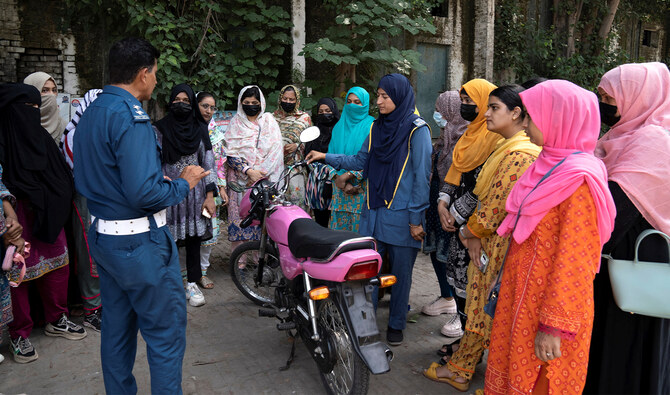

LAHORE, Pakistan: Pakistani student Laiba Rashid, 22, hopes her life will change once she learns how to drive a motorcycle after undergoing a training program that teaches women how to operate two-wheelers in the bustling eastern city of Lahore.
Although the program is 7 years old, it’s rare to see women driving motorcycles. Women driving cars or riding pillion on two-wheelers driven by a male relative is more socially acceptable in the conservative nation.
“I hope this will change my life because I am dependent on my brother to pick me up and drop me to college,” Rashid told Reuters on her first day at the Women on Wheels (WOW) driving program offered free by the Lahore traffic police.
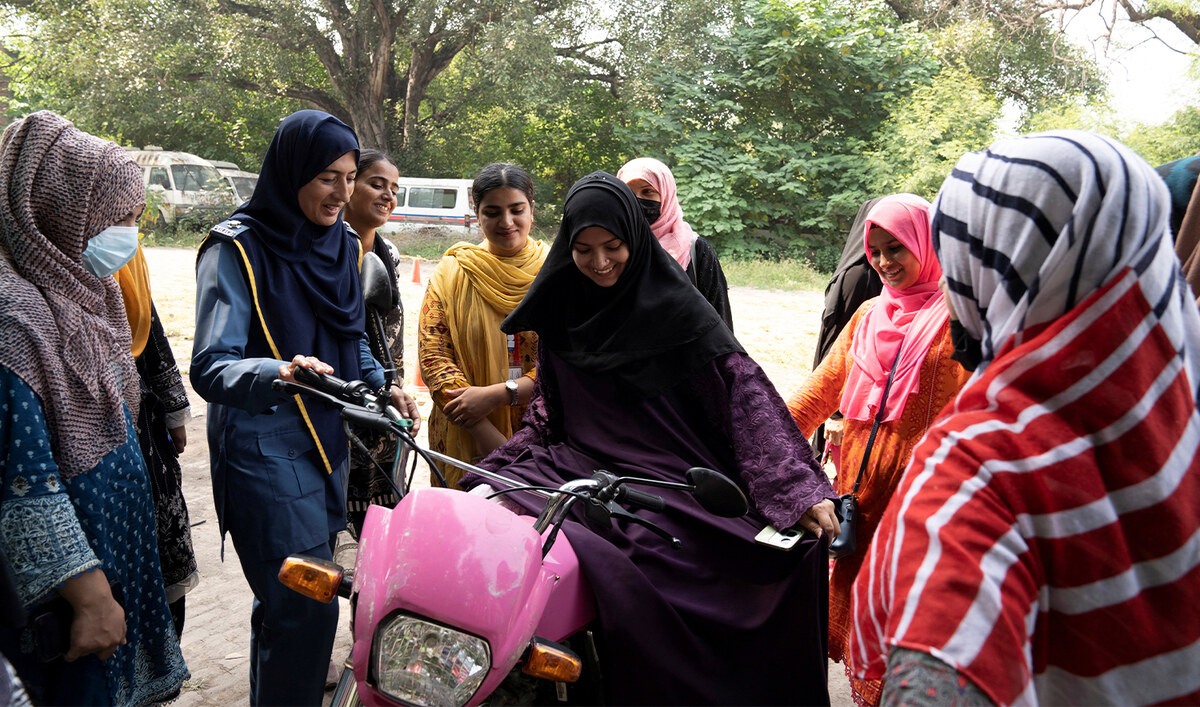
Humaira Rafaqat, a senior traffic warden, teaches women how to ride a bike while wearing an abaya, during a training session as part of the "Women on Wheels" program organised by the traffic police department in Lahore, Pakistan, on October 1, 2024. (REUTERS)
She said she wants to buy a motorcycle to go to college, adding that, previously, there were no women drivers in her family. “Now everybody is convinced that women should be independent in their movement to schools, jobs and markets,” she said.
Women driving two-wheelers has been a cultural and religious taboo, said Bushra Iqbal Hussain, a social activist and director of Safe Childhood, an organization advocating the safety of female children.
But more women are now changing the culture, she said, like they did in the 1980s with regular cars, in a bid to reduce their reliance on men to commute.
The WOW program has been in operation since 2017, but has become increasingly popular in recent months as car prices have soared and motorcycles offer a cheaper alternative.
“Stagnant wage growth and high inflation have eroded the purchasing power of the middle class, leaving motorcycles as the only viable option for many households,” said auto sector analyst Muhammad Abrar Polani of investment house Arif Habib Limited.
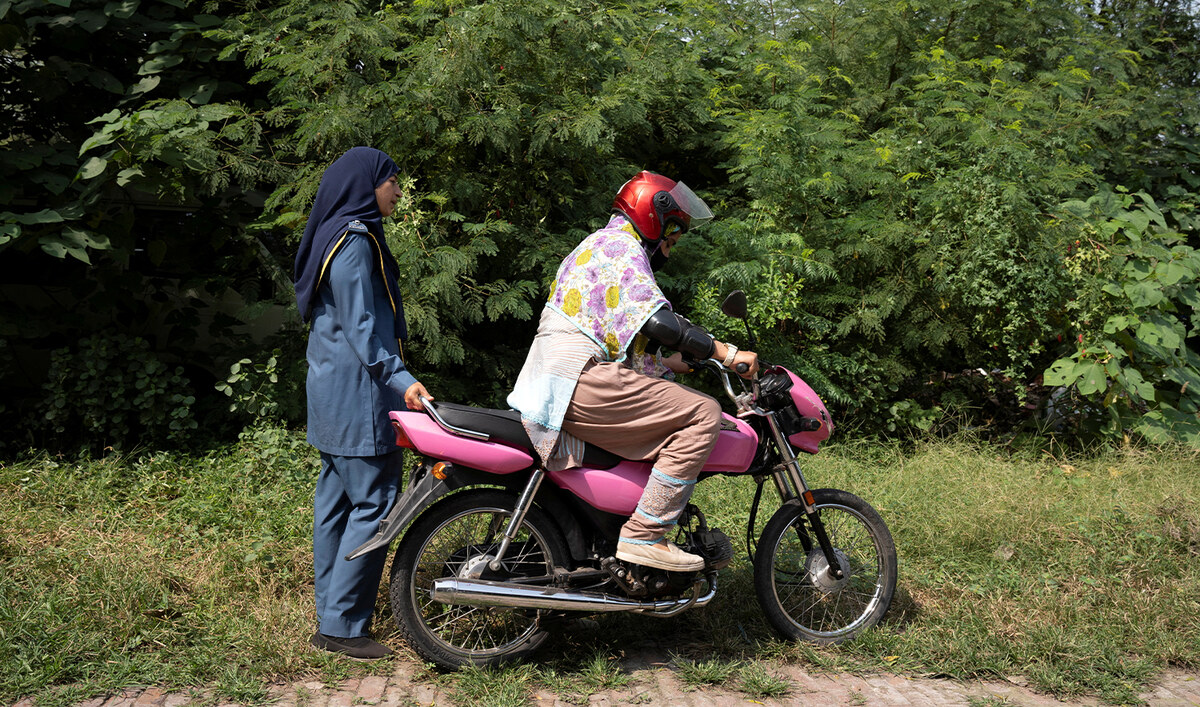
Ishrat Khan practices riding a motorbike while Humaira Rafaqat, a senior traffic warden, observes her during a training session as part of the 'Women on Wheels" program organised by the traffic police department in Lahore, Pakistan, on October 1, 2024. (REUTERS)
The cheapest four-wheeler in Pakistan, where the annual GDP per capita is $1,590, costs about 2.3 million rupees($8,265) compared to about 115,000 rupees for the most affordable China-made two-wheeler.
Sohail Mudassar, a traffic warden, said the WOW program has trained at least 6,600 women, and Rashid’s batch was the 86th since it started.
“Women of different ages and segments of society join our camp,” said female trainer Humaira Rafaqat, a senior traffic warden who has trained about 1,000 women. “Young women are quick learners because they are enthusiastic and take risks.”
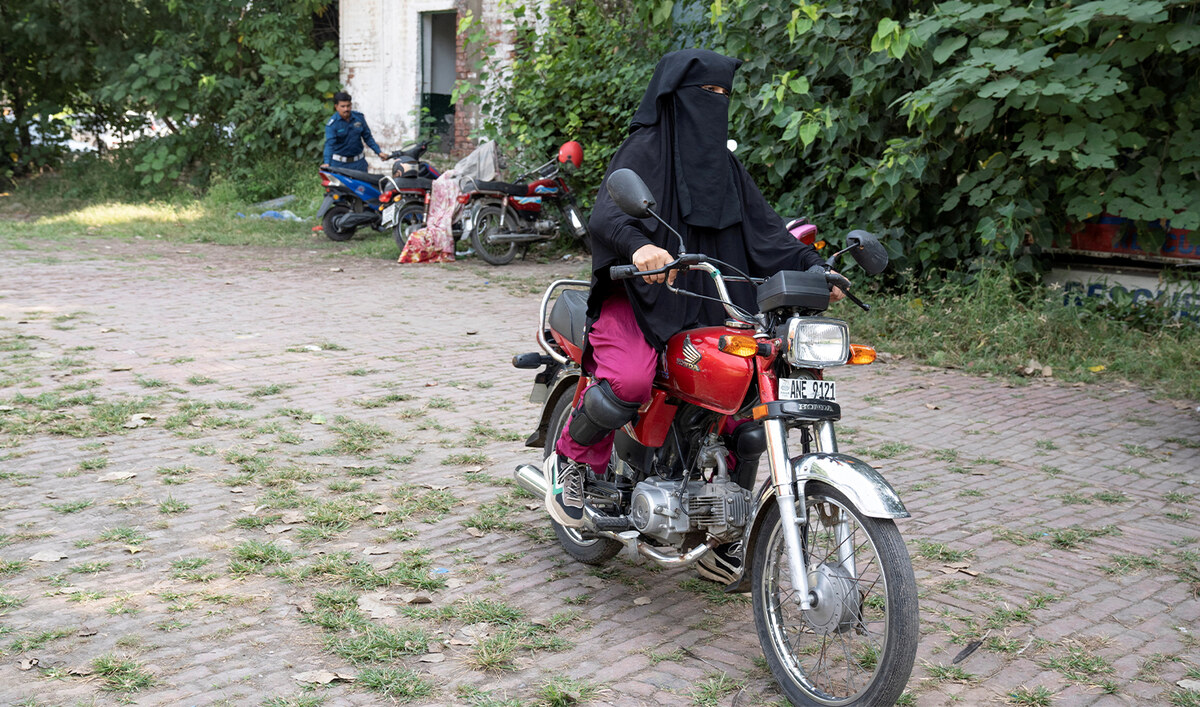
Shumaila Shafiq, 36, a teacher at a private school, rides a motorbike during a motorbike training session as part of the "Women on Wheels" program organised by the traffic police department in Lahore, Pakistan, on October 1, 2024. (REUTERS)
One of them, Ghania Raza, 23, who is pursuing a doctorate in criminology, said learning to drive a two-wheeler gave her a deep sense of achievement and empowerment: “It was like breaking a glass ceiling,” she said.
Shumaila Shafiq, 36, a mother of three and a part-time fashion designer, said she has been driving her husband’s motorcycle to the market and other places after graduating from the program.
She has designed a special short length abaya, a dress used by Muslim women, to wear while operating the motorcycle.
“Wearing a long abaya with loose fitting poses risks as it may get entangled in the wheels,” she said, adding that she intends to market the design to fellow women riders.


