What We Are Reading Today: ‘Digital Cultural Shock’ by Katherina Reinecke

Short Url
Updated 28 December 2024
Follow

What We Are Reading Today: ‘Digital Cultural Shock’ by Katherina Reinecke

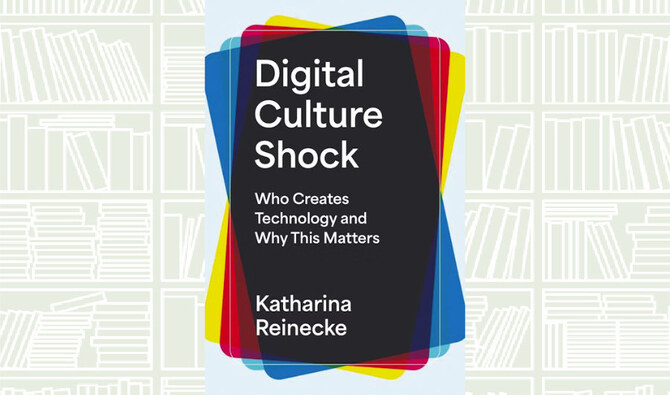
Robots that encroach on your personal space, baffling emojis, a chatbot that gives you an answer that seems terribly rude—does any of this sound familiar?

An encounter with new technology can teach us to embrace the unfamiliar, but a mismatch between design and user can create misunderstanding and loss of trust, and can even become a tool of digital imperialism.

In “Digital Culture Shock,” computer scientist Katharina Reinecke travels through countries and cultures around the world to show the many fascinating ways that technology design and use can differ. 


What We Are Reading Today: The Political Economy of Security by Stephen G. Brooks

Updated 04 March 2026
Follow

What We Are Reading Today: The Political Economy of Security by Stephen G. Brooks

In this book, Stephen Brooks provides a systematic empirical and theoretical examination of how economic factors influence security affairs. Empirically, he analyzes how economic variables of all kinds affect interstate war, terrorism, and civil war; in total, 16 pathways are examined.

Brooks shows that the relationship between economic factors and conflict is complex and multifaceted; discrete economic factors—such as international trade, economic development, and globalized manufacturing, to name a few—are sometimes helpful for promoting peace and stability, but at other times are detrimental.

Brooks also develops a stronger theoretical foundation for guiding future research on the economics-security interaction. 

Drawing on Adam Smith, he provides a more complete range of answers to the three key conceptual questions analysts must consider: how economic goals relate to security goals; what economic factors to focus on; and how economic actors influence security policies.

Combining an innovative theoretical understanding with empirical rigor, Brooks’s account will reshape our understanding of the political economy of security.