



KHAPLU, Gilgit-Baltistan: In a first, Pakistan’s National Logistics Corporation (NLC) has launched its maiden multimodal Transports Internationaux Routiers (TIR) transportation, linking China to the United Arab Emirates via the Khunjerab Pass, in a move hailed as a “good omen” for Pakistan’s trade and logistics sectors.
The TIR system, an international customs transit framework, streamlines cross-border trade by enabling goods to move through multiple countries with minimal customs interference.
At over 4,600 meters above sea level, the Khunjerab Pass connects Pakistan’s Gilgit-Baltistan region with China’s Xinjiang province, serving as a strategic gateway for trade between South Asia and Europe.
The pass, situated in the Karakoram Range, has only facilitated bilateral trade in the past, with China primarily importing textiles, agricultural products and daily commodities, while exporting plants and herbs.
“This achievement signifies a major leap forward in the operationalization of the China-Pakistan Economic Corridor (CPEC), utilizing the shortest and most efficient route from China to the Gulf region via Pakistan,” the NLC said in a statement.

This handout photograph, released by Pakistan’s National Logistics Corporation on December 28, 2024, shows officials launching country’s maiden multimodal Transports Internationaux Routiers transportation route at the Khunjerab Pass, Gilgit-Baltistan. (Photo courtesy: NLC)
“This milestone also reflects a significant step toward ensuring year-round functionality of the Khunjerab Pass, a vital gateway for regional trade,” it added.
The NLC said the journey commenced with one of its trucks, laden with electronic equipment, departing from Kashgar, China, en route to the Jebel Ali Port in Dubai. The first stop was at NLC Dry Port in Sost, where a ceremony marked the historic occasion, it added.
“The cargo container, after being transported via NLC trucks from Kashgar to Karachi, will embark on the sea leg of its journey to its final destination at Jebel Ali Port,” the statement informed.
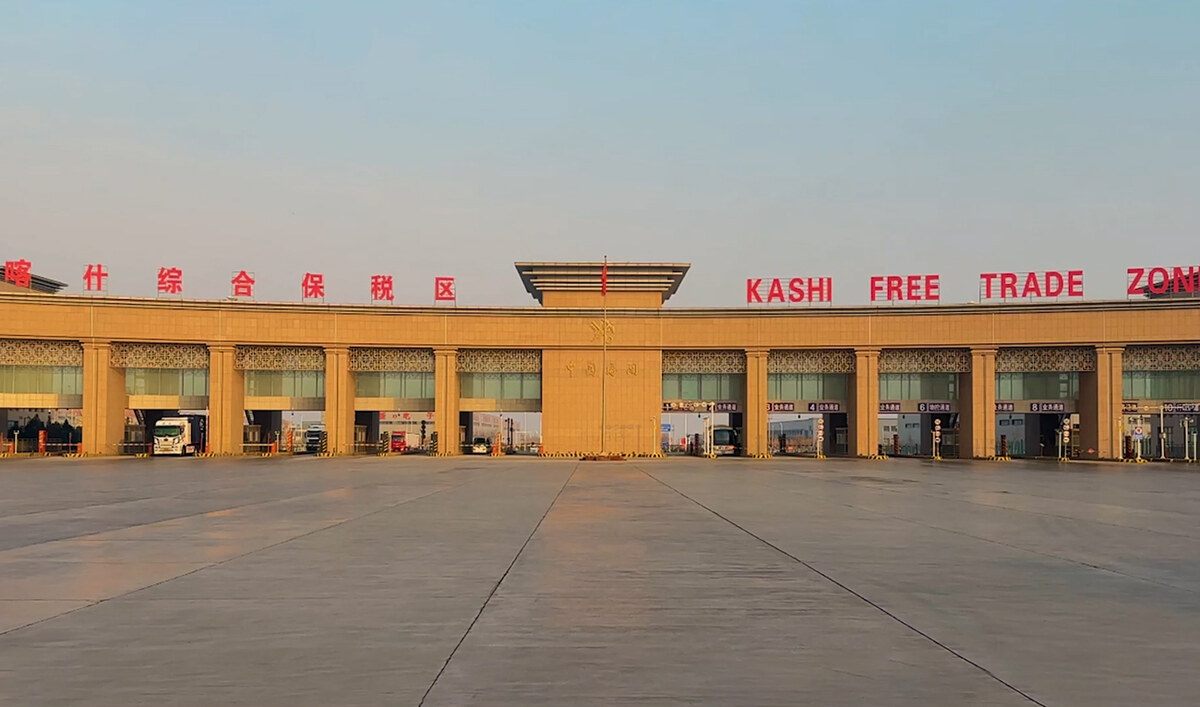
This handout photograph, released by Pakistan’s National Logistics Corporation on December 28, 2024, shows a general view of the Kashi Free Trade Zone in Kashi, Xinjiang. (Photo courtesy: NLC)
The consignment from China is expected to reach the UAE in 10 days as compared to 30 days via sea-route.
Traders and local business leaders associated with the Khunjerab Pass welcomed the launch.
“This is a good omen for Pakistan’s economy,” Imran Ali, a former president of the Gilgit-Baltistan Chambers of Commerce, told Arab News over the phone, adding it would particularly benefit the traders in the region and the local community.
“Pakistan will become a major trade hub as China gets access to the Middle East through this route,” he continued. “The economic activities in Gilgit-Baltistan and Gwadar will get a boost and unemployment will end in the region.”
Muhammad Iqbal, president of the Gilgit-Baltistan Importers and Exporters Association, agreed with him.

This handout photograph, released by Pakistan’s National Logistics Corporation on December 28, 2024, shows a Pakistani truck crossing the checkpoint at the Kashi Free Trade Zone in Kashi, Xinjiang. (Photo courtesy: NLC)
“The launching of TIR between China and the Middle East through Pakistan will change the fate of the country,” he told Arab News. “The country will make more revenue and the economic conditions of traders and locals will improve.”
According to the Gilgit-Baltistan Collectorate of Customs, a record revenue of Rs9.5 billion ($34.87 million) was collected from the Sost Dry Port during the first two quarters of the fiscal year 2024-25, compared to Rs6.5 billion ($23.4 million) during the same period last year.
Additionally, the anti-smuggling team confiscated goods worth Rs600 million ($2.16 million).


