


ISLAMABAD: Prime Minister Shehbaz Sharif on Friday urged the Taliban rulers in Afghanistan to take action against militants harboring in the neighboring country, days after Kabul said at least 46 people had been killed in Pakistani airstrikes in the eastern border province of Paktika.
The Pakistan army and government have not yet officially confirmed Tuesday’s airstrikes, which the Afghan Taliban said targeted “mostly civilians.”
Media widely reported on Wednesday Pakistani security forces had targeted multiple suspected hideouts of the Pakistani Taliban, also known as the Tehreek-e-Taliban Pakistan (TTP), dismantling a training facility and killing several insurgents.
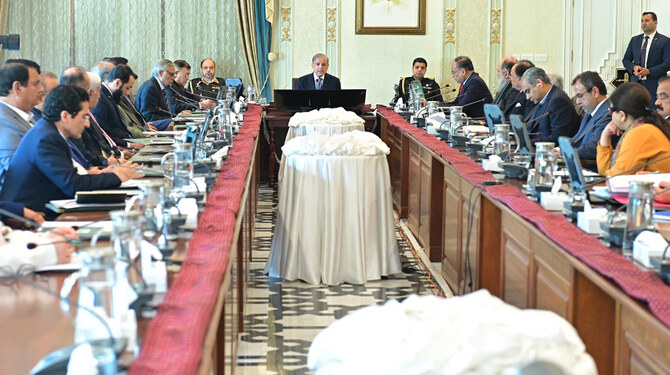
Addressing the federal cabinet on Friday, Sharif did not confirm the latest airstrikes but said Pakistan was prepared to protect its sovereignty at “every cost.”
“I feel that this is a red line for us, if TTP operates from there [Afghanistan], it is not acceptable for us and we will defend Pakistan’s sovereignty at every cost,” the PM added. “But I would also like to once again urge the Afghan government to adopt a strategy for this issue, and we are ready to engage in discussions on this matter.”
Border tensions between the two countries have escalated since the Taliban government seized power in 2021, with Pakistan battling a resurgence of militant violence in its western border regions.
Islamabad has accused Kabul’s Taliban authorities of harboring militant fighters, allowing them to strike on Pakistani soil with impunity. Kabul has denied the allegations.
“If we get messages that you want to expand relations with us and on the other hand TTP is given a free hand, then this can’t happen, it’s not possible,” Sharif added.
At a weekly press briefing on Thursday, Foreign Office Spokesperson Mumtaz Zahra Baloch also declined to confirm Tuesday’s airstrikes but said Pakistan was committed to the security of its people, and its security and law enforcement personnel conducted operations based on “concrete intelligence” against terror groups operating in the border areas.
“I would like to add here that Pakistan believes in dialogue and diplomacy. We have always prioritized diplomacy in our relations with Afghanistan,” Baloch said. “Despite the presence of terror hideouts and sanctuaries, and the consistent threat they pose to Pakistan, we have always opted for diplomacy.”
Baloch reiterated Pakistan’s demand that Afghanistan prevent the use of its territory for terror attacks against Pakistan, calling on the neighbor to work with Islamabad to combat the threat posed by groups like the TTP.
“And any issues that either side has with regards to border management, trade and transit trade, security, terrorism, these issues remain high on our bilateral agenda,” Baloch added.
The banned TTP group said in a statement on Wednesday the strikes had hit “the homes of defenseless refugees” on Tuesday evening, killing at least 50 civilians, including 27 women and children.
Deadly air strikes by Pakistan’s military in the border regions of Afghanistan in March that the Taliban authorities said killed eight civilians had prompted skirmishes on the frontier.


