



Yemen's Houthis claimed new attacks against Israel on Friday, after Israeli air strikes hit rebel-held Sanaa’s international airport and other targets in Yemen.
The Israeli strikes on Thursday landed as the head of the UN’s World Health Organization said he and his team were preparing to fly out from Yemen’s Houthi rebel-held capital, injuring a UN crew member.
Hours later on Friday, the Iran-backed Houthis said they fired a missile at Ben Gurion Airport outside Tel Aviv and launched drones at the city as well as a ship in the Arabian Sea.
Israel’s military had earlier on Friday reported a missile launched from Yemen had been intercepted “before crossing into Israeli territory.” Sirens sounded because of possible falling debris after the interception, it said.
Yemen’s Houthis have stepped up their attacks against Israel since late November when a ceasefire took effect between Israel and another Iran-backed group, Lebanon’s Hezbollah.
Israeli “aggression will only increase the determination and resolve of the great Yemeni people to continue supporting the Palestinian people,” a Houthi statement on Friday said.
Despite the damage, flights from Sanaa airport resumed at 10:00 am (0700 GMT) on Friday, Houthi Deputy Transport Minister Yahya Al-Sayani said.
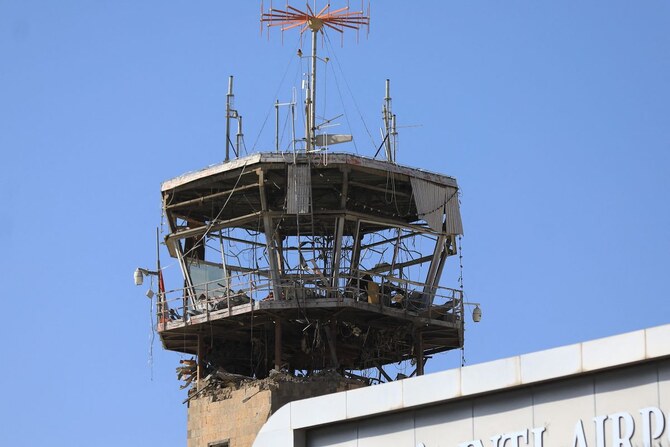
“The airport tower has been directly hit in addition to the departure lounge and airport navigation equipment. The attack resulted in four dead until now and around 20 wounded from staff, airport and passengers,” Sayani said.
Israel’s military did not immediately respond to a request for comment on whether they knew at the time that WHO chief Tedros Adhanom Ghebreyesus was there.
The strikes left the top of the control tower a bombed-out shell and large windows in the airport building were shattered, with glass littering the ground.
Israel’s attack came a day after the rebels claimed the firing of a missile and two drones at Israel.
The strikes against what Israel’s military called rebel “military targets” marked the second time since December 19 that Israel has hit targets in Yemen after rebel missile fire toward Israel.
In his latest warning to the Houthis, Prime Minister Benjamin Netanyahu said Israel would “continue until the job is done.”
“We are determined to cut this branch of terrorism from the Iranian axis of evil,” he said in a video statement.
UN Secretary-General Antonio Guterres denounced the escalation in hostilities and said bombing transportation infrastructure threatened humanitarian operations in Yemen, where 80 percent of the population is dependent on aid.
Tedros was in Yemen to seek the release of United Nations staff detained for months by the Houthis, and to assess the humanitarian situation.
On Friday he said that a member of the UN’s Humanitarian Air Service “who was injured yesterday due to the bombardment underwent successful surgery and is now in stable condition.”
A witness told AFP that raids also targeted the adjacent Al-Dailami air base. Strikes also targeted a power station in Hodeida, on the rebel-held coast, a witness and Al-Masirah TV said.
Following rebel attacks against Israel this year, Israeli strikes had twice before hit Hodeida, a major entry point for humanitarian aid to the country ravaged for years by its own war.
On December 19, after the rebels fired a missile toward Israel and badly damaged a school, Israel for the first time struck targets in Sanaa.
Houthi media said those strikes killed nine people.
In the latest attacks, the Israeli military said its “fighter jets conducted intelligence-based strikes” on Houthi “military targets.”
The targets included “military infrastructure” at the airport and power stations in Sanaa and Hodeida, as well as other facilities at Hodeida, Salif and Ras Kanatib ports, an Israeli statement said.
Houthi rebels used the targets “to smuggle Iranian weapons into the region and for the entry of senior Iranian officials,” the statement said.
Similar strikes in September followed a rebel claim to have targeted Ben Gurion Airport. At that time Israel also said it targeted sites used to “transfer Iranian weaponry.”
Iran’s foreign ministry condemned the latest Israeli strikes as a “clear violation of international peace and security.”
On December 21, Israel’s military and emergency services said a projectile fired from Yemen wounded 16 people in Tel Aviv.
The Houthis have repeatedly fired missiles and drones at Israel since the Gaza war began in October last year, claiming solidarity with the Palestinians.
They have similarly fired drones and missiles against commercial shipping in surrounding waters vital to world trade, prompting reprisal strikes against Houthi targets by the United States and sometimes Britain.
In July, a Houthi drone attack on Tel Aviv killed an Israeli civilian, prompting the first Israeli retaliation on Hodeida.
The Houthis control large parts of Yemen after seizing Sanaa and ousting the internationally recognized government in September 2014.
A Saudi-led coalition in March 2015 began a military campaign against the Houthis that the Yemen Data Project, an independent tracker, said involved more than 25,000 air raids.


