

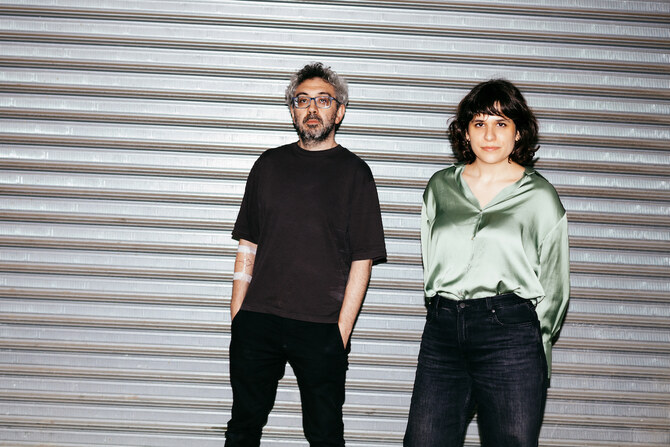

Tayar
‘Kol Shi Sar’
Tayar consists of Amman-based songwriters Ahmad Farah and Bader Helalat, who is also a producer and filmmaker. Since 2020, the pair have released a string of singles and EPs, often using their music as a means of processing life in a region immersed in grave injustice and trauma. Their first LP is a genre-defying record that oscillates effortlessly between indie rock, earworm electronica, and delectable, quartertone-laced neo-psychedelia. Between gorgeous, piano-driven interludes, Farah and Helalat snake their way through a sonic canvas of exquisite vocal harmonies, irresistibly danceable beats, synth-soaked laments, and lusciously arranged instrumentals narrated by the likes of double bass, oud, and trumpet.
Fulana
‘ground:from — Chapter One’
Vancouver-born, Jeddah-raised artist Nadine Lingawi’s evolution as a songwriter since signing with Saudi Arabia’s Wall of Sound in 2020 has been remarkable, culminating in this month’s ‘ground:from,’ an enlightened exploration of brooding indie pop and instantly iconic electronica. Collaborating with Abdulmajeed Alwazna and Husam Al-Sayed — Saudi duo Input/Output — Lingawi employs her lyrical prowess to convey deep, existential ruminations on themes such as death and rebirth. While watery, delay-drenched guitars drive tracks such as opener ‘the burn’ and ‘decompose’, and memorable synth melodies are an indelible feature of ‘letter #9’ and ‘marigold’, it’s Lingawi’s soulful vocal delivery and tasteful harmonies that power the album’s allure. An immensely talented up-and-comer to watch out for.
Tamara Qaddoumi
‘Sorry Signal’
The Kuwaiti-born singer-songwriter moves on from her dalliance with trip-hop into the glacial embrace of profound, reliably infectious cold pop. “Sorry Signal” sees Qaddoumi bristle with brilliance, as she reflects on lost innocence and the insidious, shape-shifting nature of grief. From the crystalline harmonies elegantly wrapped around disquieting introspections of “Cold In The Mourning” to the heaving torrents of synths and rhythmic beats of the title track, Qaddoumi weaves the threads of seemingly insurmountable desolation into a compellingly hopeful requiem that looks to a brighter tomorrow.
Hello Psychaleppo
‘Cipher’
The Syrian producer, songwriter, and multi-instrumentalist Samer Eldahr has audaciously pushed the boundaries of the very foundation of traditional Arabic music for the past decade. With his third LP, he has fully alchemized his own brand of electro-tarab, sharpening any rough edges into a well-rounded, unmistakably unique sound. The album features illustrious guest appearances, including former Mashrou’ Leila frontman Hamed Sinno, and DJ, producer, and singer Anas Maghrebi (formerly of Khebez Dawle), whose vocals grace the feverish beats and synths of the album opener, “Katha Altawq.” “Cipher” is a towering addition to Hello Psychaleppo’s already impressive catalogue.
Snakeskin
‘They Kept Our Photographs’
Julia Sabra — frontwoman of Lebanese dream-pop outfit Postcards — has a long history with producer Fadi Tabbal — who has shepherded countless indie artists in his Beirut-based Tunefork Studios. Their sophomore album as Snakeskin perfects the distinctive formula of Sabra’s ethereal, instantly recognizable vocals and Tabbal’s visionary production and electronic experimentation. The pair are at their most imperious on tracks like “Bodies,” which rattles off a machine-gun beat as a scene-setter for Sabra, who vocalizes with both fragility and poise to the aqueous, hypnotic soundscapes of synths engineered by Tabbal. This is a mournful, beautiful record, to be listened to with headphones in the twilight of a dying day, or just before the dawn of a new one.
Garwasha

‘Garwasha’
Saudi Arabia isn’t known for its jazz, but Riyadh-based, alternative fusion band Garwasha aim to change that with their debut album — a dexterous combo of jazz, rock, and experimental instrumentation, with nods to elements of traditional Arabic music. The LP is brimming with musicianship, as the four-piece storm through vibrant, frequently playful tracks. The eight-minute “Consolacao” is a mélange of jazzy progressions, funky breakdowns, and showcases of virtuosity. Meanwhile, song titles such as “Dancing Delicately Along the Dichotomies of Reverse Orientalism” follow a curious naming convention often deployed by post-rock bands that, like Garwasha, communicate their message effectively solely through the strength of their music.
Seera
‘Al Mojallad Al Awal’
All-female Saudi foursome Seera’s debut LP is an amalgam of psychedelic and indie rock that employs nuances of traditional Arabic music, stylishly ornamented by cathartic guitar parts, keyboard passages reminiscent of The Doors and the artistic exuberance of the late Sixties, and tinges of everything from blues to electronica. With an anonymous drummer who goes only by ‘Thing’ and wears a mask symbolizing Saudi heritage, Seera’s rise embodies the ongoing cultural change within the Kingdom, the blossoming spirit of creative freedom, and female empowerment.


