- Grenell has called for the release of Khan from jail in multiple social media posts in recent weeks
- Remarks have sparked interest in Pakistan since Trump nominated Grenell as special envoy
ISLAMABAD: Richard Grenell, president-elect Donald Trump’s nominee as envoy for special missions, has called on the Joe Biden government to use its last days in power to push for the release of jailed Pakistani former premier Imran Khan so he could run for office in the South Asian nation.
There has been a spotlight on Grenell in Pakistan since last month when he started posting on X about Khan. In one post on Nov. 26, Grenell said “Released Imran Khan!” as the jailed leader’s supporters held protests in the Pakistani capital to demand he be freed from prison. In a second post, he said, “Watch Pakistan. Their Trump-like leader is in prison on phony charges … Stop the political prosecutions around the world!” Grenell has posted in support of Khan a number of times since.
Khan has been in jail since August 2023 on charges he says are trumped up by the government and the all-powerful military to keep him away from politics. Both deny the charge.
Speaking to Newsmax TV, an American conservative television channel, Grenell said on Tuesday Khan had a “very good relationship” with Trump during his first term as US president, when the former was prime minister of Pakistan from 2018-22.
“He’s currently in prison, a lot of the same allegations just like President Trump where the ruling party [in Pakistan] put him in prison and created some kind of corruption allegations, false allegations,” Grenell said.
He urged the President Biden administration, which is in the last legs of its reign before Trump takes over in January, to “make progress” on Pakistan, an issue he said his government had ignored for four years.
Referring to a recent statement by State Department Spokesman Matthew Miller raising concerning about the trial of civilians in military courts in Pakistan, Grenell said:
“What Matt Miller … really meant was free Imran Khan. And so I just became adamant, ‘Why don’t you just say this, instead of pretending that you care about all these processes, the judicial processes, just say what you mean,’ which is to let the guy [Khan] out of prison, who actually wants to run for office and let the [Pakistani] people decide.”
Last week, Pakistani Defense Minister Khawaja Asif downplayed Grenell’s recent posts in support of Khan, saying the government did not expect the remarks to have any “repercussions” once Trump came to power on Jan. 20.
“I don’t think there is any pressure involved,” Asif said in an interview to Independent Urdu last Monday when asked if the Pakistan government expected pressure from the US on Khan’s release after Grenell’s appointment.
“In American politics, there are different considerations that different people and parties have and according to that they express their views, but as far as government to government relations go, their expression or interpretation through any tweets, or such statements, is far-fetched … I don’t think there will be any repercussions of [Grenell’s tweets] at any level.”
Khan, who was ousted from office after a parliamentary vote in April 2022, has since waged an unprecedented campaign of defiance against the country’s powerful military, which is thought to be aligned with the coalition government of Prime Minister Shehbaz Sharif. The military denies it interferes in politics.
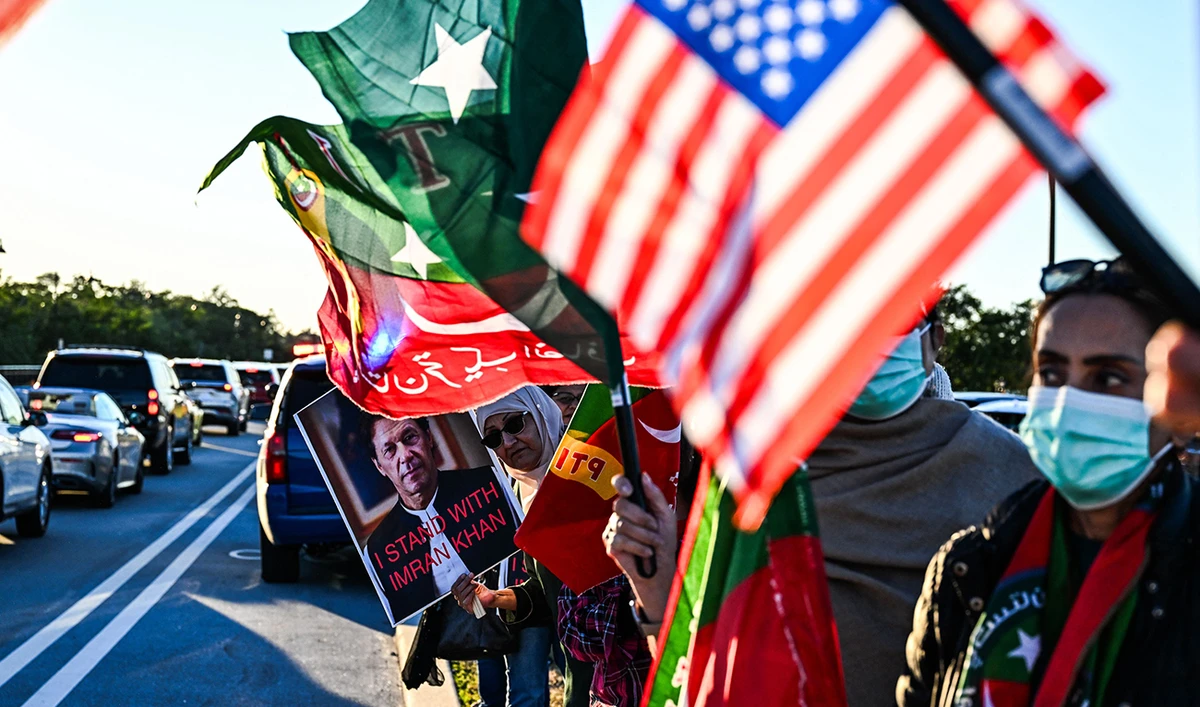
Khan continues to remain popular among the masses, with his Pakistan Tehreek-e-Insaf party’s rallies drawing thousands of people from across the country. The PTI has held several rallies over the past few months to build public pressure to secure his release from prison.
Four troops and 12 PTI supporters were killed in the latest protest in Islamabad last month after security forces raided the protest site to disperse demonstrators who had gathered at a square that is in the federal capital’s heavily-policed red zone, home to key government and diplomatic buildings as well as the Supreme Court.
Khan’s party was also barred from Pakistan’s general election on Feb. 8 2024, but the would-be candidates stood as independents.
Despite the ban and Khan’s imprisonment for convictions on charges ranging from leaking state secrets to corruption, millions of the former cricketer’s supporters voted for him. Independent candidates from his party won the highest number of seats but not enough to form a government on their own. Khan cannot be part of any government while he remains in prison.