PESHAWAR: Pakistan in rare airstrikes targeted multiple suspected hideouts of the Pakistani Taliban inside neighboring Afghanistan on Tuesday, dismantling a training facility and killing some insurgents, four security officials said.
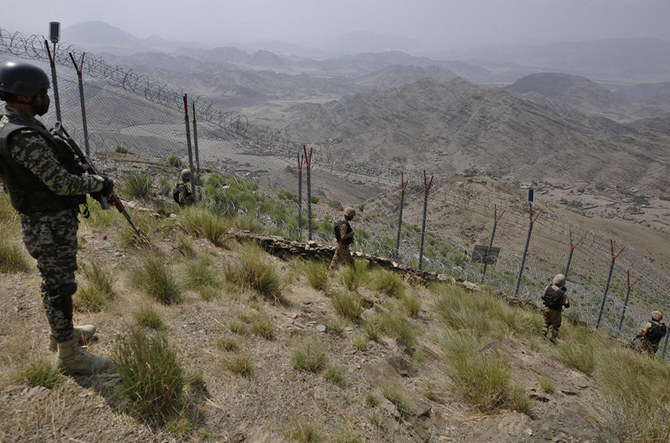
The strikes were carried out in a mountainous area in Paktika province bordering Pakistan, said the officials. They spoke on the condition of anonymity because they were not authorized to speak to the media on the record. It was unclear whether the jets went deep inside Afghanistan, and how the strikes were launched.
No spokesman for Pakistan’s military was immediately available to share further details. But it was the second such attack on alleged hideouts of the Pakistani Taliban since March, when Pakistan said intelligence-based strikes took place in the border regions inside Afghanistan.
In Kabul, the Afghan Defense Ministry condemned the airstrikes by Pakistan, saying the bombing targeted civilians, including women and children.
It said that most of the victims were refugees from the Waziristan region.
“The Islamic Emirate of Afghanistan considers this a brutal act against all international principles and blatant aggression and strongly condemns it,” the ministry said.
Local residents said at least eight people, including women and children, were killed in the airstrikes by Pakistan. They said the death toll from the strikes may rise.
In a post on the X platform, the Afghan defense ministry said the Pakistani side should know that such unilateral measures are not a solution to any problem.
“The Islamic Emirate will not leave this cowardly act unanswered but rather considers the defense of its territory and territory to be its inalienable right.”
The strikes came hours after Mohammad Sadiq, Pakistan’s special representative for Afghanistan, traveled to Kabul to discuss a range of issues, including how to enhance bilateral trade, and improve ties.
Sadiq during the visit met with Sirajuddin Haqqani, Afghanistan’s acting interior minister, to offer his condolences over the Dec. 11 killing of his uncle Khalil Haqqani. He was the minister for refugees and repatriation who died in a suicide bombing that was claimed by a regional affiliate of the Daesh group.
Sadiq in a post on X said he also met with Foreign Minister Amir Khan Muttaqi and he “held wide ranging discussions. Agreed to work together to further strengthen bilateral cooperation as well as for peace and progress in the region.”
A delegation of the pro-Taliban Jamiat-e-Ulema Islam also visited Kabul on Tuesday to convey condolences over the killing of Haqqani’s uncle.
Islamabad often claims that the Pakistani Taliban use Afghan soil to launch attacks in Pakistan, a charge Kabul has denied.
Syed Muhammad Ali, an Islamabad-based security expert, said Tuesday’s airstrike “represents a clear and blunt warning to Pakistani Taliban that Pakistan will use all the available means against the terrorist outfit both inside and outside its borders.” However, it is not an indiscriminate use of force and due care was taken by Pakistan in ensuring that only the terrorist bases were hit and no civilian loss of life and property took place, he said.
The Afghan Taliban seized power in Afghanistan in 2021 and the Taliban takeover in Afghanistan has emboldened the Pakistani Taliban, known as Tehreek-e-Taliban Pakistan, whose leaders and fighters are hiding in Afghanistan.
The TTP has stepped up attacks on Pakistani soldiers and police since November 2022, when it unilaterally ended a ceasefire with the government after the failure of months of talks hosted by Afghanistan’s government in Kabul. The TTP in recent months has killed and wounded dozens of soldiers in attacks inside the country.


![]()

Pakistan airstrikes target suspected TTP militant hideouts in Afghanistan
Short Url
https://arab.news/zazt3
Pakistan airstrikes target suspected TTP militant hideouts in Afghanistan
- Strikes carried out in mountainous area in Paktika province bordering Pakistan, training facility dismantled, insurgents killed
- Afghan Defense Ministry condemns airstrikes by Pakistan, saying they targeted civilians, including women and children
Latest updates


© 2026 SAUDI RESEARCH & PUBLISHING COMPANY, All Rights Reserved And subject to Terms of Use Agreement.