
ISLAMABAD: Pakistani Prime Minister Shehbaz Sharif and President Asif Ali Zardari on Wednesday reaffirmed the government’s commitment to safeguarding the rights of all religious minorities as they wished the nation’s Christians on the occasion of Christmas, reminding citizens of founding father Muhammad Ali Jinnah’s message of inclusivity and unity.
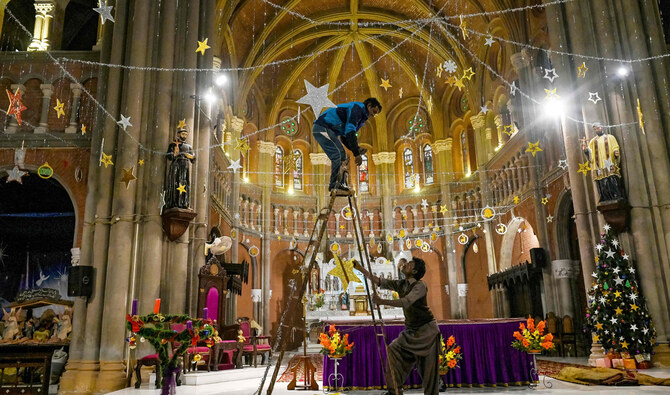
Prayer ceremonies were held in various cities across Pakistan on Christmas morning as participants gathered to pray for the safety, security, and prosperity of the nation. In the port city of Karachi, a central celebration was held at St. Patrick’s Church, while the eastern city of Lahore marked the celebration with a 100-pound cake, which was cut at St. Luke’s Church in Shahdara. Similar events took place in Islamabad, Bahawalpur, Quetta, Multan, Sargodha, and Lodhran, with churches organizing prayer gatherings under tight security.
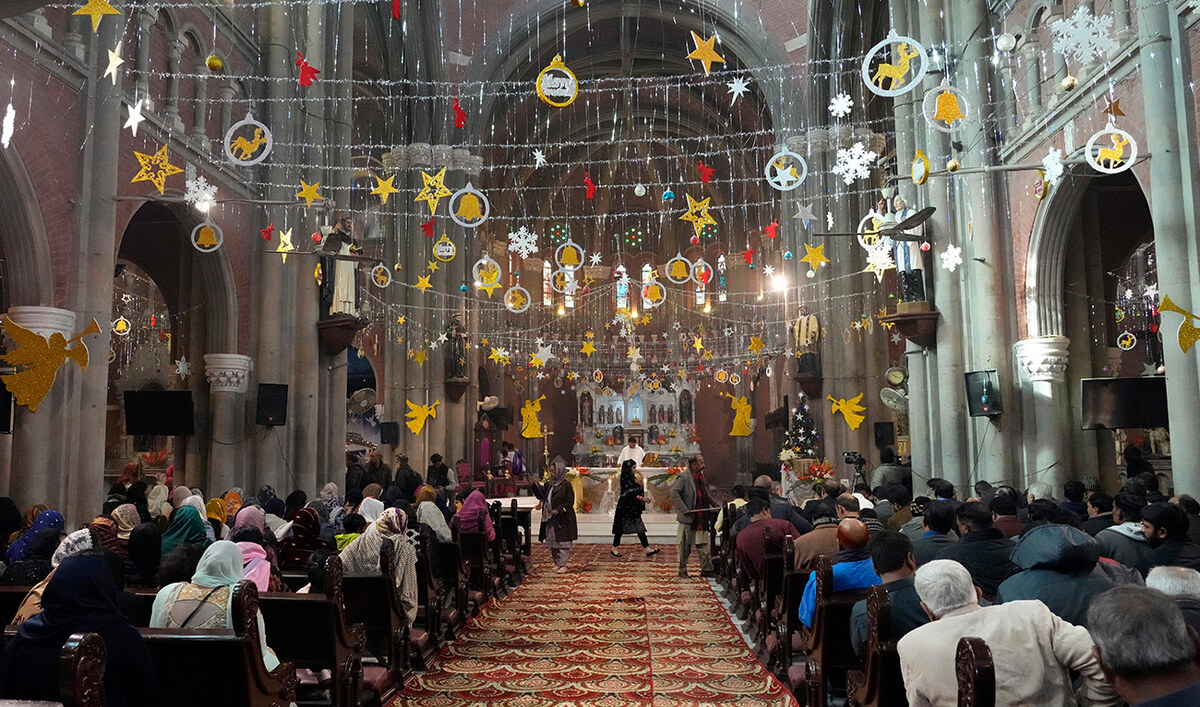
Christians attend the Christmas Mass at Sacred Heart Cathedral Church, in Lahore, Pakistan on December 25, 2024. (AP)
Dec. 25 is also celebrated in Pakistan as the birth anniversay of Jinnah, a barrister, politician, and the founder of Pakistan who served as the leader of the All-India Muslim League from 1913 until the inception of Pakistan on Aug. 14, 1947. Jinnah was also Pakistan’s first governor-general until his death a year later.
“The government of Pakistan remains firmly committed to safeguarding the rights of all religious communities and fostering an environment of mutual respect and understanding,” Sharif said in his Christmas message to the nation.
“We will continue to ensure that people of all faiths can practice their beliefs freely and contribute to the collective progress of our nation.”
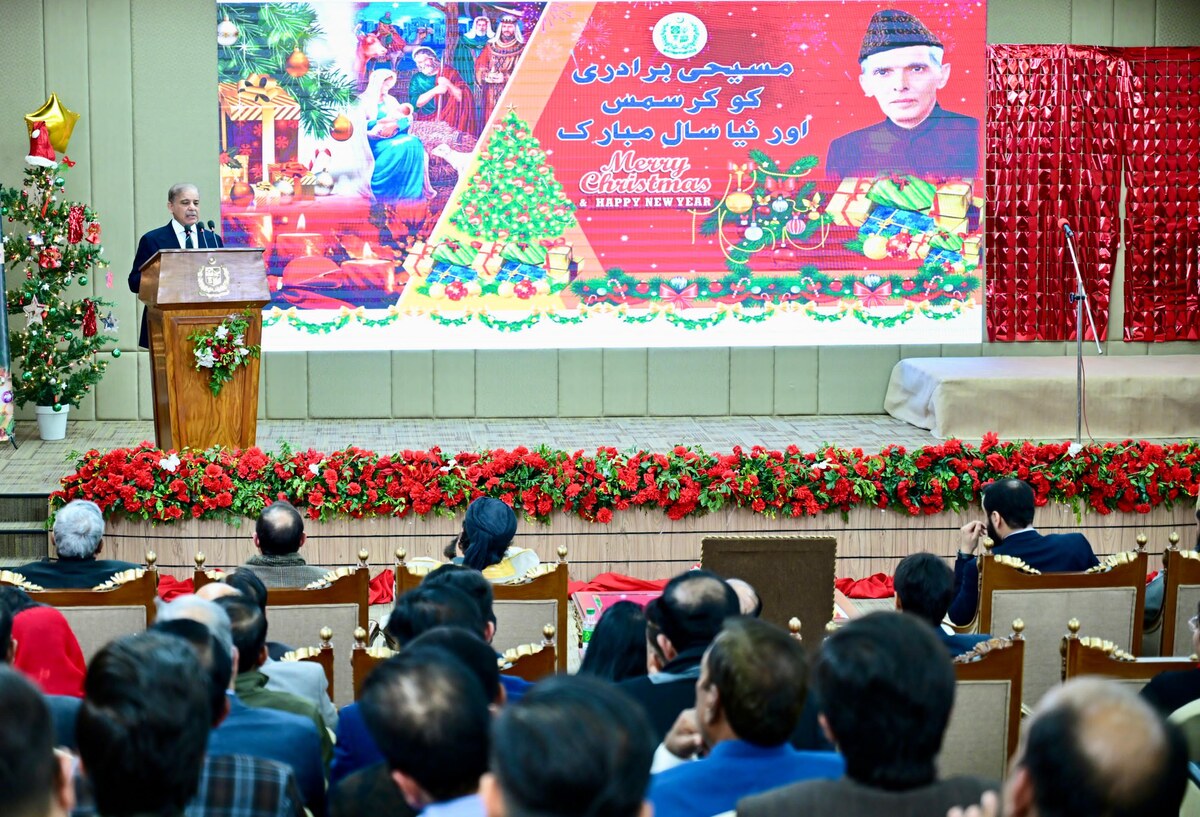
Pakistan Prime Minister Shehbaz Sharif speaks during an event celebrating Christmas in Islamabad on December 25, 2024. (Photo courtesy: PMO)
In a separate message, Sharif said founding father Jinnah had dreamed of a Pakistan” where every citizen could live with dignity, freedom, and equal opportunity, irrespective of faith or ethnicity.”
“His vision for Pakistan was one of inclusivity, unity, and prosperity,” the PM added.
In a statement released by his office, President Zardari said the constitution of Pakistan guaranteed the “fundamental rights of all citizens, irrespective of their faith,” adding that upholding the rights of all citizens was “essential for fostering national unity and progress.”

Pakistan Army Chief General Syed Asim Munir attends special event celebrating Christmas in Rawalpindi on December 25, 2024. (Photo courtesy: ISPR)
Christianity is the third-largest religion in Pakistan, with results from the 2023 census recording over three million Christians, or 1.3 percent of the total population in Pakistan. The majority of Christians in Pakistan are members of the Catholic Church or the Church of Pakistan.
Christians face institutionalized discrimination in Pakistan, including being targeted for blasphemy accusations, abduction, and forced conversions to Islam. Christians are also reserved for low-status jobs, such as working in sewers or on brick kilns.
Historical churches in Pakistan are monitored and have been targeted with bomb attacks on multiple occasions.
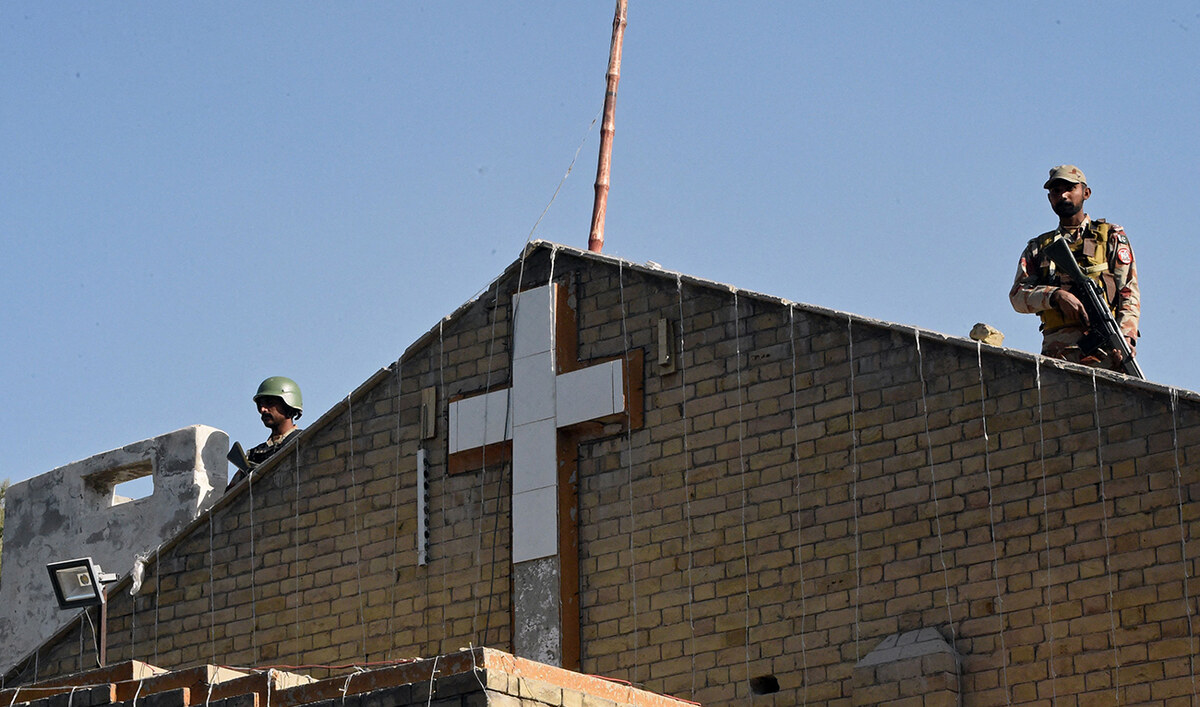
Security personnel stand guard on the roof of Methodist Church in Quetta on December 25, 2024, during Christmas Day celebrations. (AFP)