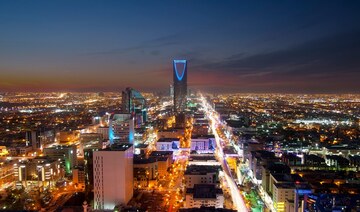

RIYADH: Urban populations across the Gulf Cooperation Council region are projected to grow 30 percent from 2020 to 2030, increasing demand for housing, infrastructure, and inclusive development, analysts say.
In its latest report, international management consulting firm Arthur D. Little said that 90 percent of GCC residents will live in cities by 2050.
The study revealed that Saudi Arabia is leading this transition, with the Kingdom eyeing to build 500,000 new housing units to meet the rising demand.
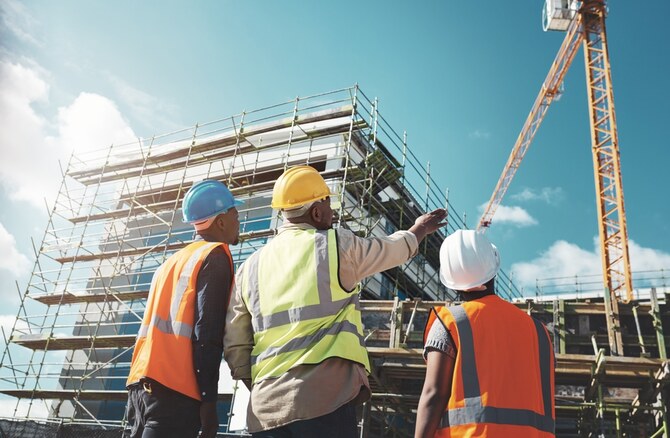
Saudi Arabia is undertaking a dozen giga-projects to address the needs of its growing urban population. These developments are key to the government’s economic diversification goals, forming a core component of Vision 2030.
“We’re witnessing a paradigm shift. This isn’t about building cities — it’s about creating living, breathing economic ecosystems that grow from within local communities,” said Rajesh Duneja, partner at Arthur D. Little.
Driven by Vision 2030 objectives and its Quality of Life Program, Saudi Arabia is striving for three of its cities to be recognized among the top 100 in the world for livability.
The consulting firm added that the Kingdom’s ongoing efforts are not just a construction initiative but a catalyst for opportunity, education, and long-term economic contribution, with Saudi Arabia embedding workforce development, small and medium enterprises, and local engagement in this journey.
Earlier this month, a report released by real estate and investment management firm JLL said that the ongoing urban infrastructure development in Saudi Arabia is creating new hotspots for growth, driven by a surge in tourism and economic diversification efforts.
In July, an analysis by British property consultancy Savills said that the Kingdom’s capital city, Riyadh, is poised to be one of the fastest-growing metropolizes in the world over the next decade, driven by the growth of the country’s mega projects.
In July, a report released by Statista also outlined urbanization progress in Arab world nations, with Kuwait already having a 100 percent urban population in 2023.
Statista added that 99.35 percent of people in Qatar live in urban areas, followed by Bahrain, the UAE, and Saudi Arabia, with 89.87 percent, 87.78 percent, and 84.95 percent, respectively.
The Arthur D. Little report said the surging demand for housing and infrastructure in the region also calls for community-driven strategies to adopt a more inclusive approach, as traditional infrastructure models alone cannot meet the scale of this demand.
“The pace of urbanization across the Middle East, especially Saudi Arabia, is unprecedented. To ensure that ambitious goals, such as those embodied in Vision 2030, are reached, it is vitally important that communities participate in, and feel part of, the changes,” said Arthur D. Little.
The analysis added that these community-focused strategies are not only enhancing social impact but also driving economic growth.
The management consulting firm projected that community-focused initiatives could support the region’s 4 percent gross domestic product growth trajectory, reinforcing its economic resilience amid global challenges.
“This is not just urban development. It’s the emergence of a new economic blueprint that places human potential at its core,” said Maurice Salem, principal at Arthur D. Little Middle East.
According to the study, the region’s demographic profile also strengthens the necessity for a community-driven approach.
“With only 3 percent of the population in Saudi Arabia over the age of 65, the Middle East has an unparalleled opportunity to leverage its young, dynamic workforce,” said the report.
It added: “When integrated with local talent, cultural heritage, and SME development, infrastructure projects become engines of socio-economic transformation.”