


RIYADH: Startups across the Middle East and North Africa region are gaining momentum, with funding rounds and expansions fueling innovation.
From artificial intelligence to fintech, health tech to media, these developments highlight the region’s growing ecosystem and investor confidence.
Aiming to boost the regional space, Saudi Venture Capital Co. has announced its investment in the $150-million Middle East Venture Fund IV, managed by Middle East Venture Partners. The fund targets technology startups with high growth potential across Saudi Arabia.

It aims to support startups from the seed stage through series A, series B, and eventual initial public offerings or exits, fostering the creation of regional tech champions. It also seeks to contribute to Saudi Arabia’s economic transformation by backing startups that impact key sectors.
“Our investment in the Middle East Venture Fund IV by MEVP supports SVC’s strategy of backing funds that invest in early-stage startups based in Saudi Arabia, aiming to foster their growth into later stages,” said Nabeel Koshak, CEO and board member at SVC.
Furthermore, SVC announced an investment for an undisclosed amount in Raed III LP, an early-stage venture capital fund managed by Raed Ventures.

The fund will target tech-enabled startups across Saudi Arabia and the wider region, primarily focusing on seed and series A stages, emphasizing fintech, enterprise software, and business-to-business Software-as-a-Services sector, predominantly in Saudi Arabia and UAE markets.
Risk intelligence platform Bureau closes $30m funding round to expand to Saudi Arabia
US-based risk intelligence and fraud detection startup Bureau completed a $30 million series B funding round to fuel its plans to expand in the Saudi market.
The round was led by Sorenson Capital with participation from PayPal Ventures and continued support from Commerce Ventures, GMO Venture Partners, Village Global, Quona Capital, and XYZ Ventures.
Bureau is a no-code identity decisioning platform that empowers businesses to prevent fraud, ensure compliance, and enhance user experiences.
The funding will accelerate Bureau’s product expansion into new use-cases, and geographical expansion to several new markets worldwide, including Saudi Arabia, to meet a significant surge in global demand.
OmniOps secures $8m to expand AI infrastructure solutions
Saudi-based OmniOps, an AI infrastructure technology provider, has raised $8 million in funding from GMS Capital Ventures.
The company, founded this year by Mohammed Al-Tassan, specializes in cloud and high-performance computing solutions for businesses of all sizes.
The investment will allow OmniOps to enhance research and development, scale operations, and advance AI infrastructure capabilities across Saudi Arabia. The company aims to deliver scalable, efficient solutions to meet the growing needs of regional industries.
This funding positions OmniOps to play a key role in Saudi Arabia’s digital transformation efforts, contributing to the development of advanced technological ecosystems.
Halo AI launches to connect brands with influencers
Saudi Arabia-based Halo AI has launched its services. Founded this year by Vito Strokov, Rami Saad, and Alex Gadalin, the AI-powered networking platform connects brands with nano- and micro-influencers who excel in specific niches.
The platform uses AI to streamline influencer marketing, offering brands access to highly targeted audiences with authentic engagement. Halo AI aims to support regional businesses in amplifying their reach through innovative marketing strategies.
Following its launch, Halo AI plans to expand its operations to the UAE and Kuwait, further solidifying its presence in the Gulf Cooperation Council market.
CredibleX raises $55m in seed round to support SMEs
UAE-based fintech startup CredibleX has secured $55 million in seed funding, comprising equity and debt.
Investors include Further Ventures for equity and debt providers such as Kilgour Williams Capital and Berkley Square Finance.
Founded in 2023 by Ahmad Malik, Anand Nagaraj, and Hassan Reda, CredibleX provides tailored financial solutions to support small and medium-sized enterprises in their daily operations. The startup aims to address the unique financial needs of SMEs in the region.
The new funds will accelerate CredibleX’s growth, expand its services, and strengthen its position as a leading fintech solution for SMEs in the Middle East.
Revibe secures $7 million Series A for refurbished electronics
UAE-based refurbished electronics marketplace Revibe has closed a $7 million series A funding round co-led by ISAI and Resonance, with participation from Kima Ventures and Edouard Mendy.
Founded in 2022 by Abdessamad Benzakour and Hamza Iraqui, Revibe specializes in providing high-quality, refurbished electronics through its B2C marketplace.
The startup has gained traction in emerging markets with its focus on affordability and sustainability and presence in Saudi Arabia, UAE, Kuwait, and South Africa.
The funds will be used to expand Revibe’s operations, enhance customer care, and invest in quality assurance as it continues to grow its market presence.
Klickl raises $25m series A to expand Web3 banking
UAE-based Web3 banking startup Klickl has raised $25 million in a Series A round led by Web3Port Foundation and Aptos Labs, with participation from Summer Ventures and others. The round values the company at $125 million.
Founded in 2017 by Michael Zhao, Klickl offers a Web3 open finance platform, enabling digital payments, banking, and crypto trading.
Its solutions are designed to facilitate seamless entry into the Web3 ecosystem for users and businesses alike.
The funding will allow Klickl to expand its Web3 banking services in MENA and emerging markets.
Quantix secures $500m asset-backed financing for lending
UAE-based fintech Quantix Technology Projects LLC, a subsidiary of Astra Tech, has raised $500 million in asset-backed securitization financing from Citi. Quantix will use the funding to support its CashNow consumer lending platform.
Founded in 2019, Astra Tech’s Ultra app integrates payments, cross-border transfers, and financing solutions, serving over 150 million users globally. Astra Tech aims to create a super app with capabilities such as digital payments and messaging.
This financing builds on Astra Tech’s previous funding success, including $490 million raised in 2022, enabling the acquisition of fintech PayBy and voice-calling app Botim.
BioSapien raises $5.5m to advance healthtech innovation
UAE-based healthtech BioSapien has raised $5.5 million in a pre-Series A funding round led by Global Ventures with participation from Dara Holdings. The funds will support clinical trials and product development.
Founded in 2018 by Khatija Ali, BioSapien offers MediChip, a 3D-printed drug delivery platform. The technology is attachable to tissues for localized treatment.
The new capital will enable patient enrollment for clinical trials in Abu Dhabi by the second quarter of 2025 and further investment in manufacturing capabilities and talent acquisition.
InvoiceQ raises $1.2 million pre-Series A to expand in GCC
Jordan-headquartered SaaS provider InvoiceQ has secured $1.2 million in pre-Series A funding from investors including Oasis 500, Orange VC, and Flat6Labs.
The company provides e-invoicing solutions and operates in Jordan and Saudi Arabia.
Co-founded in 2020 by Muhannad Tobal and others, InvoiceQ aims to streamline billing processes for enterprises while improving compliance with local regulations. The startup has been expanding its reach across the region.
The new funds will support geographic expansion into Oman, Egypt, and the UAE, as well as further development of its technology platform.
Anghami secures $55m with OSN Group taking majority stake
Lebanon-born music streaming app Anghami has raised $55 million, with $12 million coming as part of a convertible note program from OSN Group. OSN+ now holds a 55.45 percent majority stake in Anghami.
Founded in 2011 by Eddy Maroun and Elie Habib, Anghami merged with OSN+ earlier this year to create a larger media conglomerate. The company plans to use the funds to expand its content library.
The investment follows MBC Group’s acquisition of a 13.7 percent stake in Anghami earlier this year, as the streaming platform continues to strengthen its position in the media industry.
Unipal expands user base with pre-series A funding
Bahrain-born education tech startup Unipal has raised a pre-Series A investment round from Falak Angels Syndicate members.
The platform offers university students exclusive discounts on products and services.
Founded in 2020 by Ali Al-Alawi and Ali Al-Shaer, Unipal claims 160,000 users in Riyadh and 250 brand partnerships after just eight months of operation in the Saudi capital. The platform also boasts 60,000 users in Bahrain.
This investment follows a $500,000 round raised in July 2023, as Unipal continues its rapid regional growth and expansion.
ZSystems raises $1.5m to modernize traditional trade
Morocco-based marketplace ZSystems has secured $1.5 million in seed funding, led by MNF Ventures, Witamax, Cash Plus Ventures, and Kalys Ventures.
The platform empowers retailers by connecting them directly with consumers.
Founded in 2022 by Meriem Benabad and others, ZSystems focuses on revitalizing traditional trade, which accounts for 85 percent of the fast-moving consumer goods market. The company aims to drive competitiveness in underserved markets.
The funds will support ZSystems’ technology development, product expansion, and preparations for its next growth phase.
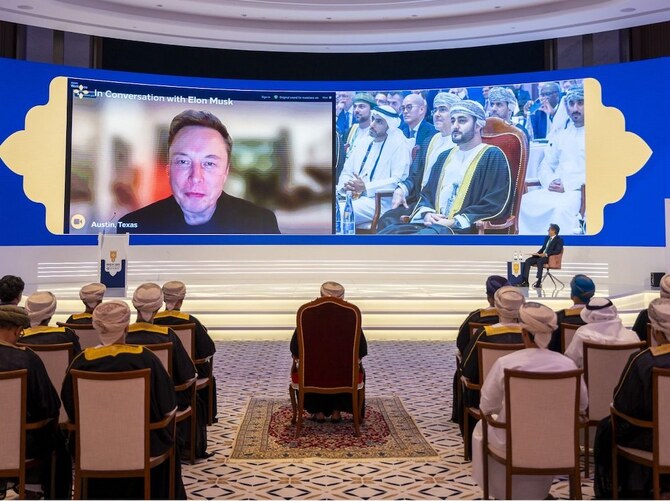
Oman Investment Authority invests in Elon Musk’s AI venture xAI
The Oman Investment Authority has acquired an undisclosed stake in xAI, Elon Musk’s artificial intelligence startup. This investment aligns with OIA’s strategy to diversify its international portfolio and support emerging technologies.
Founded in July 2023, xAI focuses on generative AI solutions, competing with leading players like OpenAI.
Earlier this month, xAI raised $6 billion in a series B round, attracting investments from Qatar Investment Authority, Kingdom Holding, and global firms like Andreessen Horowitz, bringing its valuation to $50 billion.
OIA’s latest investment in xAI complements its existing stake in SpaceX, Musk’s aerospace company.
This move reinforces the Gulf’s growing interest in cutting-edge technologies and the AI sector.
Iraq Venture Partners receives $2.7m for Iraqi entrepreneurs
Iraq Venture Partners has received $2.7 million from the Netherlands for the Orange Corners Innovation Fund. The funding will support the second phase of the initiative.
OCIF provides Iraqi entrepreneurs with technical expertise, financial backing, and access to extensive networks.


