

Pakistan to launch first women’s software technology park in Azad Kashmir next year

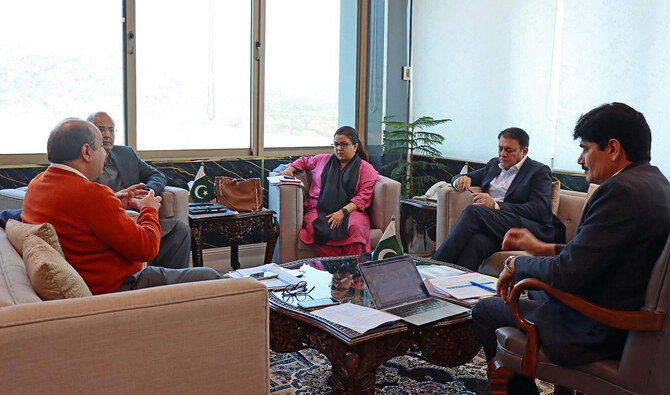
Pakistan's Minister of State for Information Technology Shaza Fatima Khawaja (center), holds a meeting with Pakistan Software Export Board in Islamabad, Pakistan, on December 20, 2024. (PID)
Short Url
Updated 21 December 2024
Follow

Pakistan to launch first women’s software technology park in Azad Kashmir next year

  • The tech facility will bridge the region’s gender-based digital divide and become operational in February
  • Over 18,000 professionals are employed across 43 IT parks in Pakistan, of which 20 percent are women

ISLAMABAD: Pakistan announced on Friday its plan to establish the country’s first women’s software technology park in Azad Kashmir, aiming to bridge the region’s gender-based digital divide and targeting a launch in February.

The decision was made during a meeting of the Pakistan Software Export Board (PSEB), chaired by Minister of State for Information Technology Shaza Fatima Khawaja, which assessed the overall performance of the country’s IT sector.

The move is part of the government’s broader plan, unveiled in May, to set up 10 new software technology parks nationwide by next year, including one in the federal capital.

These parks will feature incubation centers and other facilities to support start-ups, expand Pakistan’s digital landscape, increase IT exports and promote gender inclusivity in the tech sector.

“The initiative [to set up the software technology park in Azad Kashmir] underscores our dedication to creating equal opportunities for women and ensuring their meaningful participation in Pakistan’s digital economy,” the minister was quoted as saying in an official statement circulated after the meeting.

The statement informed that 20 percent of workforce in PSEB-supported software technology parks comprises female IT professionals.

Over 18,000 export professionals are currently employed across 43 IT parks in Pakistan.

The PSEB’s initiatives since 2020 have also resulted in more than 10,000 job placements through targeted training, certifications and internship programs.

The organization aims to empower 25,000 freelancers by 2027 by establishing 250 e-Employment Center’s and expand the footprint of the country’s IT sector abroad.



Pakistan cabinet reviews private Hajj policy as mandatory pilgrim training enforced

Updated 10 sec ago
Follow

Pakistan cabinet reviews private Hajj policy as mandatory pilgrim training enforced

  • Cabinet sends draft Private Hajj Policy 2027–2030 to committee for further review
  • Religion minister warns pilgrims who skip mandatory training will be barred from Hajj

ISLAMABAD: Pakistan’s federal cabinet on Wednesday reviewed proposals for stricter oversight of private Hajj operators, as authorities separately warned that pilgrims who failed to complete mandatory training would be barred from performing Hajj next year.

The cabinet, chaired by Prime Minister Shehbaz Sharif, was briefed on a draft Private Hajj Policy for 2027–2030, which includes third-party registration and scrutiny of private Hajj operator companies, according to a statement from the Prime Minister’s Office.

“The Federal Cabinet directed that the draft Private Hajj Policy 2027–2030, presented by the Ministry of Religious Affairs and Interfaith Harmony regarding third-party registration and scrutiny of private Hajj operators’ companies, be referred to the Hajj Policy Committee for further deliberation in light of the views of Cabinet members,” the prime minister’s office said in a statement.

The development comes as Religious Affairs Minister Sardar Muhammad Yousaf said on Wednesday pilgrims who failed to attend both phases of mandatory Hajj training would not be allowed to perform the pilgrimage.

“Pilgrims who do not complete mandatory Hajj training will be barred from performing Hajj,” the ministry quoted Yousaf as saying during a training workshop in Islamabad.

Around 120,000 pilgrims are currently undergoing training at 200 locations nationwide, with the second phase scheduled to begin after Ramadan. The training aims to familiarize pilgrims with Saudi laws, Hajj rituals and safety protocols to prevent accidents in crowded areas.

Saudi Arabia has allocated 179,210 pilgrims to Pakistan for Hajj 2026, including about 118,000 seats under the government scheme, while the remainder will be handled by private tour operators.

Under Pakistan’s government Hajj package, the estimated cost ranges from Rs1.15 million to Rs1.25 million ($4,049.93 to $4,236), subject to final agreements with service providers.