

Nearly half of taxpayers worldwide don’t see their money being spent for public good — survey

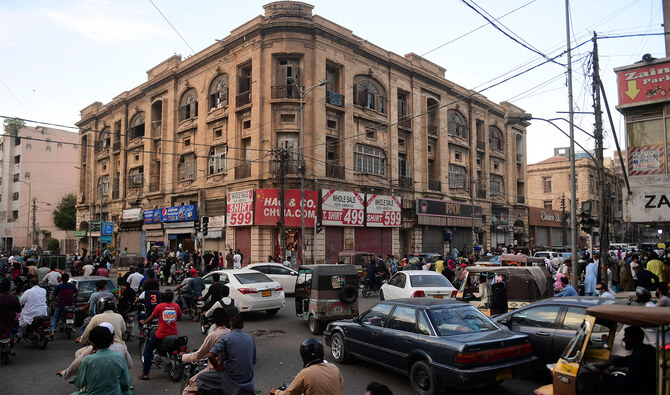
People crowd in a market area for shopping in Karachi on May 1, 2021. (AFP/File)
Short Url
Updated 21 December 2024
Follow

Nearly half of taxpayers worldwide don’t see their money being spent for public good — survey

  • 52% of respondents globally agreed that taxes were a contribution to the community rather than a cost
  • Only 33% individuals agreed that tax revenues in their country were spent for the betterment of public

ISLAMABAD: Almost half of taxpayers across the globe do not see their money being spent for the betterment of public, a recent global survey found, in contrast with the idea of citizens agreeing to pay taxes in exchange for services.

The poll was conducted by the Association of Chartered Certified Accountants (ACCA), a globally recognized professional body providing qualifications and advancing standards in accountancy.

The survey found that 52% of the respondents globally agreed that taxes were a contribution to the community rather than a cost, while 25% disagreed with this. The rest chose to stay neutral.

“Only 33% agree that tax revenues in their country are spent for the public good,” the ACCA said on Friday, adding that 46% respondents disagreed with the notion.

In addition, it said, 32% agreed that public services and infrastructure were a fair return for the taxes they paid, with 50% disagreeing and the rest staying neutral.

Pakistan has one of the lowest tax ratios in the world, according to the World Bank. The South Asian country’s failure to generate tax revenues in higher amounts stems from the fact that it has a narrow tax base, low compliance rate, an inefficient tax administration and massive tax evasion.

The South Asian country aims to collect an ambitious $46 billion through taxes this financial year (July 2024 till June 2025). Authorities say they have identified 4.9 million taxable persons in the country by using modern technology.

“Trust in tax systems is crucial for sustainable development and prosperity, and the findings of this survey highlight the challenges that many governments across the world face in building it,” said Helen Brand, the ACCA chief executive.

“We look forward to using this important work to engage with policymakers, tax authorities and civil society to drive evidence-based policy initiatives to build effective and trusted tax systems.”


International Cricket Council in talks to revive India-Pakistan T20 World Cup clash

Updated 07 February 2026
Follow

International Cricket Council in talks to revive India-Pakistan T20 World Cup clash

  • Pakistan face two-point loss and net run-rate hit if they forfeit Feb. 15 match
  • ICC seeks dialogue after Pakistan boycott clash citing government directive

NEW DELHI, India: The International Cricket Council is in talks with the Pakistan Cricket Board to resolve the boycott of its T20 World Cup match against India on February 15, AFP learnt Saturday.

Any clash between arch-rivals India and Pakistan is one of the most lucrative in cricket, worth millions of dollars in broadcast, sponsor and advertising revenue.

But the fixture was thrown into doubt after Pakistan’s government ordered the team not to play the match in Colombo.

The Pakistan Cricket Board reached out to the ICC after a formal communication from the cricket’s world body, a source close to the developments told AFP.

The ICC was seeking a resolution through dialogue and not confrontation, the source added.

The 20-team tournament has been overshadowed by an acrimonious political build-up after Bangladesh, who refused to play in India citing security concerns, were replaced by Scotland.

As a protest, Pakistan refused to face co-hosts India in their Group A fixture.

Pakistan, who edged out Netherlands in the tournament opener on Saturday, will lose two points if they forfeit the match and also suffer a significant blow to their net run rate.

India skipper Suryakumar Yadav said this week that his team would travel to Colombo for the clash.

Pakistan and India have not played bilateral cricket for more than a decade, and meet only in global or regional tournaments.