Nearly half of taxpayers worldwide don’t see their money being spent for public good — survey

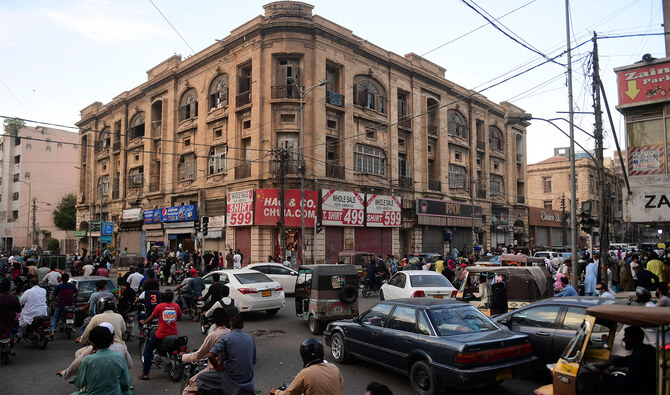
People crowd in a market area for shopping in Karachi on May 1, 2021. (AFP/File)
Short Url
Updated 21 December 2024
Follow

Nearly half of taxpayers worldwide don’t see their money being spent for public good — survey

  • 52% of respondents globally agreed that taxes were a contribution to the community rather than a cost
  • Only 33% individuals agreed that tax revenues in their country were spent for the betterment of public

ISLAMABAD: Almost half of taxpayers across the globe do not see their money being spent for the betterment of public, a recent global survey found, in contrast with the idea of citizens agreeing to pay taxes in exchange for services.

The poll was conducted by the Association of Chartered Certified Accountants (ACCA), a globally recognized professional body providing qualifications and advancing standards in accountancy.

The survey found that 52% of the respondents globally agreed that taxes were a contribution to the community rather than a cost, while 25% disagreed with this. The rest chose to stay neutral.

“Only 33% agree that tax revenues in their country are spent for the public good,” the ACCA said on Friday, adding that 46% respondents disagreed with the notion.

In addition, it said, 32% agreed that public services and infrastructure were a fair return for the taxes they paid, with 50% disagreeing and the rest staying neutral.

Pakistan has one of the lowest tax ratios in the world, according to the World Bank. The South Asian country’s failure to generate tax revenues in higher amounts stems from the fact that it has a narrow tax base, low compliance rate, an inefficient tax administration and massive tax evasion.

The South Asian country aims to collect an ambitious $46 billion through taxes this financial year (July 2024 till June 2025). Authorities say they have identified 4.9 million taxable persons in the country by using modern technology.

“Trust in tax systems is crucial for sustainable development and prosperity, and the findings of this survey highlight the challenges that many governments across the world face in building it,” said Helen Brand, the ACCA chief executive.

“We look forward to using this important work to engage with policymakers, tax authorities and civil society to drive evidence-based policy initiatives to build effective and trusted tax systems.”


Pakistan warns of landslides, avalanches in northwest amid snowfall forecast

Updated 22 December 2025
Follow

Pakistan warns of landslides, avalanches in northwest amid snowfall forecast

  • Provincial authority warns snowfall may cause road closures, slippery conditions in Khyber Pakhtunkhwa districts in next 24 hours
  • Disaster management authority urges people to exercise caution, avoid unnecessary traveling during next 24 hours in Khyber Pakhtunkhwa

PESHAWAR: Pakistan has warned of landslides and avalanches in the hilly areas of northwestern Khyber Pakhtunkhwa (KP) in the next 24 hours, the Provincial Disaster Management Authority (PDMA) said on Monday, advising the public to remain cautious and avoid unnecessary travel.

In a weather forecast issued by the PDMA KP, the authority warned that snowfall may cause road closure and slippery conditions in the northwestern Naran, Kaghan, Dir, Swat, Buner, Malakand, Kohistan, Mansehra, Abbottabad, Shangla and Galliyat districts in the next 24 hours.

“Possibility of landslides/avalanches in hilly areas of the province during the [24 hours] period,” PDMA said. 

“Travelers and tourists are advised to remain extra cautious and avoid unnecessary travel during the period.”

It also warned of foggy conditions in patches at scattered places over Peshawar, Mardan, Nowshera, Charsadda Swabi and D.I. Khan districts during late nights and early mornings in northwestern Pakistan. 

Pakistan, which contributes less than one percent of global greenhouse gas emissions, is recognized among countries that are most vulnerable to climate change.

Scientists say rising temperatures are making South Asia’s monsoon rains more erratic and intense, increasing the risk of flash floods and landslides in mountainous regions such as KP and northern Gilgit-Baltistan.

Authorities in the past have urged people to avoid northern areas or exercise caution in travel when weather conditions are expected to deteriorate in winter season. 

At least 21 people, including nine children, died in freezing temperatures after being stuck in their vehicles in the Pakistani hill station of Murree in January 2022 when the roads became impassable.