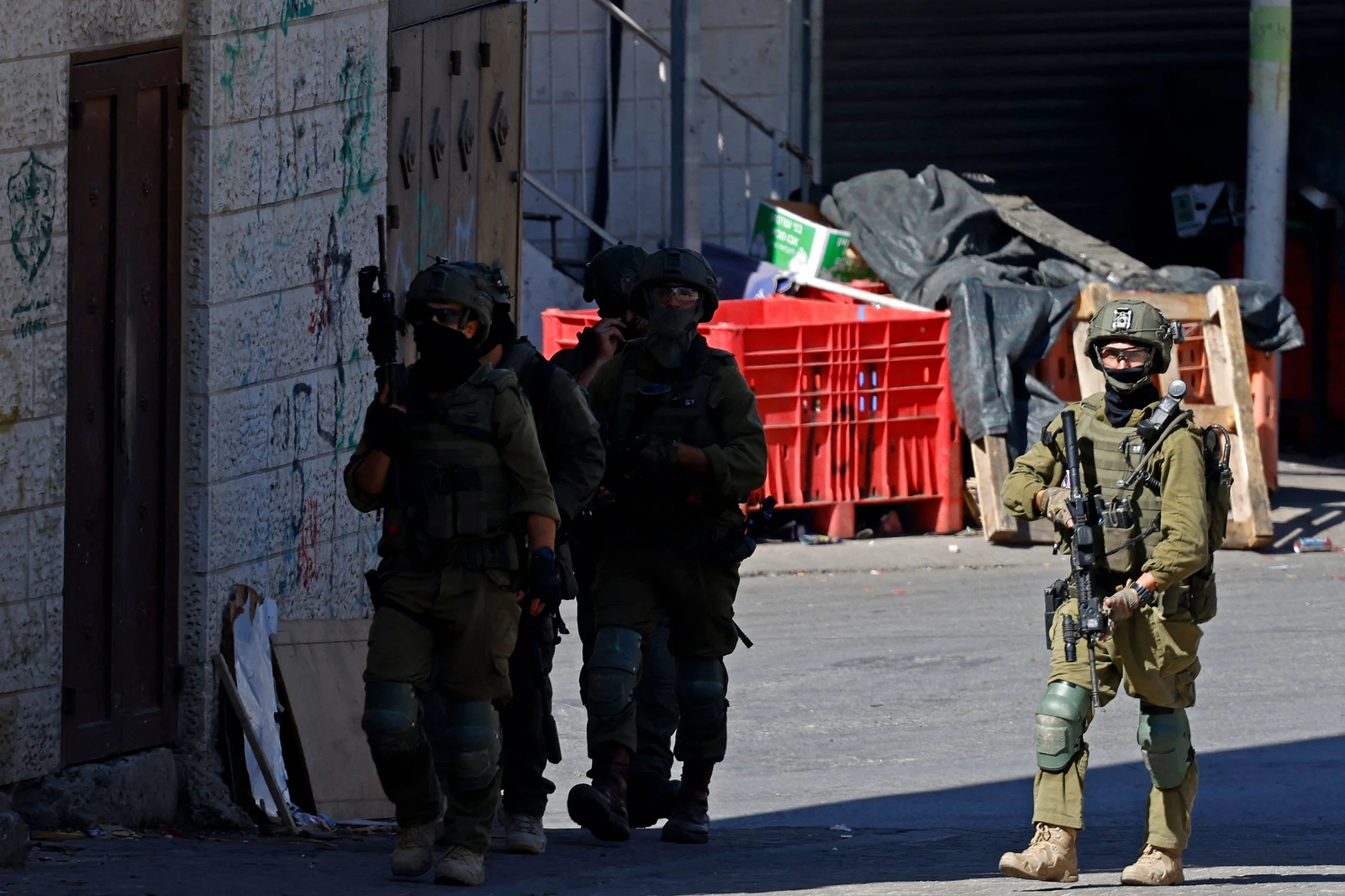
DJIBOUTI: French President Emmanuel Macron said Friday its military base in Djibouti could assume a greater role, speaking after Paris was forced to pull troops out of several other African countries.
“Our role is changing in Africa because the world is changing in Africa, because public opinion is changing, because governments are changing,” he said.
Macron was addressing French forces stationed at the strategic Horn of Africa nation before sitting down for a Christmas meal with the troops, a regular feature on the presidential calendar.
France had to change its past logic of having too many military bases in Africa, he said.
In recent years, Mali, Burkina Faso and Niger, all three under military rule, have told France to get its troops out.
They have turned instead to Russia for military support in their fight against the jihadist forces active in the region.
And on Friday, France also began withdrawing ground troops from Chad, after N’Djamena last month abruptly ended military cooperation with the former colonial power.
The central African country was the last Sahel nation to host French troops.
Its decision also came shortly after Senegal’s President Bassirou Diomaye Faye told AFP in an interview that France should close its military bases there.
Djibouti has in the past been part of France’s Indo-Pacific strategy, contributing to freedom of navigation in the Red Sea.
“It is also, and will also have to be reinvented as, a projection point for some of our African missions,” Macron said, without elaborating.
The French base at Djibouti currently hosts 1,500 soldiers.
That makes it France’s largest military contingent abroad and the only one untouched by the military draw-down African nations have imposed on Paris.
In July, Djibouti and France renewed their defense cooperation treaty.
As well as paying rent for the base, France also assumes responsibility for patrolling the airspace over the country.
The small east African state is a relative haven of stability. On the other side of the Red Sea lies Yemen, gripped in a devastating civil war.
Macron sees new role for French military base in Djibouti
https://arab.news/n6uc3
Macron sees new role for French military base in Djibouti
- Macron was speaking after France was forced to pull troops out of several other African countries
Iraqis cover soil with clay to curb sandstorms
- Dust storms have cloaked cities and villages in an endless ochre haze
BAGHDAD: Deep in Iraq’s southern desert, bulldozers and earthmovers spread layers of moist clay over sand dunes as part of a broader effort to fight increasingly frequent sandstorms.
Iraq has long suffered from sand and dust storms, but in recent years they have become more frequent and intense as the country falls prey to the effects of climate change.
Sand and dust storms — driven by severe drought, rising temperatures and deforestation — have cloaked cities and villages in an endless ochre haze, grounded flights and filled hospitals with patients suffering from breathing difficulties.
Iraqi authorities have warned that these suffocating storms will intensify further, adding urgency to address the root of the problem.
In a relatively small area between the cities of Nasiriyah and Samawah, not far from ancient Sumerian ruins, laborers are working hard to stabilize the soil by applying a layer of moist clay 20-25 centimeters thick.
The project also includes planting heat-tolerant seedlings like Prosopis and Conocarpus to further stabilize the soil.
“The main goal is to reduce the impact of transboundary dust storms,” said Udai Taha Lafta from UN-Habitat, which is leading the project to combat sandstorms with Iraqi expertise.
“It is a vital area despite its small size, and will hopefully help reduce dust storms next summer,” Lafta said.
A short-term objective is to shield a southern highway where many traffic accidents have occurred due to poor visibility during dust storms.
The Ministry of Environment estimates that Iraq now faces about 243 storms per year, and the frequency is expected to increase to 300 “dust days” by 2050 unless drastic mitigation measures are adopted.
In 2023, Iraqi authorities teamed up with the UN-Habitat and the Kuwait Fund for Arab Economic Development in areas that have been identified as major sources of sandstorms.
The project has been implementing several methods in three southern areas, including digging water canals and supplying electricity to pump water from the Euphrates river, preparing barren lands for vegetation.
One of the project’s ultimate goals is to increase green spaces and for farmers to eventually sustain the lands after droughts and chronic water shortages have drastically reduced agricultural areas.
Qahtan Al-Mhana, from the Agriculture Ministry, said that stabilising the soil gives agricultural efforts in sandy areas a chance to endure.
He added that Iraq has extensive “successful” experience in combating desertification and dust storms by stabilising sand dunes.
Since the 1970s, the country has implemented such projects, but after decades of turmoil, environmental challenges have largely fallen by the wayside.
With the severe recent impact of climate change, “work has resumed,” said Najm Abed Taresh from Dhi Qar University. “We are making slow but
steady progress.”