- Lamb or chicken sajji is popular in Sindh, Balochistan provinces but humble food stall has reimaged recipe with rohu fish
- Social media influencers and word of mouth popularity have helped put shop’s unique fish sajji on culinary map of Pakistan
SANGHAR: The glow of a crackling fire flickered from the humble food stall as dusk fell earlier this month over the small town of Sanghar in Pakistan’s southern Sindh province.
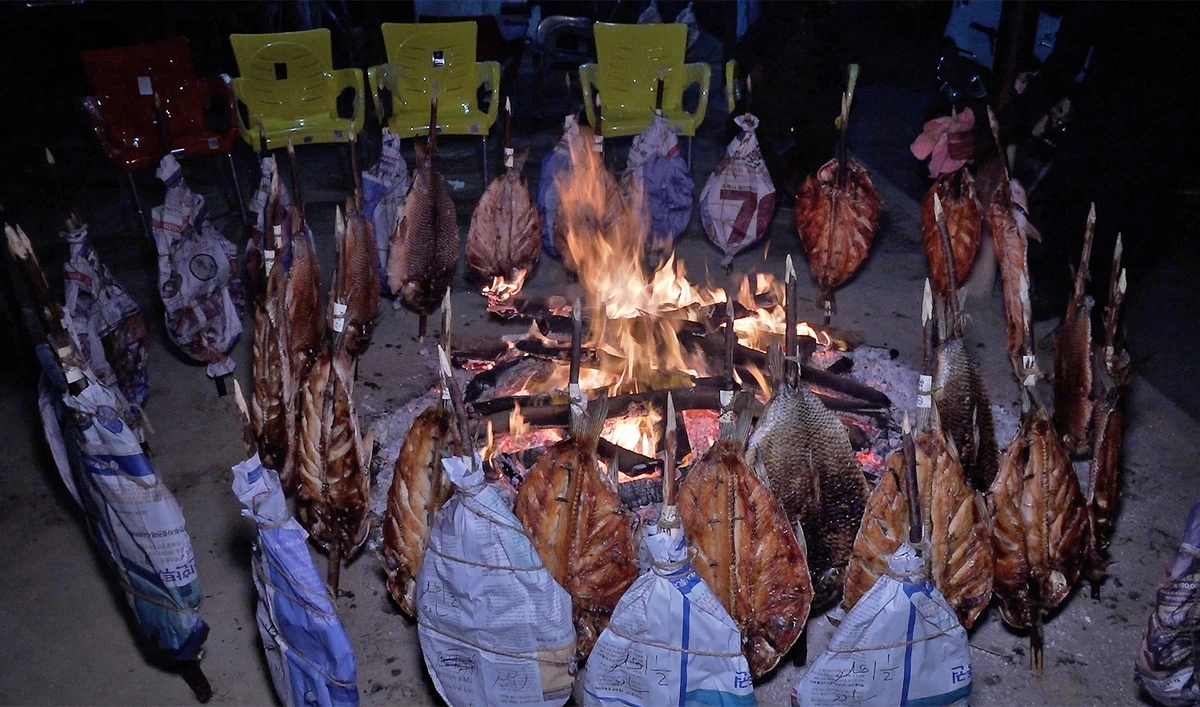
With no proper structure to speak of, the shop of Abdul Jabbar Mallah has little more than skewers, some chairs and the expertise of chefs who have honed their craft over decades, popularizing a type of slow-cooked fish sajji that draws customers from Sanghar and beyond.
Sajji is usually made of lamb or chicken marinated in simple spices and slow roasted over an open flame to preserve natural flavors. Here in Sanghar, the classic recipe has been reimagined with rohu fish, a freshwater carp prized for its tender meat.
“It has been more than 20 to 25 years since I’ve been doing this work,” Mallah told Arab News last week as he skewered fish on wooden rods which he stuck into the ground in a circle around a fire to roast for two hours.
“The specialty of this sajji is that it is made from freshwater [fish]. Second thing is that no oil is used, it is dry, it is made without water, without oil. So, when people sit down to eat, even a two-kilogram piece of fish can be eaten by one person.”
The spices, a harmonious mix of coriander, white cumin and black pepper, add to the dish’s distinct flavor, with Mallah saying he avoided using city-bought spices when preparing the fish, which retails for $4.5 a kilogram. The smallest order is 2kg.
“This is why its taste is unique. People love eating local fish in local spices,” he said.
Mallah humbly acknowledged it was not him who invented the dish but his mentors, Ata Muhammad and Rajab Ali.
“My masters used to make it, and I learned from them,” he said, recounting famous clients like Pir Pagaro, an influential spiritual leader of the region whose forces fought against the British and who later played a role in Pakistani politics. Jam Sadiq Ali, a former Sindh chief minister in the early 1990s, was another top client who also ordered Mallah’s fish sajji for his son’s wedding.
Today, the popularity of Mallah’s innovatio has spread beyond the confines of Sanghar. Though the chef has been cooking fish for over two decades, visits by food and travel vloggers in recent years have made his sajji a culinary magnet for customers from around the country.
That’s why an out-of-town guest had requested to try the fish, said Imran Khan Khilji, a local trader visiting Mallah’s stall.
“We came here especially because of this guest,” he said, pointing to a friend sitting next to him. “He has come to attend a wedding, and we said, ‘Let’s treat you to a delicacy of Sanghar’.”
Shehzad Jatt, a teacher, said he had been waiting nearly two hours to enjoy the sajji.
“This is Sanghar’s special dish, and they make it excellently,” Jatt said as he sat with a group of friends at Mallah’s shop, watching rows of sajji roasting in the chilly December night.
“I’ve had fish at many places, but the fish from Sanghar is something else. The way the sajji fish is made here, I’ve never seen such a sajji anywhere else. Once you try it, you’ll know that the taste is unique.”
And Mallah is committed to preserving the flavors and the legacy of his mentors.
“The fish sajji that is prepared here in Sanghar, no one else makes it. Whoever tries to make it, it lasts only a few days, but after that, their shop doesn’t run because, by the grace of god, we have such a unique taste,” the chef said as he skewered a fresh batch of fish onto rods with his bony fingers.
“Allah has blessed our hands with flavor and people eat it and keep coming back.”