

Saudi Arabia launches duty exemption for industrial inputs to boost exports

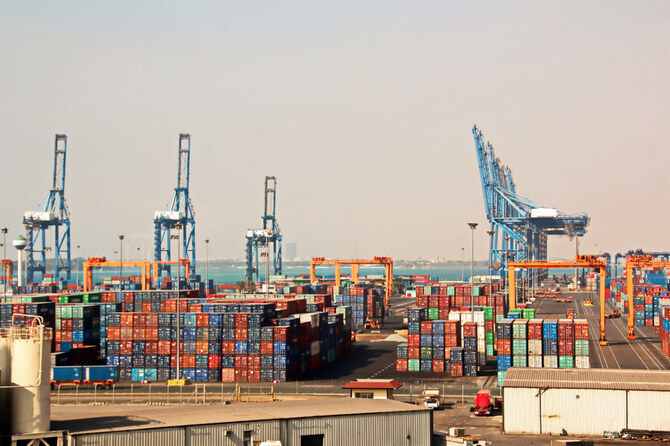
The service, which applies to industrial inputs such as labor, raw materials, fuel, equipment, and buildings, is designed to provide a competitive advantage to Saudi manufacturers by reducing costs associated with exports. Shutterstock
Short Url
Updated 17 December 2024
Follow

Saudi Arabia launches duty exemption for industrial inputs to boost exports

  • It allows industrial companies to benefit from customs duty exemptions on inputs used for the production of export goods
  • Eligibility for the exemption is also determined by a company’s export performance over the past 12 months

RIYADH: The Saudi Export Development Authority has launched a new service, “Exemption for Export,” aimed at enhancing Saudi Arabia’s industrial competitiveness.

The initiative, developed in collaboration with the Ministry of Industry and Mineral Resources, allows industrial companies to benefit from customs duty exemptions on inputs used for the production of export goods, aligning with the Kingdom’s Vision 2030 goal of diversifying the economy and boosting non-oil exports.

The service, which applies to industrial inputs such as labor, raw materials, fuel, equipment, and buildings, is designed to provide a competitive advantage to Saudi manufacturers by reducing costs associated with exports.

To qualify, companies must hold a valid industrial license and submit a request for exemption for materials listed under the Ministry of Industry and Mineral Resources’ approved industrial capacities. Additionally, the materials must match those specified in the company’s industrial license.

Eligibility for the exemption is also determined by a company’s export performance over the past 12 months. Once approved, the process is quick and efficient, with exemption requests typically processed within five business days.

Companies can access the service via the “Sina’ai” platform, provided by the Ministry of Industry and Mineral Resources, where they can apply for the customs exemption under the export category.

This new service addresses key challenges faced by Saudi Arabia’s industrial sector, streamlining the export process and encouraging businesses to expand their reach to international markets.

According to the Saudi Export Development Authority, the initiative is in line with efforts to support exporters and help achieve Saudi Vision 2030 objectives.

“This initiative aims to diversify the Kingdom’s income sources, strengthen non-oil exports, and foster sustainable growth by offering innovative solutions that meet the needs of exporters and promote the competitiveness of national industries,” the statement said.

The Kingdom’s ongoing push for economic diversification, under Vision 2030, has led to significant investments in non-oil sectors. Enhancing the industrial sector's global competitiveness is a cornerstone of this vision, and non-oil exports have steadily increased in recent years.

The Saudi Export Development Authority, in partnership with the Ministry of Industry and Mineral Resources, has introduced several initiatives to facilitate the expansion of Saudi-made products in international markets.

Key programs include the National Industrial Development and Logistics Program, which focuses on improving infrastructure, streamlining customs procedures, and providing export incentives.

By removing financial and logistical barriers, Saudi Arabia aims to position itself as a global trade hub, driving sustainable growth in key sectors such as manufacturing, petrochemicals, and construction materials.


RLC Global Forum 2026 opens, leading the agenda for transformation in retail industry

Updated 03 February 2026
Follow

RLC Global Forum 2026 opens, leading the agenda for transformation in retail industry

RIYADH: The RLC Global Forum 2026 opened in Riyadh on Feb. 3, aiming to shape the future of retail and consumer-facing industries by bringing together the most influential leaders from across the sector.

Addressing the opening session, Panos Linardos, chairman of RLC Global Forum, said: “We meet at a moment that feels fundamentally different from just a few years ago. Growth today is no longer linear. It is no longer evenly distributed. And it is no longer guaranteed. 

“We find ourselves at what we call a growth crossroads, a moment where traditional models are under pressure, geopolitical dynamics are reshaping trade and investment, and leadership choices carry longer-lasting consequences.”

He added that at the 2025 event, the discussions were focused on trust and collaboration in a time of disruption. 

“This year, the environment is more fragmented, more volatile, and more urgent,” he said, explaining that supply chains are shifting, consumer expectations are moving faster than organizations, and capital is more selective.

Linardos also stated that the boundaries between retail, real estate, technology, policy, and culture “are increasingly blurred.”

At a growth crossroads, progress is a shared responsibility requiring clarity, coordination, and balanced leadership, he said adding over the next two days, the forum will bring together global CEOs, retailers, and real estate leaders, as well as policymakers, academics, investors, and innovators.

“The purpose is clear: to examine how growth is being rebuilt, where it is being redefined, and what leadership looks like in this new context,” the forum chairman said.

Linardos set out details of the NextGen retail challenge, which is developed with the Innovation and Entrepreneurship Center at Princess Nourah bint Abdulrahman University and Monsha’at.

Vice Minister of Economy and Planning Ammar Nagadi used his opening remarks to put his perspective on how economic choices translate into competitiveness and long-term value is especially timely for the discussions ahead.

The 2026 forum is exploring six defining themes that capture the transformation reshaping global trade, consumption, and leadership: Growth in a Reordered World, AI and the Power of Multipliers, Global South as Growth Engine, Experience as Growth Infrastructure, Future Consumer Order, and Leadership Beyond Resilience.