

BP, ADNOC’s XRG agree Egypt gas JV Arcius Energy

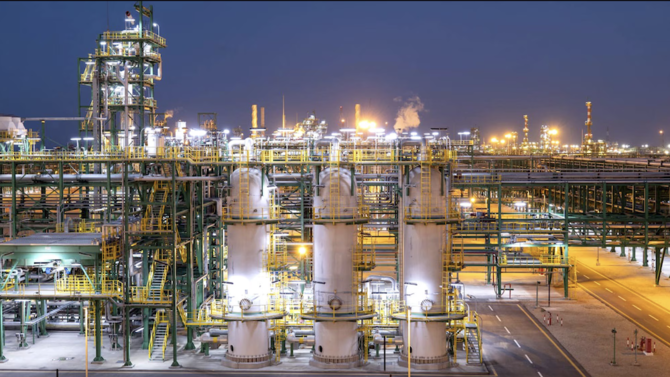
BP and XRG announced they have reached financial close and completed formation of their new joint venture and international natural gas platform Arcius Energy. BP
Short Url
Updated 16 December 2024
Follow

BP, ADNOC’s XRG agree Egypt gas JV Arcius Energy

  • Arcius Energy is 51% owned by BP and 49% owned by XRG
  • ADNOC announced last week the newly-created XRG’s board members

DUBAI: BP and Abu Dhabi National Oil Company’s international investments arm XRG said on Monday they have closed a deal for a new natural gas joint venture in Egypt, as ADNOC expands its efforts to grow abroad.
The joint venture, Arcius Energy, is 51 percent owned by BP and 49 percent owned by XRG. It will operate in Egypt initially.
Naser Saif Al-Yafei, an ADNOC veteran, was hired as Arcius’ chief executive. He most recently led strategy, sustainability and transformation at subsidiary ADNOC Gas. Katerina Papalexandri, vice president of gas and low carbon energy growth at BP, was appointed chief financial officer.

“Arcius Energy brings together the strengths of our two companies to create a dynamic new platform for international growth in natural gas in the region,” BP Chief Executive Murray Auchincloss said in the statement, adding that Egypt was “a hub for new opportunities to build out a highly competitive gas portfolio in the region.”
Sultan Al-Jaber, XRG executive chairman and ADNOC CEO, said the JV “fully aligns with XRG’s objectives to accelerate the transformation of energy systems and build a world-scale integrated gas and chemicals portfolio to meet rising global demand.”
Arcius’ concessions in Egypt comprise a 10 percent interest in Shorouk, which contains the giant Zohr field operated by Eni and 100 percent of North Damietta, which contains the producing Atoll field operated by the Pharaonic Petroleum Company.

It also has exploration concession agreements for North El Tabya, Bellatrix-Seti East and North El Fayrouz.
ADNOC announced last week that the newly-created XRG’s board members include Blackstone’s Jon Gray and former BP boss Bernard Looney, who was dismissed by BP’s board last December after the oil major said he had knowingly misled the board by failing to disclose past relationships.
The appointment of big names from the world of finance and energy to XRG’s board signals its grand ambitions, as ADNOC pursues its aggressive growth strategy.
XRG, which ADNOC said is valued at more than $80 billion, will focus on overseas investments in low-carbon energy, including gas, chemicals and renewables.


Saudi POS spending jumps 28% in final week of Jan: SAMA

Updated 8 sec ago
Follow

Saudi POS spending jumps 28% in final week of Jan: SAMA

RIYADH: Saudi Arabia’s point-of-sale spending climbed sharply in the final week of January, rising nearly 28 percent from the previous week as consumer outlays increased across almost all sectors. 

POS transactions reached SR16 billion ($4.27 billion) in the week ending Jan. 31, up 27.8 percent week on week, according to the Saudi Central Bank. Transaction volumes rose 16.5 percent to 248.8 million, reflecting stronger retail and service activity. 

Spending on jewelry saw the biggest uptick at 55.5 percent to SR613.69 million, followed by laundry services which saw a 44.4 percent increase to SR62.83 million. 

Expenditure on personal care rose 29.1 percent, while outlays on books and stationery increased 5.1 percent. Hotel spending climbed 7.4 percent to SR377.1 million. 

Further gains were recorded across other categories. Spending in pharmacies and medical supplies rose 33.4 percent to SR259.19 million, while medical services increased 13.7 percent to SR515.44 million. 

Food and beverage spending surged 38.6 percent to SR2.6 billion, accounting for the largest share of total POS value. Restaurants and cafes followed with a 20.4 percent increase to SR1.81 billion. Apparel and clothing spending rose 35.4 percent to SR1.33 billion, representing the third-largest share during the week. 

The Kingdom’s key urban centers mirrored the national surge. Riyadh, which accounted for the largest share of total POS spending, saw a 22 percent rise to SR5.44 billion from SR4.46 billion the previous week. The number of transactions in the capital reached 78.6 million, up 13.8 percent week on week. 

In Jeddah, transaction values increased 23.7 percent to SR2.16 billion, while Dammam reported a 22.2 percent rise to SR783.06 million. 

POS data, tracked weekly by SAMA, provides an indicator of consumer spending trends and the ongoing growth of digital payments in Saudi Arabia.  

The data also highlights the expanding reach of POS infrastructure, extending beyond major retail hubs to smaller cities and service sectors, supporting broader digital inclusion initiatives.  

The growth of digital payment technologies aligns with Saudi Arabia’s Vision 2030 objectives, promoting electronic transactions and contributing to the Kingdom’s broader digital economy.