

Riyadh Metro’s Red and Green lines open to public

1 / 3
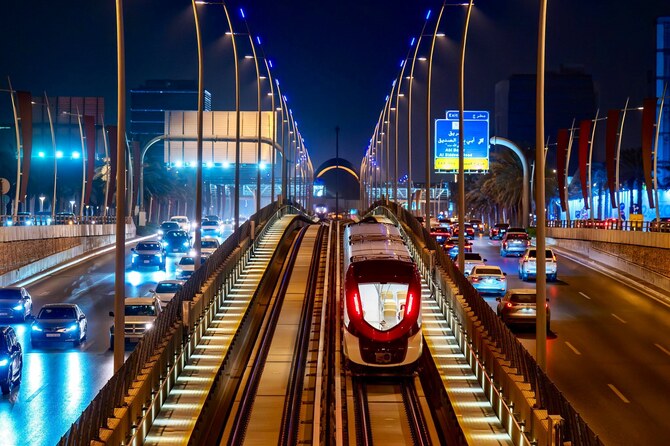
The Red Line is 25.1 km long and runs from east to west along King Abdullah Road, connecting King Fahd Sports City to King Saud University across 15 stations, including the Riyadh International Convention and Exhibition Center.(Supplied)
2 / 3
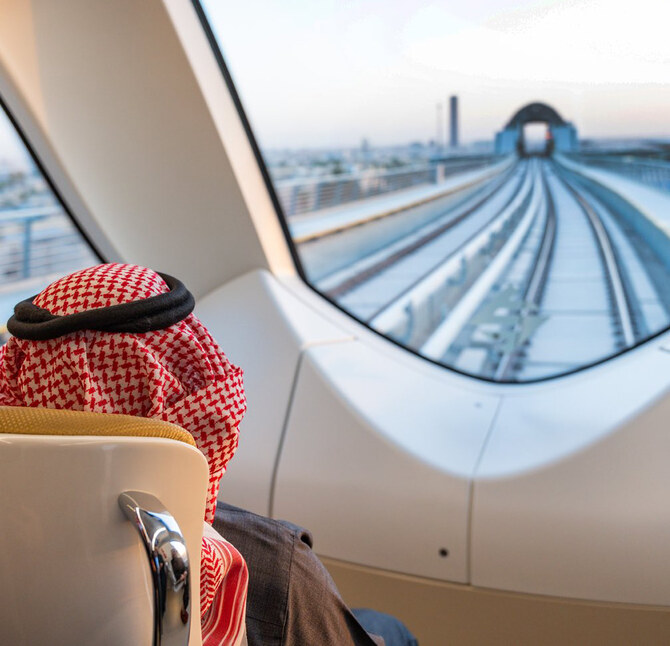
The Green Line, along King Abdulaziz Road, is 13.3 km long and runs from King Abdullah Road, past the Ministry of Education, all the way to the National Museum.(X: @RiyadhTransport)
3 / 3
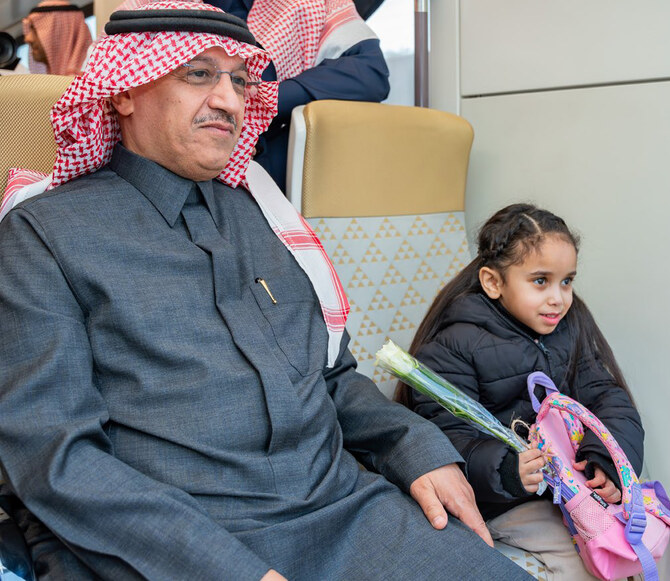
Minister of Education Yousef Al-Benyan takes the Red Line of the Riyadh Metro, from King Saud University Station to the Ministry of Education Station.(X: @RiyadhTransport)
Short Url
Updated 15 December 2024
Follow

Riyadh Metro’s Red and Green lines open to public

  • Network to be fully operational with Orange Line launch on Jan. 5, 2025

RIYADH: The Royal Commission for Riyadh City announced the roll-out of two additional lines —Red: King Abdullah Road and Green: King Abdulaziz Road — of the Riyadh Metro on Sunday.

Passengers have access to stations on the two lines from 6 a.m. to midnight, the Saudi Press Agency reported.

Riyadh Metro, a key pillar of Saudi Vision 2030, is a crucial step toward reducing traffic congestion in the capital and improving the quality of life for the city’s residents.

With this addition, five out of the six metro lines are now operational.

The Red Line is 25.1 km long and runs from east to west along King Abdullah Road, connecting King Fahd Sports City to King Saud University across 15 stations, including the Riyadh International Convention and Exhibition Center.

It intersects with the Blue Line at the STC Station, with the Green Line at the Ministry of Education Station, and with the Purple Line at Al-Hamra Station.

The Green Line, along King Abdulaziz Road, is 13.3 km long and runs from King Abdullah Road, past the Ministry of Education, all the way to the National Museum.

Its 12 stations serve several government entities, including the Ministry of Defense, the Ministry of Finance, and the Ministry of Commerce, as well as numerous commercial, service, and residential facilities.

All stations on the line were open to the public on Sunday, except for the Ministry of Finance and National Museum stations, which will become operational at a later date.

The Green Line intersects with the Red Line at the Ministry of Education Station and with the Blue Line at the National Museum Station.

According to the previously announced roll-out plan, the Orange Line, which covers Madinah Road, will open on Jan. 5, 2025, completing the Riyadh Metro network and making it fully operational.

Passengers can identify destinations and purchase tickets using the Darb mobile application or at Riyadh Metro stations.

The first phase of the Riyadh Metro began on Dec. 1 with three lines: the Blue Line, connecting Olaya Street to Al Batʼha; the Yellow Line, running along King Khalid International Airport Road; and the Purple Line, covering Abdul Rahman bin Awf Road and Al-Shaikh Hassan Bin Hussain Street.

The total length of Riyadh Metro’s six lines spans 176 km and includes 85 stations.


Saudi Arabia advances in Universal Health Coverage index

Updated 12 December 2025
Follow

Saudi Arabia advances in Universal Health Coverage index

  • Life expectancy in Kingdom rose from 74 in 2016 to 79.7 in 2025

RIYADH: Saudi Arabia has made notable progress in the Universal Health Coverage Service Coverage Index, reinforcing its position among leading nations in global health indicators, according to the latest data released by the World Health Organization and the World Bank.

The Kingdom recorded a score of 83 points in the latest UHC update, marking a nine-point increase within two years and placing Saudi Arabia among countries classified as having high-level health service coverage.

The steady rise reflects sustained improvements over the past two decades and underscores the impact of the Kingdom’s Health Sector Transformation Program under Saudi Vision 2030.

The UHC Service Coverage Index is one of the internationally recognized Sustainable Development Goal indicators and measures access to essential health services across key areas, including preventive care, treatment, and system capacity.

Progress in the index is closely linked to broader development outcomes such as improved quality of life, reduced disease burden, and enhanced social well-being.

Saudi Arabia’s advancement has been driven by a strategic focus on preventive healthcare, strengthened primary care services, expanded early screening programs, and increased health system readiness.

The transformation has also been supported by rapid digitalization, including platforms such as Sehhaty and the Seha Virtual Hospital, which have expanded access to care and improved service efficiency nationwide.

These reforms have translated into measurable public health gains. Life expectancy in Saudi Arabia rose from 74 years in 2016 to about 79.7 in 2025, bringing the Kingdom close to its Vision 2030 target of 80 years and highlighting the effectiveness of preventive and treatment programs.

Health Minister Fahad Abdulrahman AlJalajel said the progress reflected the tangible outcomes of Vision 2030 and sustained leadership support.

He said: “The improvements we see today in international health indicators demonstrate the real impact of the Kingdom’s health transformation, which prioritizes prevention, primary care empowerment, and digital health solutions. Raising life expectancy to 79.7 years is the result of an integrated effort focused on improving people’s health and quality of life.”

Saudi Arabia’s progress in the UHC index further strengthens its standing among G20 countries and underscores the Kingdom’s commitment to building a more efficient, resilient, and sustainable health system, with people at the center of national development.