

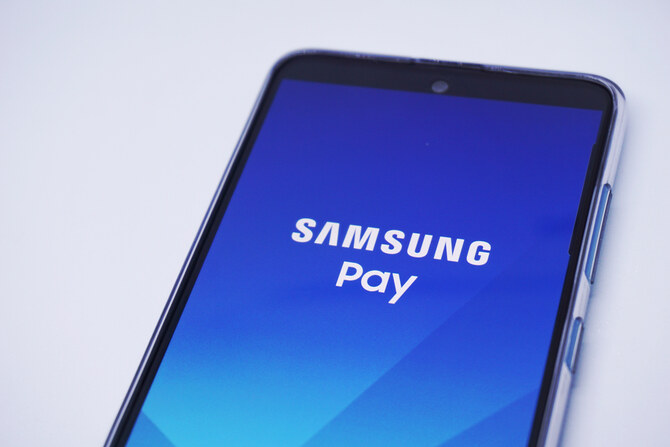
Samsung Pay launches in Saudi Arabia

The introduction of Samsung Pay aligns with SAMA’s strategic objective to foster a cashless society by developing a state-of-the-art digital payments infrastructure. Shutterstock
Short Url
Updated 09 December 2024
Follow

Samsung Pay launches in Saudi Arabia

  • New service provides secure and convenient alternative to traditional cash and payment methods
  • Launch is part of SAMA’s ongoing initiatives to enhance the digital payments ecosystem

RIYADH: Saudis will now have access to another mobile payment option with the launch of Samsung Pay, which will be integrated into the national payment system mada.

The Saudi Central Bank announced the availability of this new service, providing a secure and convenient alternative to traditional cash and payment methods, according to a press release.

The launch is part of SAMA’s ongoing initiatives to enhance the digital payments ecosystem in alignment with the ambitious goals of Saudi Vision 2030, which aims to diversify the economy and promote financial inclusion through the roll out of new technologies.

“The launch of Samsung Pay service is part of a series of innovations that aim at meeting market needs and advancing Saudi Arabia’s position as a global pioneer in fintech,” said SAMA in a statement.

Samsung Pay will allow users to store and manage mada cards, credit cards, and other payment methods directly on their devices via the Samsung Wallet app. This will enable contactless payments in physical stores, online transactions, and in-app purchases.

The service utilizes advanced security technologies, including tokenization, biometric authentication, and Samsung Knox encryption, ensuring that every transaction is protected against fraud, the release added.

The introduction of Samsung Pay aligns with SAMA’s strategic objective to foster a cashless society by developing a state-of-the-art digital payments infrastructure.

This move reflects the Kingdom’s dedication to modernizing its financial sector while adhering to international standards for innovation and security in digital transactions.

The launch of Samsung Pay is just one of many initiatives aimed at meeting the growing demand for fintech solutions in the Kingdom.

Last month, SAMA issued the “E-Wallets Rules” to regulate Electronic Money Institutions, enhancing the safety and stability of the financial sector. 

The new rules outlined requirements for opening e-wallets, verifying client identities, and managing inactive wallets, ensuring compliance to protect market participants. 

This move supports SAMA’s ongoing efforts to develop the financial sector and empower EMIs. 


Saudi stock market opens its doors to foreign investors

Updated 06 January 2026
Follow

Saudi stock market opens its doors to foreign investors

RIYADH: Foreigners will be able to invest directly in Saudi Arabia’s stock market from Feb. 1, the Kingdom’s Capital Market Authority has announced.

The CMA’s board has approved a regulatory change which will mean the capital market, across all its segments, will be accessible to investors from around the world for direct participation.

According to a statement, the approved amendments aim to expand and diversify the base of those permitted to invest in the Main Market, thereby supporting investment inflows and enhancing market liquidity.

International investors' ownership in the capital market exceeded SR590 billion ($157.32 billion) by the end of the third quarter of 2025, while international investments in the main market reached approximately SR519 billion during the same period — an annual rise of 4 percent.

“The approved amendments eliminated the concept of the Qualified Foreign Investor in the Main Market, thereby allowing all categories of foreign investors to access the market without the need to meet qualification requirements,” said the CMA, adding: “It also eliminated the regulatory framework governing swap agreements, which were used as an option to enable non-resident foreign investors to obtain economic benefits only from listed securities, and the allowance of direct investment in shares listed on the Main Market.”

In July, the CMA approved measures to simplify the procedures for opening and operating investment accounts for certain categories of investors. These included natural foreign investors residing in one of the Gulf Cooperation Council countries, as well as those who had previously resided in the Kingdom or in any GCC country. 

This step represented an interim phase leading up to the decision announced today, with the aim of increasing confidence among participants in the Main Market and supporting the local economy.

Saudi Arabia, which ‌is more than halfway ‍through an economic plan ‍to reduce its dependence on oil, ‍has been trying to attract foreign investors, including by establishing exchange-traded funds with Asian partners in Japan and Hong Kong.