

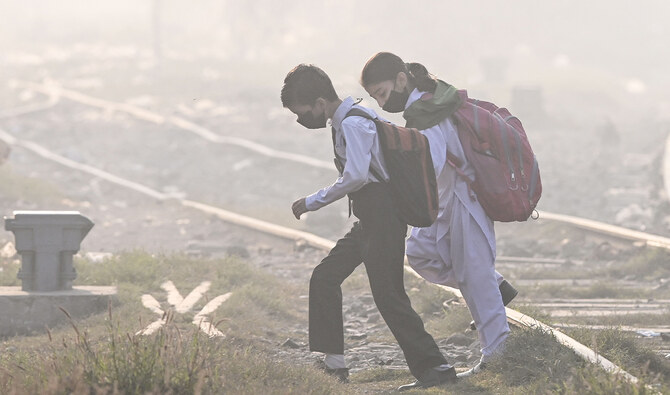

ISLAMABAD: Choking smog, scorching heat and ravaging floods — arch-rivals India and Pakistan share the same environmental challenges, offering a rare but unrealized opportunity for collaboration, according to experts.
The neighboring nations, which have fought three wars since their 1947 partition and still bitterly dispute Kashmir, are suffocated every winter by a haze of pollution traversing their border.
The countries, together making up a fifth of the world’s population, frequently blame each other for smog blustering into their respective territories.
But this year pollution reached record highs in Pakistan’s eastern and most populous province of Punjab, prompting the regional government to make a rare overture calling for “regional climate diplomacy.”
India did not comment and whether they will unite to face a common foe remains to be seen. But experts agree the two countries cannot tackle climate threats in isolation.
“We are geographically, environmentally and also culturally the same people and share the same climatic challenges,” said Abid Omar, founder of the Pakistan Air Quality Initiative (PAQI).
“We have to work transboundary,” he told AFP.
India and Pakistan are at the mercy of extreme weather which scientists say is increasing in frequency and severity, owing to climate change.
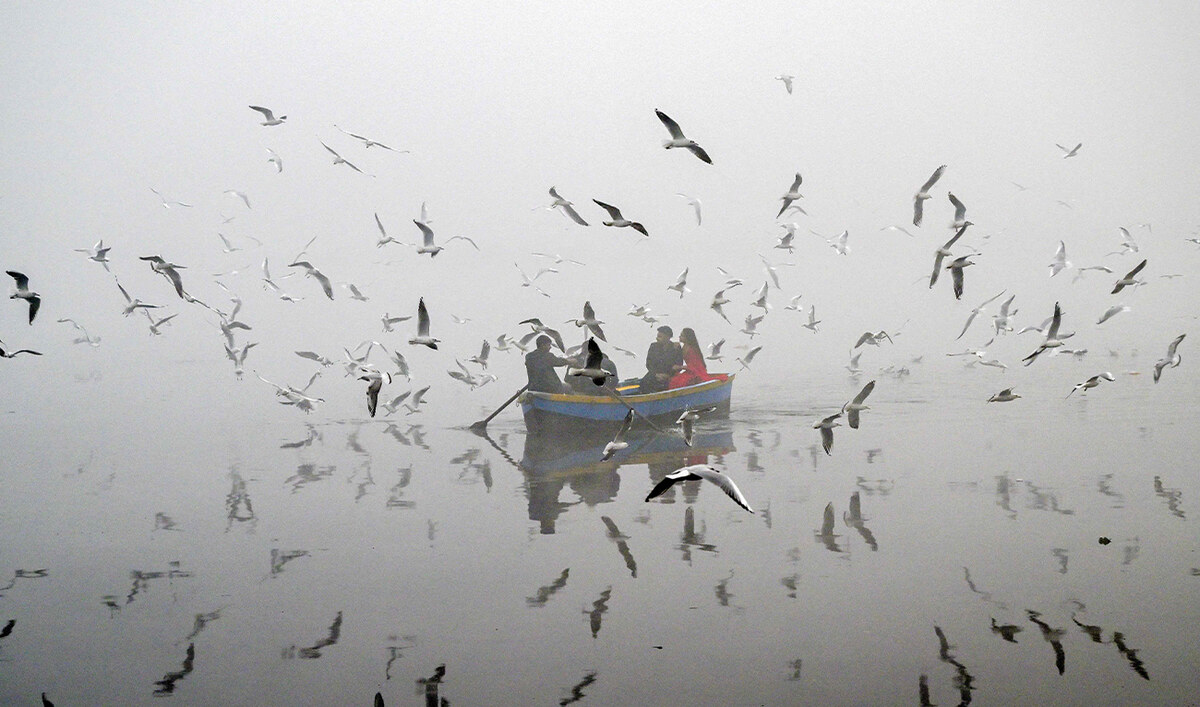
People feed seagulls in the waters of river Yamuna engulfed in smog in New Delhi, on November 14, 2024. (AFP/File)
Heatwaves have regularly surpassed 50 degrees Celsius (122 Fahrenheit), droughts plague farmers and monsoon rains are becoming more intense.
Pakistan’s 2022 monsoon floods submerged a third of the country and killed 1,700 people.
A year later, more than 70 died in northeastern India when a mountain lake burst its banks, a phenomenon becoming more common as glaciers melt at higher rates.
This July more than 200 people were killed in the southern Indian state of Kerala when monsoon downpours caused landslides that buried tea plantations under tons of rock and soil.
In both countries, nearly half of people live below the poverty line, in a state of precarity where climate disasters can be devastating.
“One would like to think that an urgent shared threat would bring the two sides together,” Michael Kugelman, South Asia Institute director at the Washington-based Wilson Center, told AFP.
“The problem is that this hasn’t.”
Each side has outlawed agricultural burning, a method to quickly clear crop waste ahead of the winter planting season, but farmers continue the practice because of a lack of cheap alternatives.
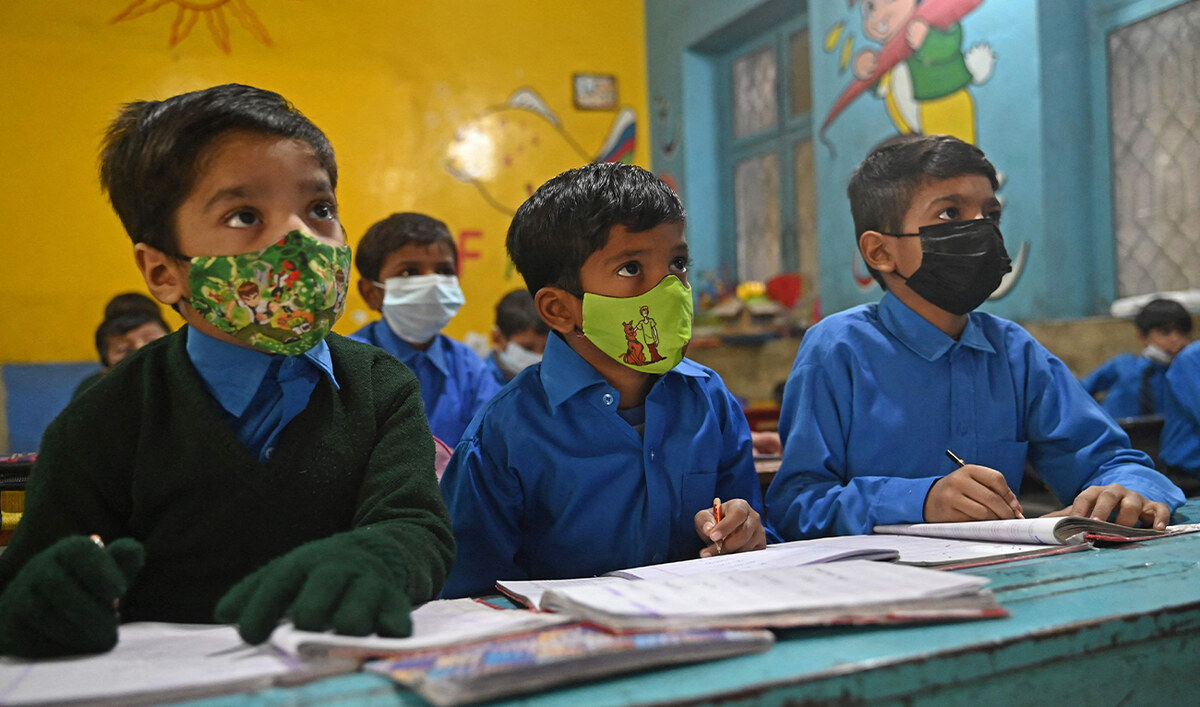
Students wearing facemasks attend a class after their school reopened, amid smoggy conditions in Lahore, on November 20, 2024. (AFP/File)
Authorities in both countries have also threatened to destroy brick kilns that do not adhere to emissions regulations.
But India, one of the world’s largest emitters of greenhouse gases, and Pakistan, one of the smallest, have never aligned their environmental laws, school or traffic closures, or shared technology and data.
Indian economist and climate expert Ulka Kelkar highlighted the potential to collaborate on electric vehicle technology suited to South Asian needs.
“In our countries, it’s two-wheelers and three-wheelers which most people tend to use,” she told AFP.
“So research and development of vehicular technologies, battery technologies that are suited for our road conditions, warmer climates, our passenger use — that’s the sort of discussion and common development that can happen.”
Experts say the geopolitical rivalry runs so deep that distrust undercuts any prospects of cooperation.
Visas are so sparingly granted that most researchers in one of the countries cannot visit the other, whilst Islamabad and New Delhi frequently poke holes in one another’s data.
The PAQI partnered with an Indian counterpart in 2019 to reconcile findings by installing matching air pollution sensors in each other’s countries.
While breathing toxic air has catastrophic health consequences — with the World Health Organization warning that strokes, heart disease, lung cancer and respiratory diseases can be triggered by prolonged exposure — the one-year project was not renewed.
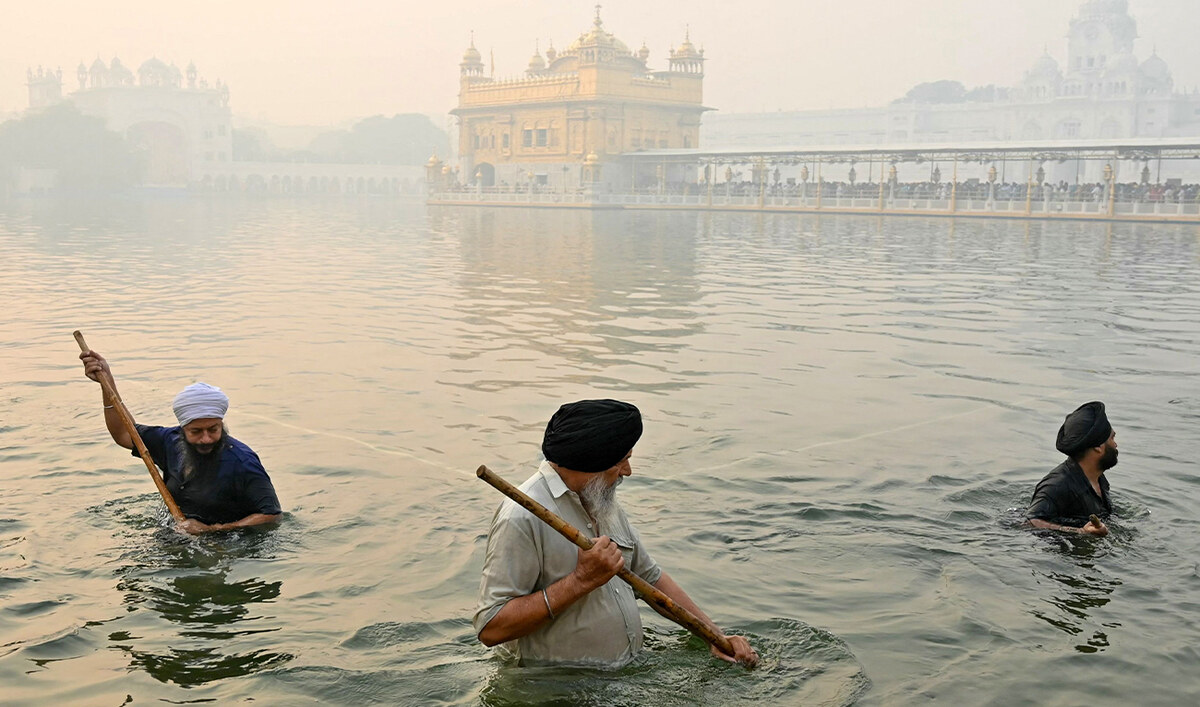
Volunteers clean the holy sarovar a day after the Sikh festival Bandi Chhor Divas, as a thick smog engulfs the Golden Temple in Amritsar on November 2, 2024. (AFP/File)
The nations do hold regular discussions on one critical climate issue: sharing rights to the Indus River which bisects Pakistan but is fed by tributaries in India.
However geopolitical posturing in September saw New Delhi lobby Islamabad for a review of their water-sharing treaty, citing cross-border militant attacks, according to Indian media.
But the impetus for cooperation will only increase. India and Pakistan both have exploding population growth rates.
“Being developing economies, there is a growing use of electricity and fossil fuels for industry, for transportation, for urban use,” economist Kelkar said.
At a national level, experts also say there may be a crucial imbalance between the two countries.
“Climate-related problems tend to be transnational by nature,” Indian international relations expert Kanishkan Sathasivam said.
“India can do certain things for Pakistan but Pakistan is not going to have much that it can do for India,” he added, explaining that India’s gross domestic product was 10 times larger than its neighbor’s in 2023.
Pakistan was also on the brink of default last year, only saved from bankruptcy by international loans, and is burdened by debt repayments preventing investment to counteract climate challenges.
India, meanwhile, has taken more proactive measures such as banning petrol-powered vehicles older than 15 years from driving on the streets of its capital.
But unilateral measures do not address the root cause.
“The dialogue and the trust has to be built up through many mechanisms,” said Omar of PAQI.
“It should not be limited to government to government discussions, but also between the science and academic community.”


