GENEVA: Soccer’s biggest ever global club tournament is coming to the United States next year and the 32-team group stage will be drawn Thursday.
European powers Real Madrid and Manchester City, Lionel Messi’s Inter Miami, recently crowned South American champion Botafogo and top clubs from Asia, Africa and Oceania are among the teams who are in the draw for FIFA’s revamped Club World Cup.
The tournament, which used to be played annually in December, will take place in 11 US cities from June 15 to July 13 in an expanded format with 32 teams instead of the previous seven. Going forward the Club World Cup will be played every four years – just like the World Cup for national teams, which will be co-hosted by the US, Mexico and Canada in 2026.
Here’s what to know about the Club World Cup draw, which is made in Miami at 1 p.m. (1800 GMT) on Thursday.
What is the Club World Cup?
FIFA and its presidents have long coveted a prime piece of club soccer content.
The 2025 Club World Cup is FIFA’s most ambitious project, creating a month-long tournament in a mid-June to mid-July slot historically used by the men’s World Cup, which draws the biggest audiences in global sports.
The new club competition uses the traditional 32-team format used by the World Cup from 1998 to 2022. Eight round-robin groups of four teams each, and the top two advance to a knockout bracket of 16.
In allocating 32 entries, FIFA tried to balance getting the best and most watchable teams with giving all the world a chance to compete and develop.
Europe got 12 places, South America six, while Africa, Asia and North America got four each. One place went to Oceania and one to the host nation that should change for each edition.
Teams qualified by winning their continental championship from 2021 through 2024, or ranking highly with consistent results across those four seasons. Countries are capped at two entries unless more won titles. Brazil will send four different Copa Libertadores winners and Mexico three champions of the CONCACAF region. The other North American champion was Seattle Sounders.
Who will play?
Storied and wealthy European names are in: Real Madrid, Manchester City, Bayern Munich, Inter Milan and Paris Saint-Germain. The current leaders of most of Europe’s strongest leagues miss out: Liverpool, Barcelona, Napoli and Sporting Lisbon.
Salzburg earned the last European entry last season based on FIFA’s ranking system though it can hardly be considered among Europe’s top clubs: it’s currently 32nd in the new 36-team Champions League standings.
Argentina’s big two clubs, River Plate and Boca Juniors, are in. The Brazilian and Mexican entries include, respectively, Fluminense and Pachuca, both currently 16th in their national league standings.
Africa’s entries include Al Ahly of Egypt — three times champion of Africa in the last four years — and Mamelodi Sundowns of South Africa, which is owned by FIFA vice president Patrice Motsepe.
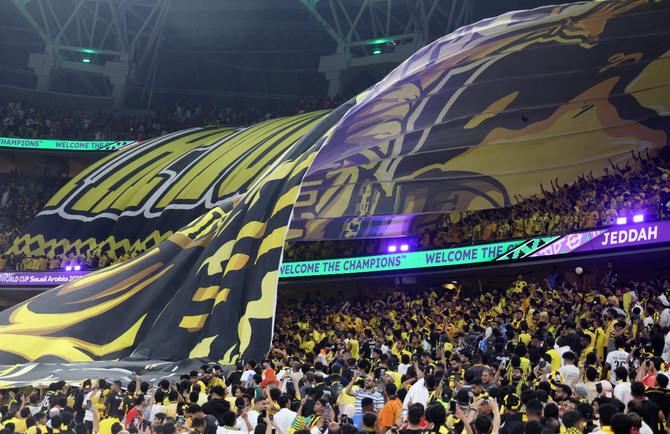
Saudi Arabia sends Al-Hilal, the 2021 champion of Asia, which won the domestic league last season despite losing Neymar to a long-term injury.
If they stay fit, the tournament will feature a new generation of stars such as Real Madrid’s Kylian Mbappé, Vinícius Júnior and Jude Bellingham, Manchester City’s Erling Haaland and Bayern Munich’s Jamal Musiala.
Lionel Messi’s Inter Miami will be there, with a FIFA thumb on the scales in October to give the team the host nation’s entry. Two other stars from Messi’s generation will miss out: Cristiano Ronaldo’s Saudi Arabian club Al Nassr and Barcelona with Robert Lewandowski failed to qualify through their continental Champions League competitions.
Why is Inter Miami playing?
The previous version of the Club World Cup kept an entry for the host nation’s champion. But this time FIFA did not wait for the MLS Cup title game on Saturday, when LA Galaxy hosts New York Red Bulls. Neither will be in the draw Thursday.
Instead, Inter Miami, with the star power of Lionel Messi on the field and co-owner David Beckham, was given the Club World Cup place in October based on regular-season standings. It will play three group-stage games in Florida, including opening the tournament at the Hard Rock Stadium.
What are they playing for?
Money and a trophy. Which is more prized by club owners is a debate to be had.
FIFA president Gianni Infantino has promised hundreds of millions of dollars in prize money, with reported guarantees of $50 million to top European teams, though it is currently unclear where from.
FIFA signed a global broadcasting deal Wednesday with streaming service DAZN to make all 63 games available for free. The value of the deal was not disclosed, and allows the streaming service to sell on rights to public broadcasters.
DAZN has close ties with Saudi Arabia, which promotes and stages top-level boxing title fights.
The new gold trophy has been fashioned by Tiffany and has Infantino’s name engraved on it twice. Plus his signature.
What is the tournament’s history?
Traditionally, the champions of Europe and South America played for the Intercontinental Cup. From 1980 to 2004 the game was played in Japan and usually in December.
FIFA launched a Club World Championship in 2000, played in January by eight teams in Brazil. It was not held again for nearly six years.
From 2005 through last year, the annual FIFA Club World Cup was played each December, settling on a seven-team knockout format: the six reigning continental champions and the host nation’s domestic champion. Hosts rotated between Japan, Abu Dhabi, Morocco, Qatar and, for its final edition last December, Saudi Arabia.
This annual event was unloved in Europe. The UEFA Champions League winner typically arrived for two games in four days and took home the trophy. Chelsea in 2012 was the only European team to lose in the past 17 years.
When first elected in 2016, Infantino spoke of FIFA’s need for a bigger, more attractive and lucrative club event.
In his previous job as UEFA general secretary, he helped organize the Champions League, in peak years of Messi winning the title at Barcelona and Ronaldo with Manchester United and then Real Madrid.
First, Infantino had a secretive $25 billion deal for new tournaments including a 24-team Club World Cup worth $3 billion every four years from 2021. That was blocked by European soccer officials.
Agreement was reached to play an inaugural 24-team tournament in June 2021 in China. Europe was to send just six teams.
No broadcast or sponsor deals had been announced by early 2020 when the tournament was scrapped because of the COVID-19 pandemic. The June 2021 slot was needed for the postponed Euro 2020 and Copa America.
After the failed Super League project in April 2021 rocked European soccer, FIFA found agreement for a 32-team Club World Cup.


![]()

The draw for FIFA’s revamped Club World Cup is coming up
Short Url
https://arab.news/4p53n
The draw for FIFA’s revamped Club World Cup is coming up
- The tournament will take place in 11 US cities from June 15 to July 13 in an expanded format with 32 teams instead of the previous seven
- Europe got 12 places, South America six, while Africa, Asia and North America got four each


Latest updates


© 2026 SAUDI RESEARCH & PUBLISHING COMPANY, All Rights Reserved And subject to Terms of Use Agreement.