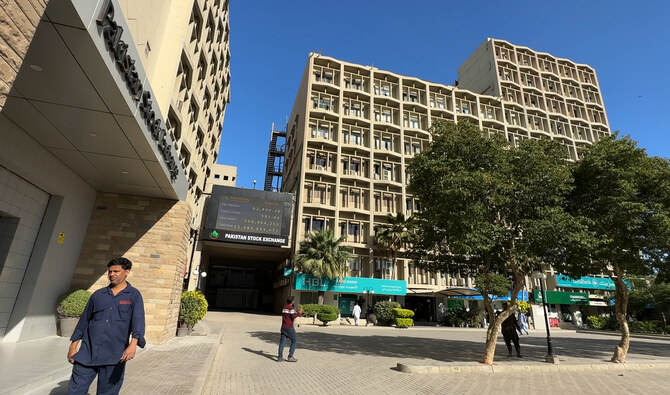
ISLAMABAD: The Pakistan Stock Exchange (PSX) on Monday set a new record as it closed at 103,274.94 points, up by 1917.62 points or 1.89 percent, from the last close of 101,357.32 points.
The benchmark KSE-100 index was at 103,036 points at around 250pm on Monday, recording a 1.66 percent gain from Friday’s close of 101,357 points.
The development came as Pakistan’s statistics bureau said annual consumer inflation had slowed to 4.9 percent in November, lower than the government’s forecast, largely due to a high base a year earlier. This is the lowest CPI inflation rate in 6.5 years.
Analysts said the stocks showed record bullish activity amid upbeat data on CPI inflation, which was likely to ease the central bank policy. Pakistan has reduced interest rates by 700 bps since June in four consecutive cuts.
“Strong economic data and surging foreign exchange reserves [$11,418.5 million in week ending on Nov. 22] played a catalyst role in bullish activity at the PSX,” Ahsan Mehanti, chief executive officer (CEO) of Arif Habib Corporation, told Arab News.
Consumer inflation cooled from 7.2 percent in October, a sharp drop from a multi-decade high of nearly 40 percent in May 2023. The PSX breached the 100,000-mark for the first time on Thursday to close at 100,082 points. The South Asian country slashed interest rates by 250 basis points earlier in November to help revive a sluggish economy amid a big drop in the rate of inflation.
The market rally is also attributable to Pakistan’s new $7 billion loan agreement with the International Monetary Fund (IMF), approved in September, that has bolstered investor confidence, according to some analysts. The IMF’s disbursement of the first tranche of approximately $1 billion in September, along with fiscal and monetary reforms, has improved sentiment.
Muhammad Ali Khan, an investment banker and analyst, downplayed the IMF factor and pointed to low interest rates and a correction in the market, which had been undervalued for years, as the main reasons behind the bullish trend.
“The stock market had come down to very low valuations, especially in the region, the interest rate is going down and a lot of cash was sitting on the sidelines before this rally,” he told Arab News.
Khan was skeptical of the market performance in the long run, though he expected the market to go up to 110,000 points in the coming days before undergoing another correction.
“This is a speculative market at this point in my view, given that large-scale manufacturing, exports and all other major indicators are crippling,” he said.
“We came off the ventilator. That doesn’t mean we are healthy. IMF saved us, IMF did not solve anything for us.”


![]()

‘Off ventilator’: Pakistan stock market cruises past 103,000 points on upbeat inflation data
Short Url
https://arab.news/8ud25
‘Off ventilator’: Pakistan stock market cruises past 103,000 points on upbeat inflation data
- Pakistan said on Monday annual consumer inflation in Pakistan had slowed to 4.9% in November, lowest in 6.5 years
- Strong economic data and surging foreign exchange reserves played catalyst role in bullish activity, analysts say
Latest updates


© 2026 SAUDI RESEARCH & PUBLISHING COMPANY, All Rights Reserved And subject to Terms of Use Agreement.