


CHICAGO/LONDON: As a fragile ceasefire in Lebanon meant to stop the fighting between Israel and Hezbollah enters its fifth day, experts have cast doubt on its sustainability, the region’s future stability and the role of international justice in holding leaders accountable for alleged war crimes.
To complicate matters, a surprise attack on Aleppo, a city in neighboring Syria, by militant groups on Thursday breached a five-year-long truce, reigniting a long-running civil war with an intensity not seen in years.
The most serious challenge to the government of President Bashar Assad in years, the assault has raised questions about whether non-state actors are trying to take advantage of weakness of the so-called Axis of Resistance alliance resulting from setbacks suffered by Hamas in Gaza and Hezbollah in Lebanon.
Appearing on “The Ray Hanania Radio Show” this week, Arab American Institute founder James Zogby and international law expert Brad Roth offered insights into the Lebanon ceasefire agreement and its broader geopolitical implications.
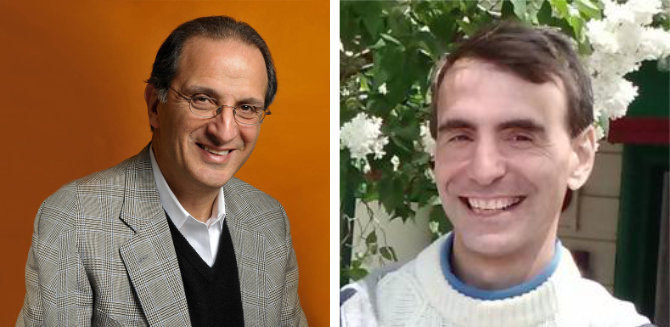
Arab American Institute founder James Zogby and international law expert Brad Roth. (Supplied photos)
The ceasefire, announced earlier this week, comes after months of intense fighting in southern Lebanon and Gaza. While it has brought temporary relief, the terms appear to favor Israel, with critics warning of its instability as the two factions “remaining fully equipped” to strike.
Zogby described the deal as “one-sided,” noting that Israel retains significant freedom to act unilaterally. “The US and France were pushing (for the ceasefire), but the terms of the deal are Israel’s terms,” Zogby said.
The truce, brokered by the US and France, revisits the framework of UN Resolution 1701, enacted 18 years ago. According to US President Joe Biden, the agreement is intended to establish a “permanent cessation of hostilities.” It calls for Israel to withdraw its forces from southern Lebanon and limits armed groups in the area to the Lebanese military and UN peacekeeping forces.
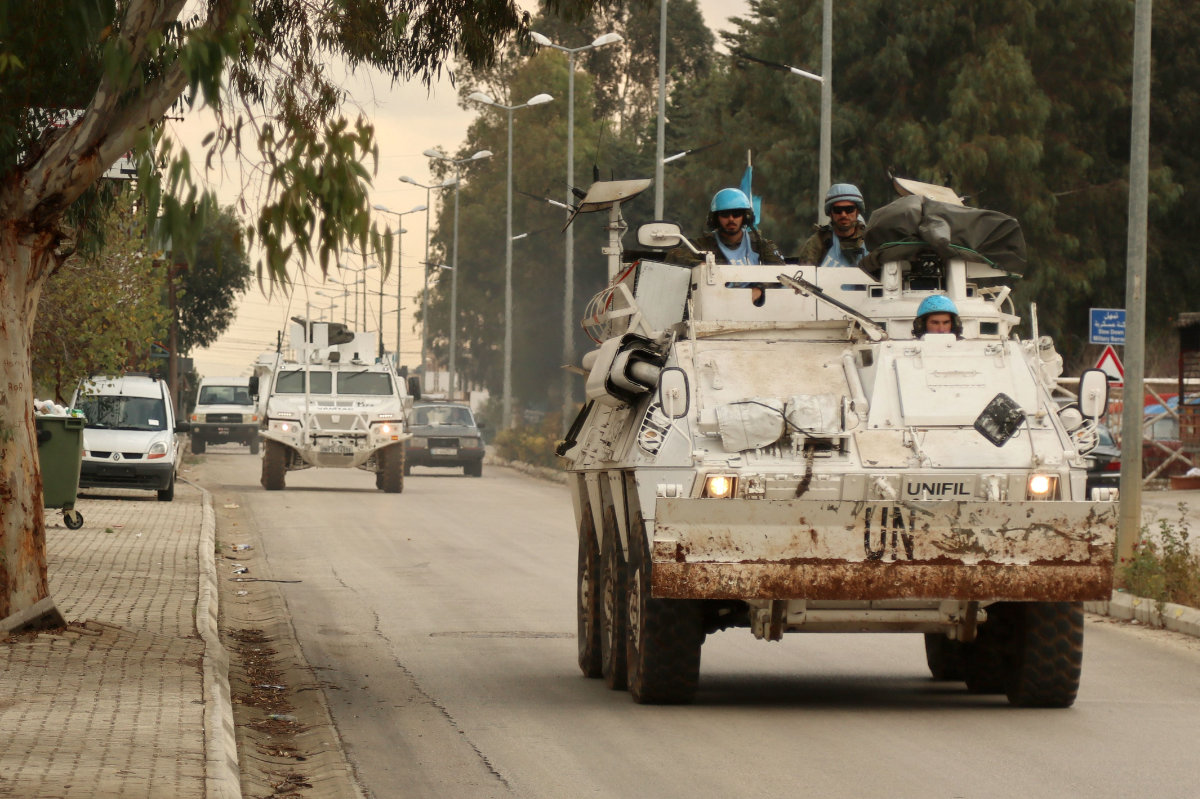
UN peacekeepers patrol in the southern Lebanese city of Marjayoun, near the border with Israel, on November 29, 2024. (AFP)
However, the updated terms grant Israel extensive leeway. A “reformulated and enhanced” mechanism, chaired by the US, allows Israel to strike Hezbollah arms shipments, a clause that Israeli Prime Minister Benjamin Netanyahu described as ensuring “full freedom of military action” with Washington’s backing.
Meanwhile, the US has pledged to rearm Israel, restoring its military capacity to pre-war levels.
“I don’t think we have a ceasefire in the real sense of a ceasefire. It’s not two teams agreeing to stop. There’s one team saying: ‘we gotta stop.’ That’s Lebanon. The other team is saying: ‘We’re going to continue if we need to and the way we want to’,” Zogby said, suggesting that Israel’s insistence on the ceasefire was partly driven by internal challenges.
“I think there’s another reason why Israel wanted this now, and that is that their troops are exhausted,” he said. “They’ve been fighting new fronts. Israel’s never fought a war this long. They’re already experiencing suicides and other forms of post-traumatic shock syndrome.”

Israeli tanks are seen near the border with Lebanon on November 28, 2024. James Zogby believes Israel has agreed to a ceasefire with the Hezbollajh largely because its troops are exhausted, (AFP)
Yet, Zogby warned that Israel’s military dominance remains unchecked. “The US has created a monster which has incredible offensive capability and no restraint. None. I used to compare Israel and the Palestinians to the spoiled child and the abused child. Israel’s the spoiled child with unlimited destructive capability, and that’s dangerous.”
In his Tuesday night announcement of the ceasefire, Netanyahu described Israel’s military campaign as “victorious” on all seven fronts — Gaza, the West Bank, Lebanon, Iraq, Yemen, Syria and Iran — claiming it aimed to weaken adversaries and reshape the region. However, experts view his push to expand the war as a strategy to bolster his hold on power amid a corruption trial in which he is set to testify on Dec. 10, and to obscure the true focus of the conflict: Gaza.
“Lebanon never was the main arena. It’s always been about the conquest of the land of Palestine for them,” Zogby said, criticizing US Secretary of State Antony Blinken’s remarks on Hezbollah’s role in Gaza, who claimed the war in Gaza lasted so long because “Hamas was counting on Hezbollah’s cavalry.
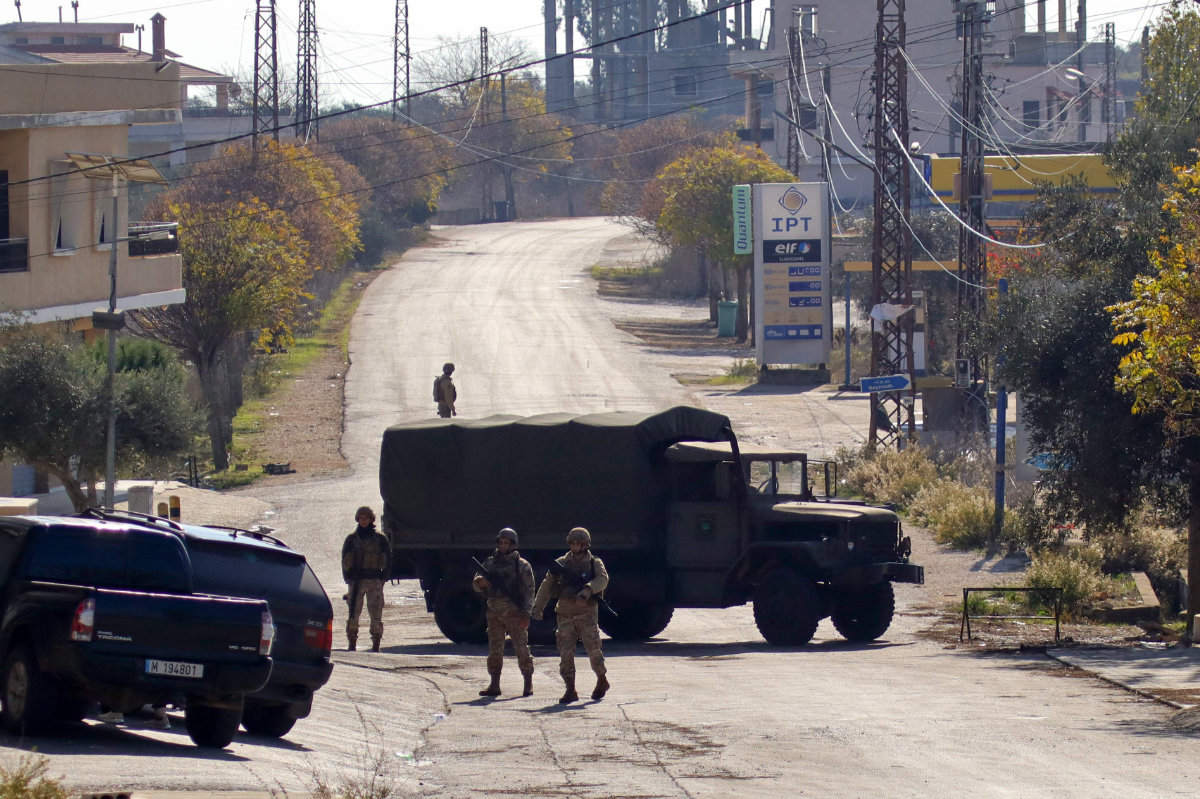
Lebanese army soldiers manning a checkpoint use a military vehicle to block a road in southern Lebanon's Marjayoun area on November 28, 2024, a day after a ceasefire between Israel and Hezbollah took effect. (AFP)
“And I thought, ‘how dumb, how blindsided, how short-sighted, rather, can he be that he thinks that what’s going on in Gaza is Hamas holding out for Hezbollah to rescue them. This has always been about Israel destroying Hamas and the US supporting them in that. There’s never been a desire for a ceasefire or a peace agreement,” he said.
Zogby also highlighted Lebanon’s internal struggles following the conflict. With more than 1.2 million Lebanese displaced, primarily Shiite Muslims, tensions have escalated as they relocate to areas dominated by other sectarian groups. “The country, after all, has been on the brink for a long time,” Zogby said, pointing to the ceasefire’s terms, which critics say works in Israel’s favor.
Hezbollah’s decision to open a southern front in support of Gaza had drawn significant criticism within Lebanon. Many argued it exacerbated the nation’s economic and political crises, deepening divisions and compounding the devastation. While the ceasefire has provided a fleeting sense of relief, displaced Shiite residents, unable to return to their ruined homes, question what, if anything, was gained from the war.
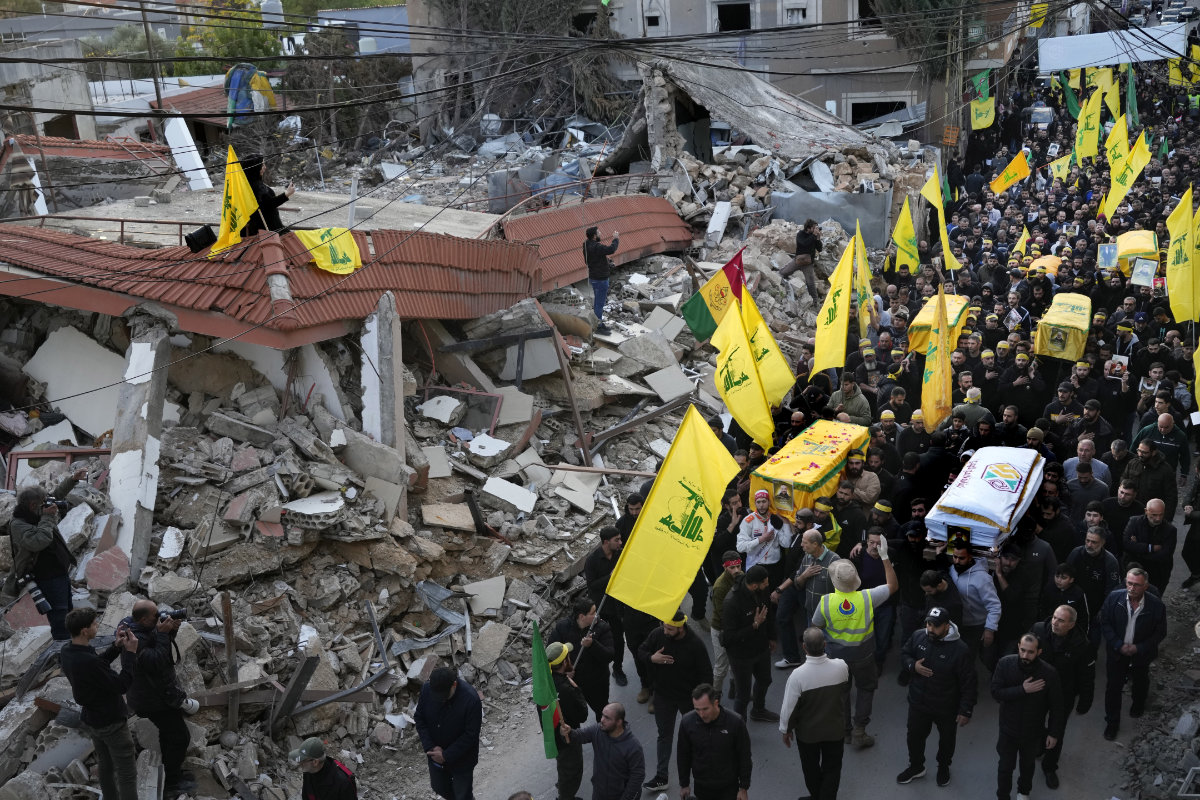
Mourners carry the coffins of Hezbollah fighters killed in the fighting against Israeli troops as they pass by a destroyed building in Maarakeh village, southern Lebanon, on Nov. 29, 2024.(AP)
For Hezbollah, this raises existential challenges. Critics contend that its ability to mobilize support — long reliant on weapons, financial sway and promises of deterrence — has been severely weakened, leaving its future influence in the region uncertain.
The ceasefire coincides with the International Criminal Court’s move to issue arrest warrants for Netanyahu, former Israeli defense minister Yoav Gallant and Hamas commander Mohammed Deif, accusing them of war crimes and crimes against humanity. However, the likelihood of these leaders facing justice remains slim, given Israel’s refusal to recognize the ICC’s jurisdiction.
INNUMBERS
• 3,900+ People killed in Lebanon in Israeli strikes since October 2023.
• 76+ Israeli soldiers killed in war with Hezbollah over same period.
• 44,000+ Estimated Palestinian deaths in Gaza during the same period.
Brad Roth, a professor of law at Wayne State University and an expert on international justice, outlined the challenges confronting the ICC. “In principle, if US forces commit war crimes or plausibly alleged to commit war crimes within the territory of a state that is either party to the ICC statute or has conferred specialty jurisdiction over the situation, then US forces can be subject to the jurisdiction of the ICC,” he said.
“The US has always objected to that, but they have never had very good grounds for objecting to it. And, of course, Israel as well is not a party and denies that Palestine is a state and, therefore, denies that Palestine has the legal capacity to confer jurisdiction over these territories to the ICC.”
He added that most legal experts agree Palestine satisfies the criteria for ICC jurisdiction.

Israel's genocidal war in Gaza, which it launched in response to the deadly Hamas attack on October 7, 2023, has killed at least 44,382 Palestinians as of Nov. 30, 2024, and wounded over 105,000, according to various agencies. Of those killed, more than 11,000 were children. (AFP photos)
The ICC, established through the Rome Statute in the late 1990s and operational since 2002, was designed to prosecute individuals for crimes such as genocide, war crimes and crimes against humanity. However, its jurisdiction excludes major powers like the US, Israel, Russia and China, creating significant gaps in its authority. “It’s a sort of Swiss cheese here in terms of what it covers,” Roth said.
He highlighted that ICC member states are legally obligated to enforce arrest warrants, though enforcement often hinges on domestic politics rather than legal principles. “Then the question of whether the problem is that a state may be bound by the treaty to engage in the arrest and may be bound by customary international law to not engage in the arrest. And those domestic courts would have to deal with that question, and how that would come out is anyone’s guess,” he said.
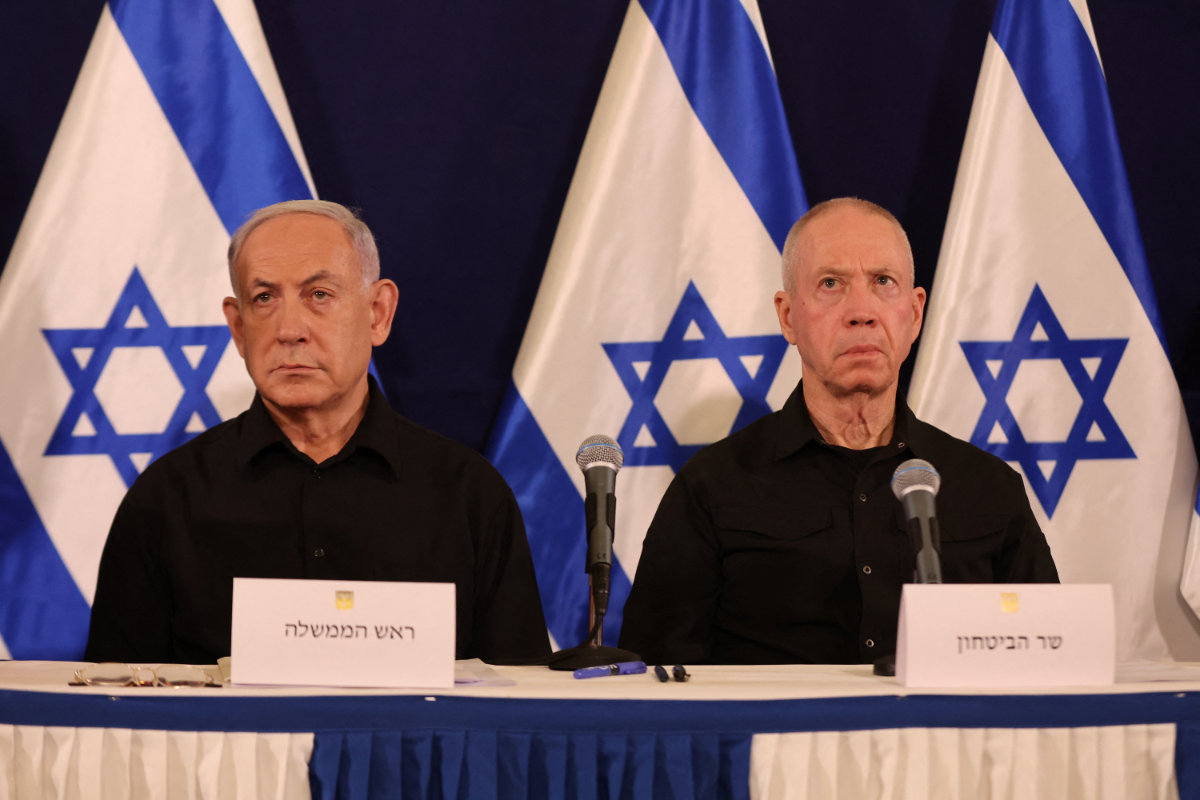
The International Criminal Court has issued arrest warrants against Israeli Prime Minister Benjamin Netanyahu (L) and Defense Minister Yoav Gallant for war crimes, but there are doubts if they would ever be arrested because of continued US support for the genocidal Israeli regime. (AFP)
Adding to the complexity, French officials reportedly agreed to oversee the ceasefire’s implementation only after securing assurances that ICC warrants against Israeli leaders would not be enforced. Roth attributed this to the ICC’s reliance on US funding and support, which complicates its willingness to pursue cases against US allies.
“For that, you can draw your own conclusions about why it is that a body, so heavily dependent on US support and funding and assistance with investigation and so forth, might be reluctant to take action against the US,” he said.
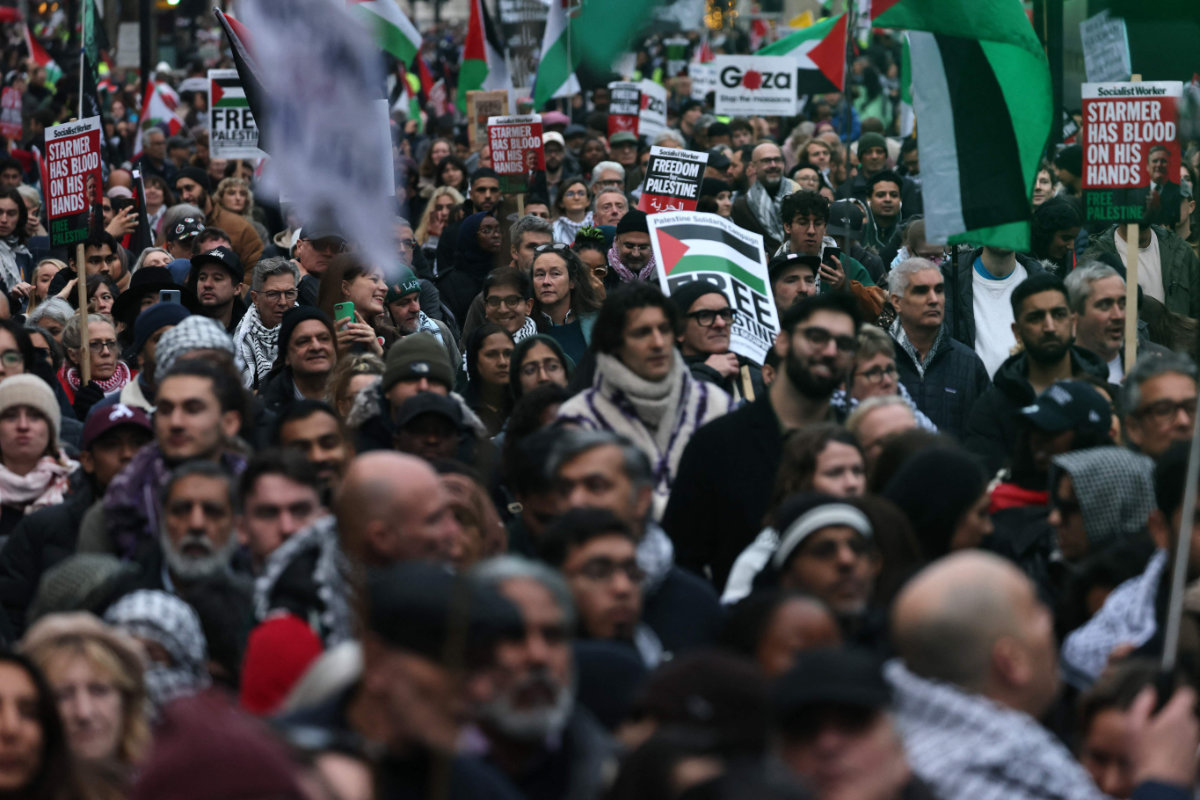
Protesters attend a national demonstration in central London on November 30, 2024, demanding a halt to Israel's genocidal war against Palestinians. (AFP)
The US role in shielding Israel from international accountability has drawn criticism, particularly during the Gaza war. While the Biden administration has framed its unwavering support for Israel as essential for regional security, critics argue this stance exacerbates instability.
Zogby cautioned that continued backing of Israel’s military campaigns risks undermining long-term peace efforts, as evidenced by the resurgence of fighting in Syria.
According to the UK-based Syrian Observatory for Human Rights war monitor, the militants, mainly from the Hayat Tahrir Al-Sham, took control of “more than half of Aleppo” within hours on Friday without encountering any resistance from Syrian government forces. The official Syrian media challenged this narrative and claimed to have captured groups of “terrorists.”
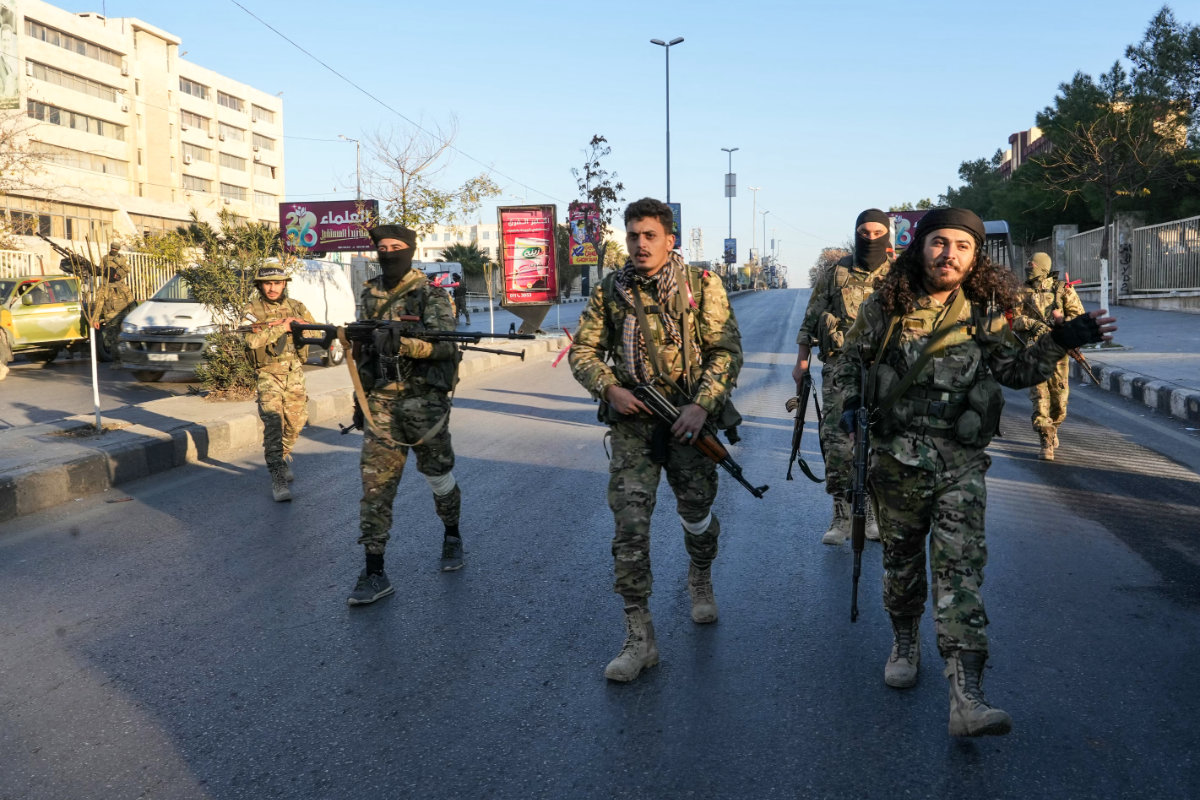
Syrian militants patrol in central Aleppo on Nov. 30, 2024, as they pressed a lightning offensive against government forces. (AFP)
While the ceasefire has brought a temporary halt to the violence in Lebanon, the road ahead remains uncertain, particularly on issues related to justice and accountability.
To Roth, the ICC’s efforts to hold Israeli leaders accountable may exemplify the broader difficulties of navigating international law amid powerful political interests. A lasting resolution, he suggested, requires a robust international response addressing the root causes of the conflict.
“The Ray Hanania Radio Show” is broadcast every Thursday in Michigan on WNZK AM 690 Radio at 5 p.m. on the US Arab Radio Network and is sponsored by Arab News. To watch the full episodes and past shows, visit ArabNews.com/RayRadioShow.


