DUBAI: After voting for Donald Trump in anger at the Biden administration’s perceived inaction on the Gaza war, many Arab Americans are now voicing concern as the victorious Republican candidate prepares to return to the White House with top team nominees vocal in their support for Israel.
Former senior US intelligence officer Norman Roule, however, says the incoming Trump administration’s policy in this regard will be largely similar to that of President Joe Biden’s.
“It is certainly true that many of the Trump senior designees are openly pro-Israel, but their rhetoric as to what they would do to support Israel is no different than the Biden administration itself,” he said on the Arab News current affairs program “Frankly Speaking.”
He believes one positive thing to look forward to is that Trump would avoid embroiling the US, Israel, or the region in an endless conflict in the Gaza Strip.
“If there is a difference between the Biden approach and the Trump approach,” he said, “the Trump approach might be more of, to the Israeli government: Do what you feel is necessary, but do it efficiently, humanely, and quickly, we’re not looking to support Israel for an endless war there itself.”
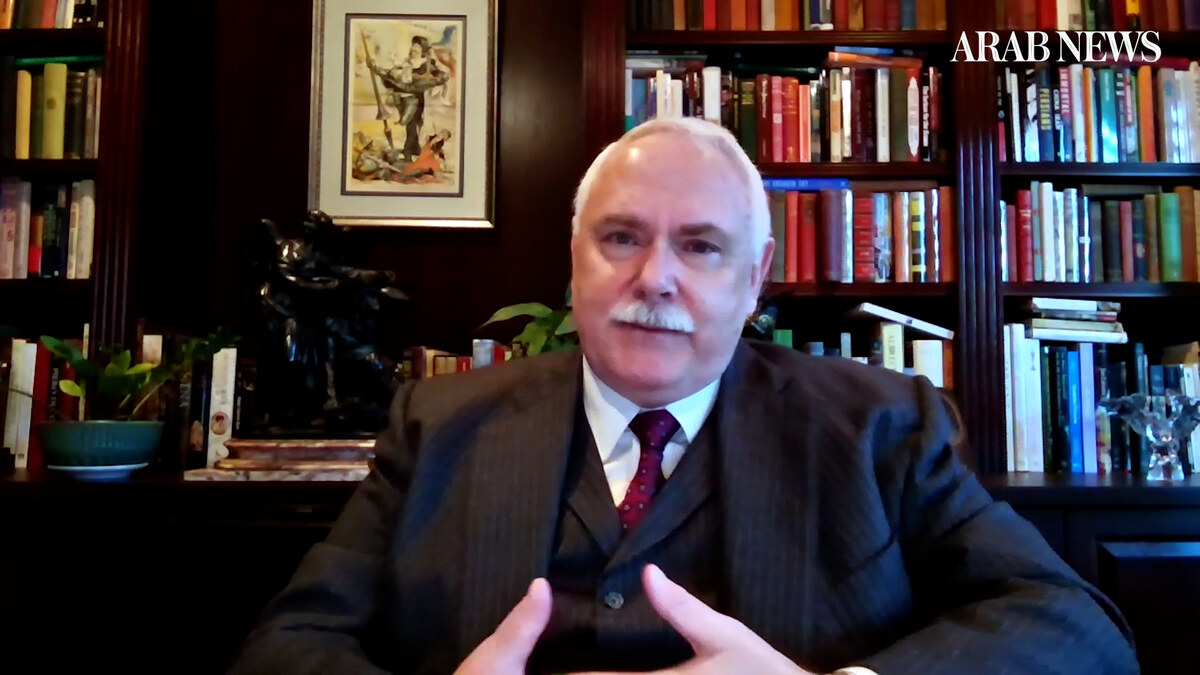
The incoming Trump administration’s policy regarding the Gaza will be largely similar to that of President Joe Biden’s, former senior US intelligence officer Norman Roule tells Frankly Speaking host Katie Jensen. (AN photo)
Roule stressed that America must end the war and facilitate aid access for the Palestinians in Gaza, who have suffered for over a year from a deepening humanitarian crisis, while at the same time ensuring Israel’s security from Hamas militants.
“First, we must provide humanitarian relief to the Palestinian people who have suffered tremendously, largely because of Hamas’ use of this population as human sacrifice, but we must bring in international aid and end the conflict,” he said.
“But at the same time, we must end the role of Hamas in threatening Israel. It’s not unfair that Israel seeks its security to prevent another repetition of Oct. 7.”
On that fateful day in 2023, Hamas-led Palestinian militants carried out a surprise attack on southern Israel, killing some 1,200 people and taking 240 others hostage. Israel retaliated by launching a widespread bombing campaign on Gaza, killing at least 44,000 Palestinians within 14 months, according to the local health authority.
Saudi Arabia has consistently condemned Israel’s actions in Gaza, and Foreign Minister Prince Faisal bin Farhan has ruled out normalizing relations with Israel until a Palestinian state is established.
Roule lauded the Saudi leadership’s consistency and clear stance on the Palestine issue.
“The Saudi foreign minister’s position has been consistent, it’s been clear, and it’s been directed to achieve what the entire Arab world seeks — a two-state solution that is fair to the Palestinian people, that allows security for Israel, and does not provide undue diplomatic recognition or other inducements to Israel before that diplomatic solution of the two-state relationship comes about,” he said.
“So, I’m a big fan of Prince Faisal bin Farhan. His comments have been appropriate, and the comments of the Saudi leadership have also been quite clear,” he told Katie Jensen, the host of “Frankly Speaking.”
Roule spent 34 years with the CIA covering the Middle East. For nine of those years, he was the national intelligence manager for Iran at the Office of the Director of National Intelligence.
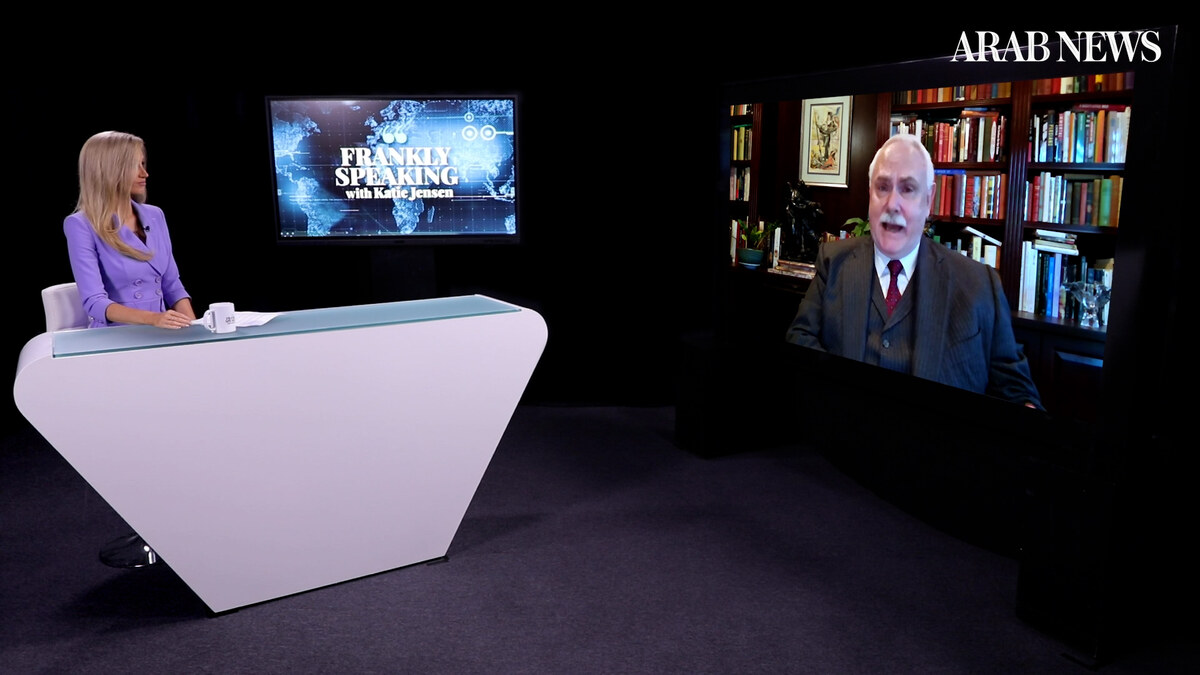
Roule, a former senior US intelligence officer, believes Saudi-US relations will continue to thrive regardless of the administration in Washington and despite the temporary pause caused by the Gaza war. (AN photo)
Drawing on his background, he expressed skepticism about whether all parties would cooperate in reaching a two-state solution. “If that’s going to be difficult with the Israelis, you just have to imagine yourself right now: Is the president of the Palestinian Authority capable politically of bringing the Palestinians to a two-state solution? Will Hamas tolerate that?” he said.
“And, indeed, the question that we all should ask ourselves is, if two-state discussions began today, what would Hamas, the Palestine Islamic Jihad, Hezbollah, Iran and the Houthis say about that? Would they support those talks? Would they try to upend those talks?”
According to Roule, the “great unanswered question” is what the international community is doing to ensure that, if a two-state diplomatic approach is reached, it will be protected from “the malign actions of Iran and its proxies.”
Asked if parts of the much-talked-about Saudi-US deal could still move forward despite the Kingdom’s stance on not normalizing relations with Israel without the two-state solution being achieved, he said the two countries “have a separate relationship that needs to progress at the same time.
“And it’s been doing quite well in recent months,” he said. “Both the Biden administration in its remaining time and the (incoming) Trump administration will seek to implement the parts of the deal that are not related to Israel.”
Despite the temporary pause in a comprehensive strategic agreement owing to the Gaza conflict, he sees collaboration continuing in areas like AI, green energy and regional stability.
“We have a massive technological cooperation that’s ongoing, particularly in artificial intelligence,” Roule said. “The issue of data centers is coming to the forefront of the relationship, but also, as the Biden administration was working on its strategic agreement with the Saudi government, the sense in Washington is the movement of that deal was quite positive and was only upended by the Gaza conflict.”
Roule expects to see continued progress on elements of that deal, which “provides Saudi Arabia and the US with what they need to maintain and build what is a very positive and critical relationship for the US and for the region.”
Opinion
This section contains relevant reference points, placed in (Opinion field)
Moving on to Lebanon, Roule said that to bring peace to the war-torn country, “there’s a simple solution with a difficult approach to get there.
“We need first to remove Lebanese Hezbollah north of the Litani (River) to empower the Lebanese armed forces to come south of the Litani and do their job — and be able to do so without fear of Lebanese Hezbollah,” he said.
Nevertheless, he stressed that the first priority is to “end the conflict” and “end the suffering of the Lebanese people, end the suffering of the Israeli people.”
Pointing to the fact that “60,000 Israelis have left their home and prior to the Lebanese recent conflict, 100,000 Lebanese were not going into their homes, and now we have a million displaced Lebanese,” Roule said: “We’ve got to make that our first priority.”
Achieving peace in Lebanon, according to Roule, hinges on one key factor: “The Lebanese people must be willing to stand up against Lebanese Hezbollah.”
Elaborating on the point, he said: “This isn’t something that we’re going to be able to do. And I’ll close by saying that one bit of diplomatic guidance that in the intelligence community we often give to diplomats is: We can’t want a solution more than the people on the ground.
“The Lebanese people must appoint a president, empower their armed forces, push back on Lebanese Hezbollah.”
He is sure that once the Lebanese decide on the political solution, the US “will assist them and support them and provide them with billions of dollars of aid.
“But, at a certain point, the political solution must be their own.”
Asked about the outlook for the war in Lebanon, especially after Israeli official Michael Freund told the Jerusalem Post that southern Lebanon is actually “northern Israel,” Roule said “harsh rhetoric” is “coming from all sides — Lebanese Hezbollah, elements of the Israeli government, and Palestinians themselves — on all of these issues.”
President-elect Trump pledged throughout his campaign to quickly end the conflicts in Ukraine and the Middle East. Roule believes that Trump, who opposes “endless wars,” will pursue this goal by surrounding himself with people who share his worldview.
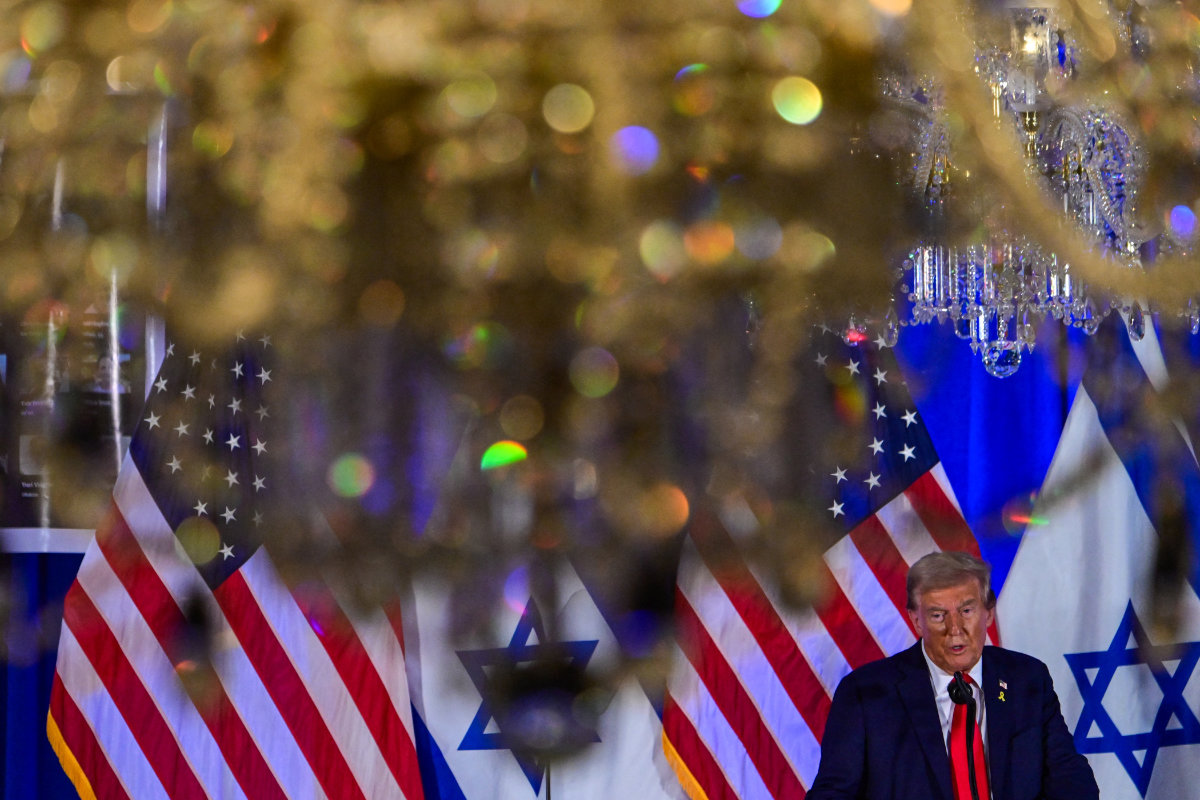
In this photo taken on October 7, 2024, former US President and Republican presidential candidate Donald Trump speaks at a remembrance event in Miami, Florida, to mark the first anniversary of the Hamas attack on Israel. (AFP/File photo)
“President Trump does see himself as a deal maker and he assigns to key positions around him individuals with the same worldview,” he said.
“So, you’re going to get individuals who are generally sympathetic toward Israel, confident of the strong US relationship with the Gulf Cooperation Council states, willing to deter Iran, willing to do what it takes to keep the US out of regional conflicts, but willing also to push back on adversaries.”
While Trump does not want to see the US in a war in the Middle East or in Europe any more than President Biden, the two administrations’ approach to these issues in significantly different ways, according to Roule.
“President Trump’s goal appears to be how do we bring some sort of agreement together that stops the killing and restores the diplomatic channels so that we can bring about peace in Europe,” he said.
He added that Trump’s goal in regard to Iran is “probably” similar.
“Iran needs to reduce its nuclear program, cease its regional adventurism, and act like a normal nation,” Roule said. “If Iran is willing to do this, as we’ve seen in the previous Trump administration, they will offer engagement.
“But if not, in either of these cases, what you’re going to see is likely the Trump administration not unwilling to provide Ukraine with more weapons, because Russia won’t cooperate — and also to conduct significant pressure against Iran.”
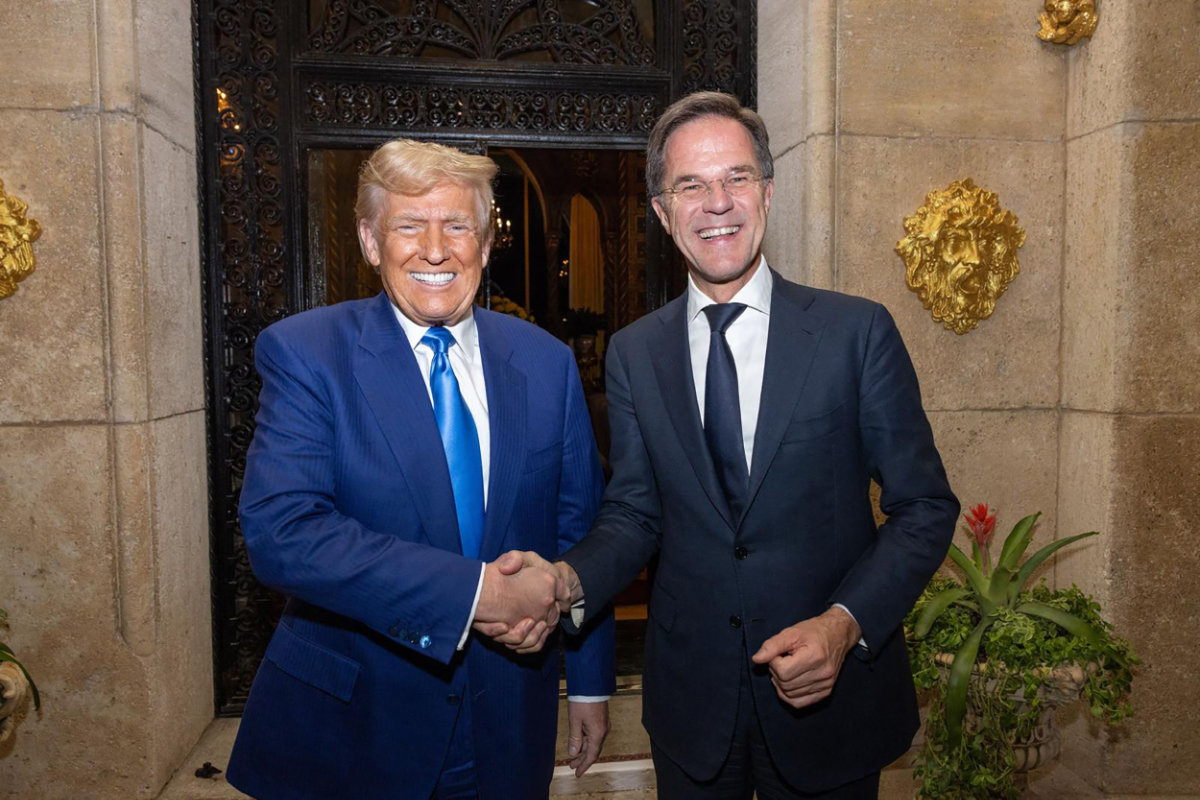
US President-elect Donald Trump (L) shakes hands with NATO Secretary General Mark Rutte as they meet in Palm-Beach, Florida, on Nov. 22, 2024. Rutte held talks with US President-elect Donald Trump in Florida The duo talked about the "global security issues facing the alliance," a spokeswoman said. (NATO handout photo via AFP)
When asked whether Ukrainians and Europeans fear that Trump’s policies might prioritize Russia in a deal and pressure Kyiv, the EU, and NATO to accept it — much like the withdrawal from Afghanistan — Roule responded that the US approach would ultimately depend on whether the issue is deemed existential to its interests.
“The Trump administration’s position is going to be: If this is an existential issue for Europe, then it must act accordingly. And there are some countries in Europe which still will not meet their NATO obligations,” he said.
“The Trump administration’s position is going to be, not unreasonably, if this is existential for us and we must participate accordingly, why isn’t it existential for you?”
Turning to Ukraine, Roule said this has been “a costly, bloody war” within the country. “They’ve lost many of their people to Russian aggression. This is a criminal invasion of another country,” he said.
“That said, if you’re interested in stopping the violence, at some point all wars come to a diplomatic solution. They may not be attractive, but that solution is needed.”