Pakistan urges climate justice at COP29, highlights gaps in global commitments

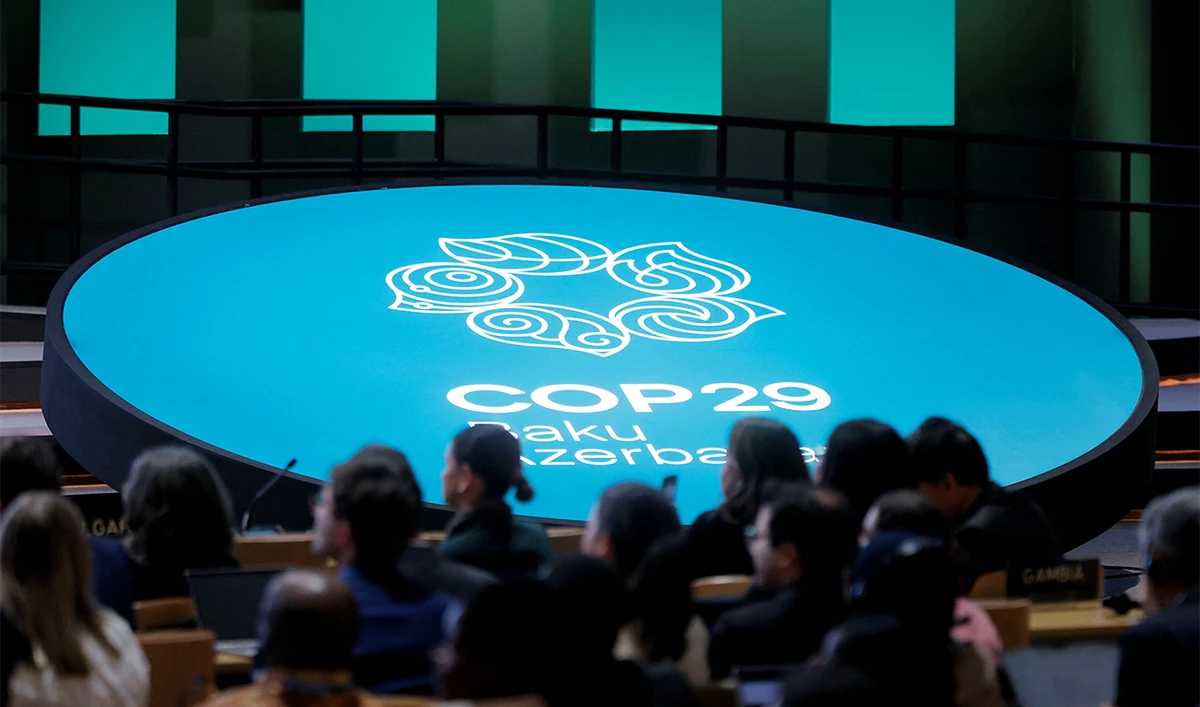
A view during a closing plenary meeting at the COP29 United Nations Climate Change Conference, in Baku, Azerbaijan, on November 24, 2024. (REUTERS)
Short Url
Updated 24 November 2024
Follow

Pakistan urges climate justice at COP29, highlights gaps in global commitments

  • It highlights mismatch between developed nations’ pledges and developing countries’ needs
  • Romina Alam says Pakistan is forced into debt to manage the fallout of climate disasters

ISLAMABAD: Pakistan’s top climate change official on Sunday voiced concern over the widening gap between global climate commitments and the needs of vulnerable nations as COP29 ended in Azerbaijan.
Addressing the closing plenary, Romina Khurshid Alam, Prime Minister’s Coordinator on Climate Change, emphasized Pakistan’s acute vulnerability to phenomenon, citing devastating floods, glacial melt, extreme heatwaves and droughts that have affected millions and strained the country’s resources.
“Climate justice is not charity; it is a moral obligation,” she said during her statement, criticizing the mismatch between developed nations’ pledges and the requirements of developing countries to implement their climate plans.
The Pakistani official welcomed the adoption of the Baku Climate Unity Pact, though she expressed “mixed feelings” about the outcomes.
“We note critical gaps in the decisions adopted here,” she said. “Global solidarity is important, but the goals set by developed countries fall short of addressing the needs of developing nations to implement their NDCs [Nationally Determined Contributions] and National Adaptation Plans.”
Alam highlighted the inequity in the international climate finance system, pointing out that countries like Pakistan are being forced into debt to manage the fallout of climate disasters.
“The climate crisis is turning into a debt crisis because the means of implementation are not clear,” she added.
The Pakistani official urged all parties to return to the negotiating table with renewed determination ahead of COP30.
“Multilateralism remains the cornerstone of Pakistan’s climate diplomacy, and we hope for greater equity and commitment in addressing outstanding critical issues,” she added.
Pakistan is ranked as the 5th most vulnerable country to climate change, according to the Global Climate Risk Index. Apart from floods, droughts and heatwaves, the country’s eastern cities in Punjab have also witnessed unprecedented smog, taking the AQI level as high as 2,000.
Pakistan to promote mineral sector at Saudi forum this month with 13 companies

Updated 5 sec ago
Follow

Pakistan to promote mineral sector at Saudi forum this month with 13 companies

  • Delegation will take part in the Future Minerals Forum in Riyadh from Jan. 13-15
  • Petroleum minister will lead Pakistan, participate in a 90-minute country session

ISLAMABAD: Around 13 Pakistani state-owned and private companies will attend the Future Minerals Forum (FMF) in Saudi Arabia from Jan. 13 to 15, an official statement said on Friday, as the country seeks to ramp up global engagement to develop its mineral resources.

The FMF is an international conference and investment platform for the mining sector, hosted by mineral-rich countries to attract global investors, companies and governments.

Petroleum Minister Ali Pervaiz Malik confirmed Pakistan’s participation in a meeting with the Saudi envoy, Nawaf bin Said Al-Malki.

Pakistan hosts one of the world’s largest copper-gold zones. The Reko Diq mine in southwestern Balochistan, with an estimated 5.9 billion tons of ore, is partly owned by Barrick Gold, which calls it one of the world’s largest underdeveloped copper-gold deposits. Its development is expected to boost Pakistan’s struggling economy.

“Upon an invitation of the Government of the Kingdom of Saudi Arabia, the Federal Minister informed the Ambassador that Pakistan will fully participate in the upcoming Future Minerals Forum (FMF), scheduled to be held in Riyadh later this month,” Pakistan’s Press Information Department (PID) said in an official statement.

The Pakistani minister will lead his country’s delegation at the FMF and take part in a 90-minute country showcase session titled “Unleashing Potential: Accelerating Pakistan’s Mineral Revolution” along with local and foreign investors.

Pakistan will also establish a dedicated pavilion to highlight the vast potential of its rich geological landscape to the global mineral community.

The Saudi envoy welcomed Pakistan’s decision to participate in the forum and discussed enhancing bilateral cooperation in the minerals and energy sectors during the meeting.

According to the statement, he highlighted the potential for cooperation between Saudi Arabia and Pakistan in the minerals and energy sectors, expressing confidence that the FMF would provide a platform to expand collaboration.
Pakistan’s mineral sector, despite its rich reserves of salt, copper, gold and coal, contributes only 3.2 percent to the country’s GDP and just 0.1 percent to global mineral exports.

However, many countries, including the United States, have shown interest in Pakistan’s underdeveloped mineral sector, particularly in copper, gold and other critical resources.

In October, Pakistan dispatched its first-ever shipment of rare earth and critical minerals to the United States, according to a Chicago-based US public relations firm’s report.