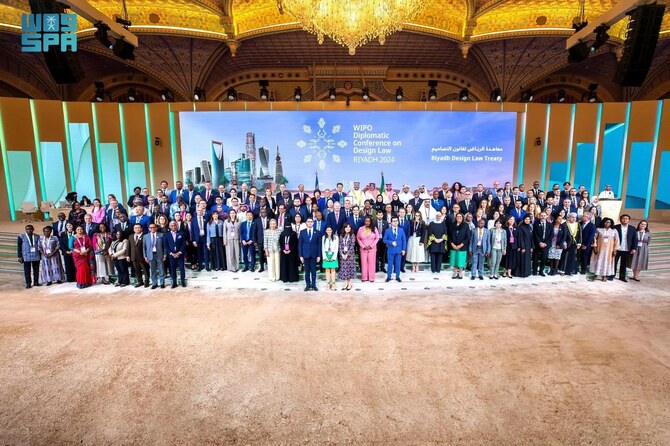
Riyadh Design Law Treaty signed at intellectual property conference in Saudi Arabia

Member states of the World Intellectual Property Organization officially adopted the Riyadh Design Law Treaty on Friday. (SPA)
Short Url
Updated 22 November 2024
Follow

Riyadh Design Law Treaty signed at intellectual property conference in Saudi Arabia

  • Document aims to enhance designers’ rights, unify design registration procedures 

RIYADH: Member states of the World Intellectual Property Organization officially adopted the Riyadh Design Law Treaty on Friday, the Saudi Press Agency reported.

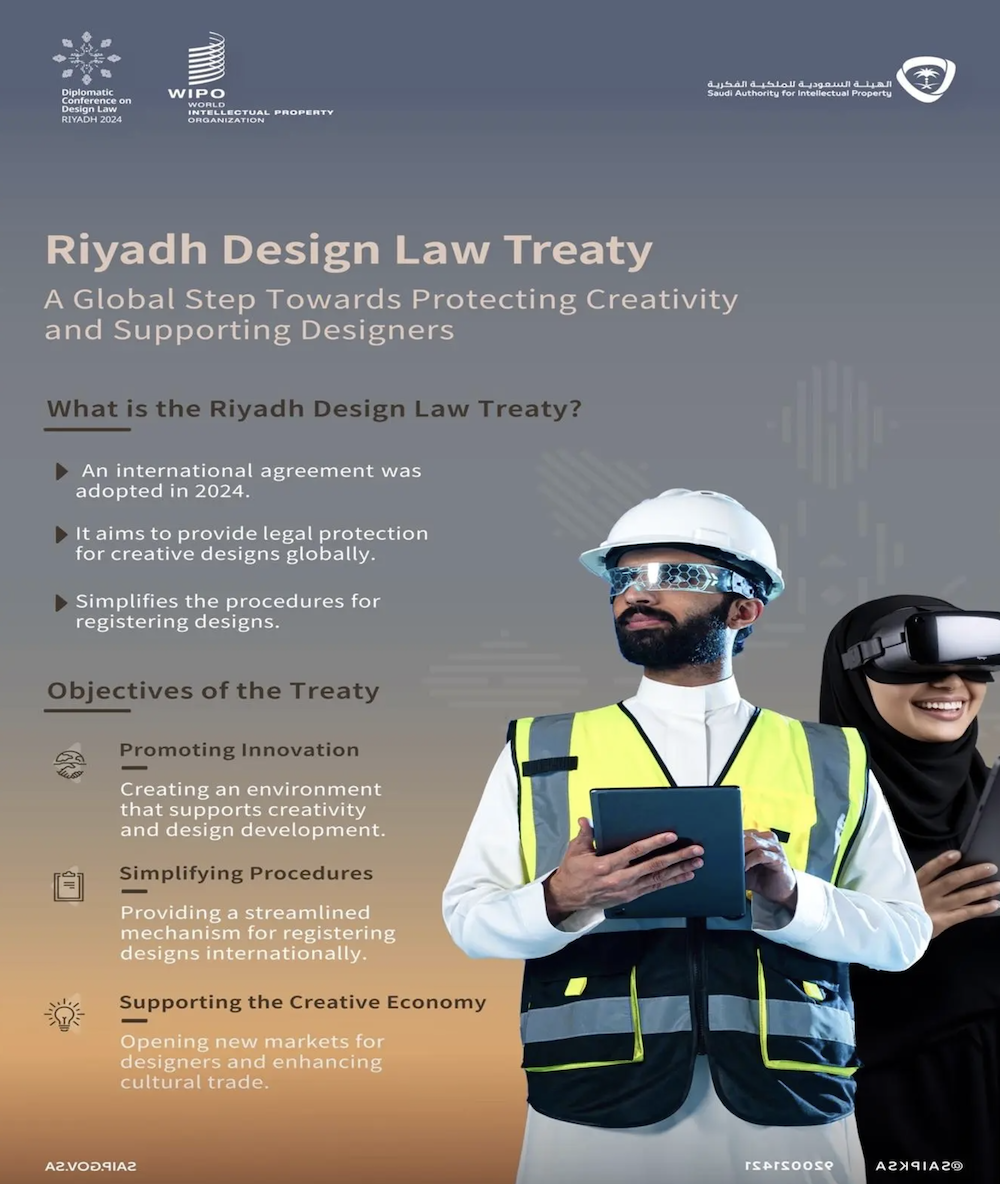
The treaty, which aims to enhance designers’ rights and unify design registration procedures, was finalized at the Diplomatic Conference to Conclude and Adopt a Design Law Treaty at the King Abdulaziz International Conference Center in Riyadh, which finished on Friday.

By establishing a robust legal framework, the Riyadh treaty is set to bolster innovation and creativity across multiple industries worldwide, the SPA added.
Abdulaziz Al-Suwailem, the CEO of the Saudi Authority for Intellectual Property, spoke of the significance of the treaty’s adoption.

He said: “The name Riyadh treaty reflects Saudi Arabia’s pivotal role as a bridge between cultures and a hub for supporting global initiatives.

“Adopting this treaty is a historic achievement highlighting Saudi Arabia’s cooperation and contribution to the international intellectual property framework. It opens new avenues for collaboration among member states.

“This treaty will lay the foundation for vital legal frameworks that benefit designers and bolster innovation and creativity worldwide.”

The event, which was hosted by the SAIP, gathered high-level representatives and decision-makers from the WIPO’s 193 member states.


The founding economy: A blueprint for stability in the First Saudi State

Updated 23 February 2026
Follow

The founding economy: A blueprint for stability in the First Saudi State

  • The establishment of the First Saudi State created a secure environment that facilitated the arrival of caravans, secured vast trade routes, and revived commerce across the Arabian Peninsula

RIYADH: The economy during the founding stage of the First Saudi State served as a fundamental pillar in building the nation, consolidating its influence, and ensuring its stability. This early economic growth was inextricably linked to achieving security, unifying regions, and organizing society—factors that directly stimulated trade, stabilized markets, and enhanced the foundations of daily life in Diriyah and its surrounding areas.
According to Dr. Abdullah Al-Saleh Al-Othaimeen's "Diriyah: Origins and Development during the First Saudi State," published by the King Abdulaziz Foundation for Research and Archives (Darah), the founding economy stands as a historical model reflecting the reciprocal relationship between political stability and early economic prosperity.

Beyond its political and intellectual prominence, Diriyah emerged as a vibrant economic hub. (SPA)

The establishment of the First Saudi State created a secure environment that facilitated the arrival of caravans, secured vast trade routes, and revived commerce across the Arabian Peninsula.
Beyond its political and intellectual prominence, Diriyah emerged as a vibrant economic hub. Its active markets attracted merchants and students from across the region, all of whom benefited from the state-provided stability. The local society relied on diverse activities for its livelihood, including trade, agriculture, and livestock breeding, with horses and camels playing crucial roles in transportation, commerce, and securing roads.
The social and administrative organization upon which the state was founded ensured the continuous availability of goods and sustained market stability. Ultimately, the close relationship between public security and economic growth during this founding phase solidified Diriyah's position as a premier political and commercial center in the Arabian Peninsula.