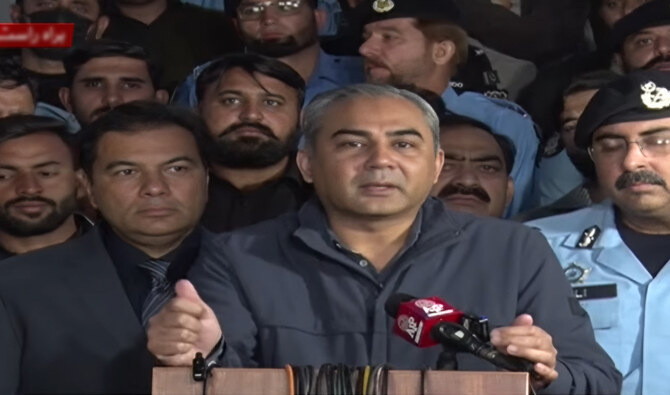
ISLAMABAD: Pakistan’s Interior Minister Mohsin Naqvi on Thursday suggested the government was open to talks with former prime minister Imran Khan’s Pakistan Tehreek-e-Insaf (PTI) party but ruled out allowing its planned protest in Islamabad on November 24, ahead of a high-level visit by a Belarusian delegation.
The PTI has announced a “long march” to Islamabad on November 24, primarily demanding the release of Khan, who has been imprisoned since August last year on charges the party contends are politically motivated.
Additionally, the party’s protest is also meant to raise its voice against alleged rigging in the February 8 general elections while calling for measures to ensure judicial independence, which it believes has been undermined by the 26th constitutional amendment.
On Monday, Islamabad’s district magistrate imposed a two-month-long ban on gatherings of more than five people in the capital, invoking Section 144 of the Code of Criminal Procedure. This provision allows the government to prohibit political assemblies, rallies, demonstrations, sit-ins and other activities for a specified period.
Addressing the media in Islamabad, the interior minister said the government was fully prepared to stop the protest, with Punjab police, Rangers and Frontier Constabulary (FC) troops assisting the Islamabad police in operational duties.
“Khyber Pakhtunkhwa Chief Minister Ali Amin Gandapur and Barrister Gohar Khan met Imran Khan twice in the past two days,” Naqvi said, amid speculation that the PTI leaders discussed the option of negotiating with the government. “If they wish to initiate talks [with the government], they should do it. If they want to hold talks, they should tell us.”
The minister added, however, that no talks were possible if the PTI headed to Islamabad and “wielded sticks against us” on November 24.
“Let me tell you one thing: negotiations don’t take place with threats, though I personally feel talks should take place between everyone,” he said.
In response to a question, Naqvi clarified that no talks were currently underway with Khan, who is facing a new case related to violence at a PTI rally that took place in September while the ex-premier was in jail.
Highlighting the upcoming visit of Belarus President Alexander Lukashenko and his 10 cabinet ministers to Pakistan on a three-day visit next week, Naqvi said no permission could be granted for any rally or protest in the federal capital.
He added that a decision on whether to suspend mobile signals in Islamabad ahead of the protest would be finalized by Friday night.
Just a day earlier, it emerged that Pakistan’s interior ministry had authorized the deployment of paramilitary Punjab Rangers and FC forces in Islamabad since November 7 to maintain law and order.
Pakistan’s parliament also passed a law earlier this year to regulate public gatherings in Islamabad, specifying timings for rallies and designating specific areas. The law prescribes three-year jail terms for participants in illegal assemblies and 10-year imprisonment for repeat offenders.


![]()

Pakistan government open to talks with Imran Khan’s party, refuses to allow Nov. 24 protest
Short Url
https://arab.news/ggpry
Pakistan government open to talks with Imran Khan’s party, refuses to allow Nov. 24 protest
- Interior Minister Mohsin Naqvi says negotiations cannot take place amid ‘threats’ from PTI
- He says it is not possible to allow a rally in Islamabad ahead of a Belarusian delegation visit
Latest updates


Recommended


© 2026 SAUDI RESEARCH & PUBLISHING COMPANY, All Rights Reserved And subject to Terms of Use Agreement.