


PORT SUDAN: An attack by paramilitary forces that began Tuesday evening has left 40 people dead, a medic told AFP from a central Sudan village, following a month of escalating violence in Al-Jazira state.
“All 40 people suffered direct gunshot wounds,” the medic said from Wad Rawah Hospital, just north of Wad Oshaib village, requesting anonymity for their own protection after repeated attacks on medical personnel.
The paramilitary Rapid Support Forces (RSF), at war with the army since mid-April 2023, first attacked the village, located 100 kilometers north of Al-Jazira’s capital Wad Madani, on Tuesday evening, eyewitnesses said.
“The attack resumed this morning,” one eyewitness told AFP by phone on Wednesday, adding that fighters were “looting property.”
It is the latest in a month-long series of attacks on Al-Jazira villages by the RSF following the defection of a key paramilitary commander to the army’s side last month.
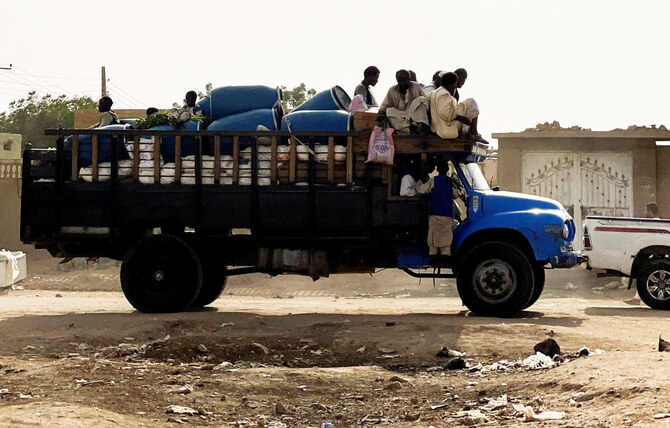
According to the United Nations, over 340,000 people have been displaced from their homes in the state, a key agricultural region that was formerly considered Sudan’s breadbasket.
The UN Secretary-General’s spokesperson Stephane Dujarric said on Friday that the violence in Al-Jazira “is putting the lives of tens of thousands of people at risk.”
The war between the army, led by Sudan’s de facto leader Abdel Fattah Al-Burhan, and the RSF, commanded by his former deputy Mohamed Hamdan Dagalo, has already killed tens of thousands of people across the country.
It has also uprooted over 11 million people, more than 3 million of whom have fled across Sudan’s borders.

Sudan's Ambassador to the UN Al-Harith Idriss Al-Harith Mohamed addresses the UN Security Council meeting on the situation on Sudan and South Sudan, at UN headquarters in New York City, on Nov. 18, 2024. (REUTERS)
The brutal war has seen both sides accused of war crimes, with RSF fighters accused of laying siege to entire villages, carrying out summary executions and systematically looting civilian property.
Eyewitnesses, rights groups and the UN have reported villages in eastern Al-Jazira coming under total siege in recent weeks, causing compounding humanitarian crises.
In the village of Al-Hilaliya, residents have been cut off from essential supplies, with dozens falling sick “allegedly due to poisoned food.”
The UN’s Dujarric said on Friday that many of the displaced arriving in neighboring states “had walked for days and arrived with nothing but the clothes on their backs.”
Even in areas safe from the fighting, hundreds of thousands of displaced people are facing epidemics including cholera, decimated infrastructure and a looming famine.
“They are now sheltering in the open, including children, women, older persons and people who are sick,” Dujarric added.
According to health officials and the UN, the conflict has forced 80 percent of health facilities in conflict-affected areas to shut down.
Sudan is currently facing what the UN has called one of the worst humanitarian crises in recent memory, with 26 million people suffering from acute hunger.


