United Nations: The UN Security Council is expected to vote Wednesday on another draft resolution calling for a ceasefire in Gaza in its latest attempt to exert pressure to end the war.
But the draft could be blocked by the United States, Israel’s main ally.
The latest draft of the resolution demands “an immediate, unconditional and permanent ceasefire” in the war between Israel and Hamas and “the immediate and unconditional release of all hostages.”
The wording has angered Israel and raised fears of a US veto.
Israeli ambassador to the UN Danny Danon has called the text “shameful,” adding: “We cannot allow the UN to tie the hands of the State of Israel from protecting its citizens, and we will not stop fighting until we return all the kidnapped men and women home.”
“For us, it has to be a linkage between a ceasefire and the release of hostages,” said Robert Wood, the deputy US ambassador. “It has been our principle position from the beginning and it still remains.”
The war was triggered by Palestinian group Hamas’s assault on Israel on October 7, 2023, a stunning cross-border raid that resulted in the deaths of 1,206 people, mostly civilians, according to an AFP tally of Israeli official figures.
The health ministry in Hamas-run Gaza said the death toll from the resulting war had reached 43,972 people, the majority civilians. The United Nations considers the figures reliable.
Of 251 hostages seized during the October 7 attack, 97 remain in Gaza, including 34 the Israeli military says are dead.
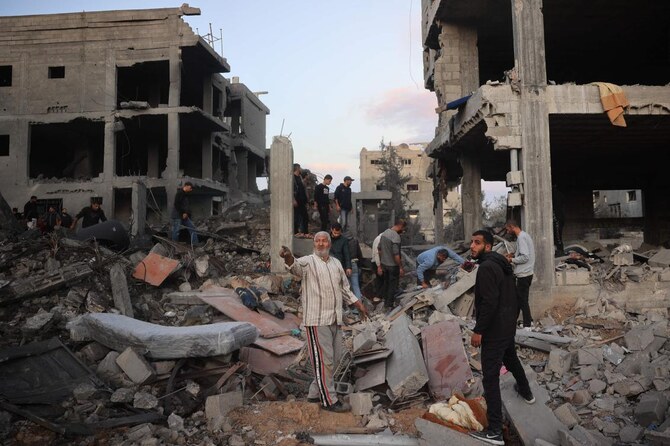
Almost all of Gaza’s 2.4 million people have been displaced by the war, which has caused a humanitarian catastrophe.
Since the beginning of the war, the Security Council has struggled to speak with one voice, as the United States used its veto power several times, although Russia and China have as well.
The few resolutions that the United States did allow to pass by abstaining stopped short of calling for an unconditional and permanent ceasefire.
In March, the council called for a temporary ceasefire during the Muslim holy month of Ramadan, but this appeal was ignored by the warring parties.
In June, the council pledged support for a multi-stage US ceasefire and hostage release plan that went nowhere.
Some diplomats have expressed hope that following Donald Trump’s election win on November 5, President Joe Biden might be more flexible in the few weeks he has left in power.
They imagined a possible repeat of events in December 2016 when then-president Barack Obama was finishing his second term and the council passed a resolution calling for a halt to Israeli settlement building in the occupied territories, a first since 1979.
The United States refrained from using its veto in this case, a break from traditional US support for Israel on the sensitive issue of settlements.
The draft being voted on Wednesday also calls for “safe and unhindered entry of humanitarian assistance at scale,” including in besieged northern Gaza, and denounces any attempt to starve the Palestinians.
The Palestinian delegation at the UN has suggested this text does not go far enough.
“Gaza’s fate will haunt the world for generations to come,” ambassador Riyad Mansour warned.
He said the only course of action for the council is to call for an immediate and unconditional ceasefire under Chapter 7 of the UN charter.
That chapter allows the council to take steps to enforce its resolutions, such as sanctions, but the latest text makes no reference to this option.


![]()


UN to vote again on Gaza ceasefire, US plans unclear
Short Url
https://arab.news/2br2h
UN to vote again on Gaza ceasefire, US plans unclear
- The few resolutions that the United States did allow to pass by abstaining stopped short of calling for an unconditional and permanent ceasefire
- The latest draft of the resolution demands “an immediate, unconditional and permanent ceasefire” in the war between Israel and Hamas


Fire from Iran, Lebanon triggers sirens across Israel
- Alerts were sounded in Jerusalem, Tel Aviv, Haifa and several other northern regions
- The Israeli army had noticed a gradual decrease in the number of Iranian missiles launched at Israel since Saturday
JERUSALEM: The Israeli military said it had detected multiple missile barrages from Iran on Wednesday, as well as launches from Lebanon, but added that the number of missiles fired from the Islamic republic at Israel was declining.
AFP journalists heard several blasts and multiple rounds of sirens from Jerusalem, while alerts also sounded in Tel Aviv, central Israel, Haifa and several other northern regions.
“The IDF identified missiles launched from Iran toward the territory of the State of Israel. Defensive systems are operating to intercept the threat,” the military said four times throughout the afternoon and early evening.
In a statement shortly after the first salvo was announced, the military said that “several launches... from Lebanon toward Israeli territory were successfully intercepted” after sirens sounded in central Israel.
The new salvos came on the fifth day of the Middle East war, which began on Saturday with joint US-Israeli strikes on Iran.
Lebanon was dragged into the war on Monday when the Tehran-backed Hezbollah group launched an attack on Israel to “avenge” the killing of Iran’s supreme leader Ayatollah Ali Khamenei, prompting ongoing Israeli air strikes.
Israeli military spokesman Lt. Col. Nadav Shoshani told reporters Wednesday evening that the army had noticed a gradual decrease in the number of Iranian missiles launched at Israel since the start of the war.
“We are speaking about many dozens the first day going down gradually to a few dozen and very low amounts,” he said.
“The barrages are much smaller. Today, some of them weren’t even a barrage, they were just one missile,” he added.
Shoshani said that some projectiles were launched from Iraq too, where some militias act as Iran proxies.
“We’ve seen small amounts of fire coming from Iraq, mostly UAVs (drones), but the vast majority of fire is from Iran and now from Hezbollah,” he said.
Israel’s Magen David Adom (MDA) emergency services said they had evacuated to hospital two people in central Israel with mild injuries, including “a man of about 30 with shrapnel wounds and another casualty with blast injuries.”
Police said in a statement that officers were dispatched to five locations in the Jerusalem area “where various intercepted projectiles had fallen, causing only damage.”
The military said that the “majority of the launches” from Lebanon were intercepted.
Not including Wednesday’s figures, MDA said that since the start of the war its teams had provided medical treatment to 414 casualties including “10 fatalities, 2 seriously injured, 6 moderately injured and 396 lightly injured.”
AFP journalists heard several blasts and multiple rounds of sirens from Jerusalem, while alerts also sounded in Tel Aviv, central Israel, Haifa and several other northern regions.
“The IDF identified missiles launched from Iran toward the territory of the State of Israel. Defensive systems are operating to intercept the threat,” the military said four times throughout the afternoon and early evening.
In a statement shortly after the first salvo was announced, the military said that “several launches... from Lebanon toward Israeli territory were successfully intercepted” after sirens sounded in central Israel.
The new salvos came on the fifth day of the Middle East war, which began on Saturday with joint US-Israeli strikes on Iran.
Lebanon was dragged into the war on Monday when the Tehran-backed Hezbollah group launched an attack on Israel to “avenge” the killing of Iran’s supreme leader Ayatollah Ali Khamenei, prompting ongoing Israeli air strikes.
Israeli military spokesman Lt. Col. Nadav Shoshani told reporters Wednesday evening that the army had noticed a gradual decrease in the number of Iranian missiles launched at Israel since the start of the war.
“We are speaking about many dozens the first day going down gradually to a few dozen and very low amounts,” he said.
“The barrages are much smaller. Today, some of them weren’t even a barrage, they were just one missile,” he added.
Shoshani said that some projectiles were launched from Iraq too, where some militias act as Iran proxies.
“We’ve seen small amounts of fire coming from Iraq, mostly UAVs (drones), but the vast majority of fire is from Iran and now from Hezbollah,” he said.
Israel’s Magen David Adom (MDA) emergency services said they had evacuated to hospital two people in central Israel with mild injuries, including “a man of about 30 with shrapnel wounds and another casualty with blast injuries.”
Police said in a statement that officers were dispatched to five locations in the Jerusalem area “where various intercepted projectiles had fallen, causing only damage.”
The military said that the “majority of the launches” from Lebanon were intercepted.
Not including Wednesday’s figures, MDA said that since the start of the war its teams had provided medical treatment to 414 casualties including “10 fatalities, 2 seriously injured, 6 moderately injured and 396 lightly injured.”
Latest updates


© 2026 SAUDI RESEARCH & PUBLISHING COMPANY, All Rights Reserved And subject to Terms of Use Agreement.